Men's Horsebit Loafers Guide
A snaffle bit across the vamp turned a loafer into jewellery-adjacent dress: the horsebit is the sharpest slip-on a man can wear.
Shop Men's Horsebit Loafers Now
Shop Men's Horsebit Loafers on Amazon Shop Men's Horsebit Loafers on eBayThe Amazon and eBay links on this page are affiliate links. If you make a purchase through them, Apparel Search may earn a commission.
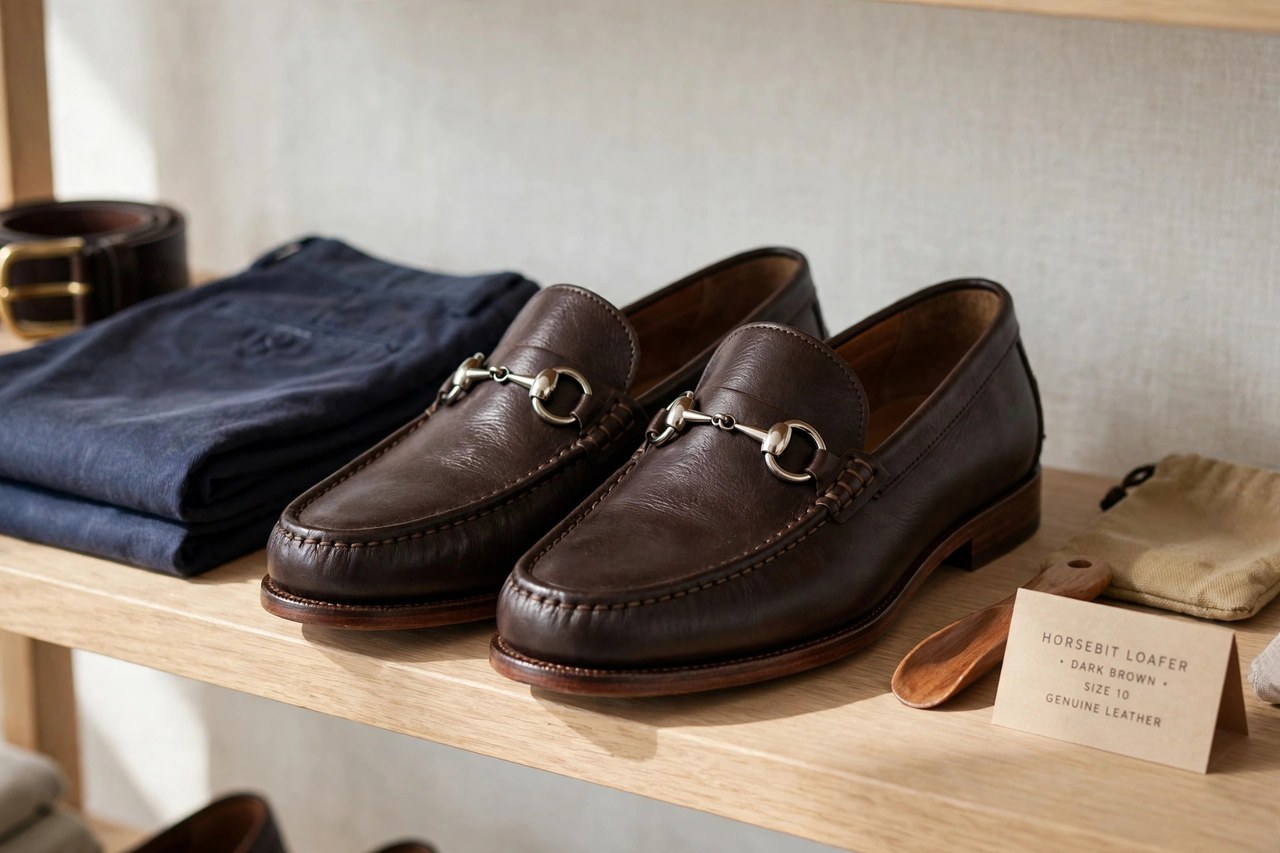
In 1953 Aldo Gucci added a horse's snaffle bit — two rings joined by a bar — across the vamp of a loafer, and created the most dressed-up slip-on in menswear. Gucci's equestrian vocabulary came from the saddlery the house began with, and the bit loafer carried it onto the feet of everyone from Italian industrialists to American presidents and film stars. The Metropolitan Museum took a pair into its collection; Wall Street took it into uniform.
The bit changes what a loafer is allowed to do. A penny loafer is a campus and weekend shoe that can visit the office; a horsebit is an office and evening shoe that can visit the weekend. That shift in register — achieved by a few grams of metal — is the whole story of the style, and the reason it remains the default smart slip-on for suits in summer, boardrooms and dinners where laces feel like effort.
The Hardware and the Silhouette
The bit itself is a true snaffle: a jointed or straight bar ending in rings, fixed to the vamp by short leather keepers so it lies flat and moves slightly as the shoe flexes. Quality shows in the metal — solid, smoothly finished, neither chromed to a mirror cheapness nor so bulky it reads as costume. Antique gold, aged silver and dark gunmetal finishes each tilt the shoe: gold warm and classic, silver cooler and more modern, dark metal quietest of all.
The silhouette matters as much as the hardware. The original 1953 shape is low, sleek and almond-toed, with a low stacked heel and a leather sole on formal versions — a slipper's profile with a shoe's manners. Chunkier, lug-soled and platform horsebits cycle through fashion and serve casual outfits well, but they are a different garment from the classic, and should be bought as fashion rather than as the wardrobe staple.
Leather, Suede and When Each Works
Polished calfskin in black is the boardroom and evening version, worn with suits and even, in many countries and companies, accepted where only dress shoes are supposed to be. Dark brown calf is the most versatile leather, moving between tailoring and smart trousers; suede horsebits — brown, snuff or black — soften the shoe for knitwear, chinos and summer suits, the Italian combination of suede bit loafers with a linen suit being one of menswear's reliable pleasures.
Colour in the metal and the leather should roughly agree in temperature, and the belt, if the outfit has one, should not fight the bit: many men simply skip a visible belt buckle statement on horsebit days and let the shoes carry the outfit's only hardware. Unlined and soft-structured bit loafers exist for summer and pack flat for travel; lined, Goodyear-welted versions from English and American makers trade that slipper feel for a decade of resolable life.
Fit and Care
A loafer has no laces to forgive a wrong size, and the horsebit is the least forgiving of the family because its sleek last leaves nowhere to hide. The fit should be snug across the instep — the bit strap should lie close, not gape — with the heel gripped from the first wear; length should leave a thumb's width at the toe. Suede gives a little more than calf in the first week; never buy a loafer counting on stretch to fix a heel that already slips.
Care follows the material: calf versions take cream polish and benefit from a shine that matches their jewellery logic, suede takes brush and protector, and both want cedar trees the moment they come off — an unlined slip-on left empty collapses into creases fast. The bit itself needs only a wipe; if a keeper stitch loosens, a cobbler fixes it in minutes, and catching it early saves the hardware from being lost to a pavement somewhere.
Common Questions
Are horsebit loafers formal enough for a suit?
Yes — in polished black or dark brown calf on a leather sole, the horsebit is the accepted dress slip-on and has been worn with suits in boardrooms and at evening events since the 1950s. Suede and lug-soled versions step the same design down to smart-casual, where they pair with chinos and knitwear instead.
What is the difference between a horsebit and a penny loafer?
Formality and hardware. The penny loafer carries a plain leather saddle strap and reads casual-to-smart; the horsebit carries a metal snaffle bit and reads smart-to-dressy. Same moccasin family, different register — the bit is what lets the shoe sit under a suit without apology.
Should horsebit loafers fit tight?
Snug, not painful. With no laces, the shoe holds by the instep and heel, so it should grip both from the first fitting, with the bit lying flat and no heel slip as you walk. A loafer bought loose only gets looser; if between sizes, the smaller in suede and the true size in calf is the usual resolution.
More Men's Outerwear & Wardrobe Basics Guides
All thirteen guides in this cluster, in alphabetical order — classic coats, jackets, tailoring, trousers and shoes:
More to Explore on Apparel Search
Looking for Men's Clothing Stores?
This guide helps you choose men's horsebit loafers in leather or suede. To browse where to buy, visit our mens clothing store directory, where you can find retailers that carry them.