Men's Linen Suit Guide
The summer suit that trades crispness for air: linen's slubs, wrinkles and unmatched breathability, worn best by men who accept all three.
Shop Men's Linen Suits Now
Shop Men's Linen Suits on Amazon Shop Men's Linen Suits on eBayThe Amazon and eBay links on this page are affiliate links. If you make a purchase through them, Apparel Search may earn a commission.
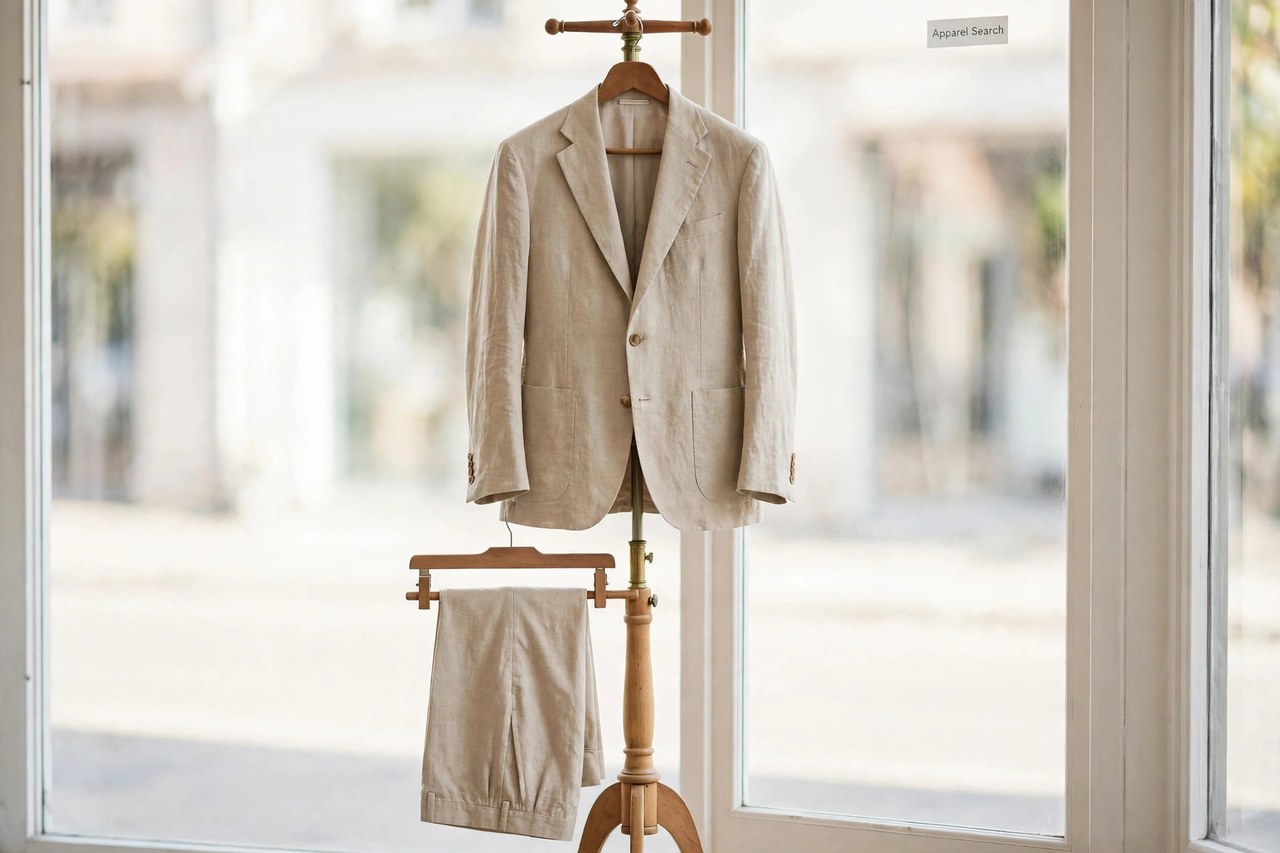
The linen suit is summer's tailored answer: a jacket and trousers cut from flax cloth that breathes like nothing else in tailoring, absorbs moisture without feeling damp, and develops a lived-in softness over a season of wear. Tailoring reached for linen wherever empires and businesses met heat — colonial officials, Mediterranean summers, Caribbean and Southern weddings — and the modern summer calendar, full of outdoor ceremonies and warm-weather travel, keeps it permanently employed.
A linen suit must be judged by its own rules. It wrinkles — that is the fibre's nature, not a defect — its surface carries the slubs and slight irregularities of natural flax, and its construction is usually softer than a business suit's. Men who want armour should stay with high-twist wool; men who want to arrive at a July wedding looking composed rather than cooked should read on.
Cloth: Pure Linen and the Blends
Pure linen suiting runs from about 260 to 400 grams per metre; Irish linens at the heavier end wrinkle into softer, rounder folds and drape almost like a light wool, while featherweight tropical linens crease sharply and can look tired by lunch. The slubbed, slightly uneven yarn is part of the cloth's character — a perfectly uniform surface usually means the linen has been blended or heavily finished.
Blends solve specific problems. Linen-wool adds resilience and sheds creases faster, keeping a cleaner line through a working day — the best choice for a linen suit that must attend meetings. Linen-cotton softens the hand and the price. Linen-silk adds a faint lustre for evening summer events. A small amount of synthetic fibre improves crease recovery further but costs breathability, which is the whole reason for the suit, so keep it minimal or skip it.
Construction: Soft Shoulders, Light Canvas, Less Lining
Summer construction strips the suit down. Shoulders are natural or lightly padded, chest canvas is soft or absent in fully unstructured jackets, and linings shrink to the sleeves and upper back — a half-lined or butterfly-lined jacket — or disappear so air moves through the cloth itself. Trousers are usually flat-front with a plain hem and a slightly easier leg than winter tailoring, because linen worn skin-tight both looks and feels wrong in heat.
Details stay summery: patch pockets on casual versions, horn or corozo buttons in pale tones, and lapels that roll softly rather than snap. A three-roll-two button stance and a slightly shorter jacket suit the relaxed register; peak lapels and ticket pockets push the same cloth toward garden-party formality. Fit should skim rather than cling — linen has no stretch and no forgiveness at a strained seam.
Colours, Wearing and Care
The palette is sunlit: sand, stone, ivory and tobacco are the classics, navy and mid-blue the most versatile, and olive, sage and dusty pastels the fashion register. A navy linen suit is the strategic first buy — it works at weddings, offices and dinners, and the jacket doubles as a blazer over chinos or jeans, while the trousers join the summer rotation on their own. White and cream suits are magnificent and unforgiving in equal measure.
Embrace the wrinkle intelligently: sharp creases at the elbows, seat and knees are linen being linen, and pressing a suit back to boardroom flatness every hour is a losing game — press it properly before the event, then let it live. Wear it with loafers, suede shoes or clean minimal trainers according to formality, an open-collar shirt or a knitted polo as readily as with a tie. Care means rest — flax needs days between wears to release creases — gentle pressing with steam, and dry-cleaning sparingly, since harsh cleaning strips the fibre's natural lustre.
Common Questions
Do linen suits wrinkle too much for a wedding?
No — they are a wedding staple in warm climates precisely because guests expect linen to crease gracefully. Choose a mid-weight cloth or a linen-wool blend, press the suit before the day, and avoid featherweight linens that crease sharply. Soft folds read as ease; only a crushed, slept-in suit looks wrong.
What is the best colour for a first linen suit?
Navy. It carries the most occasions, flatters the widest range of shirts and shoes, and separates into a blazer and summer trousers that each work hard on their own. Sand and stone are the choices if your summer calendar is mostly daytime and outdoors.
How do you care for a linen suit?
Rest it at least two days between wears on a good hanger, steam or press lightly to refresh, spot-clean marks promptly, and dry-clean only when necessary. Store it unbagged in a ventilated wardrobe; linen is a strong fibre that lasts for years when it is not over-cleaned.
More Men's Outerwear & Wardrobe Basics Guides
All thirteen guides in this cluster, in alphabetical order — classic coats, jackets, tailoring, trousers and shoes:
More to Explore on Apparel Search
Looking for Men's Clothing Stores?
This guide helps you choose a men's linen suit in the right weight and construction. To browse where to buy, visit our mens clothing store directory, where you can find retailers that carry them.