Men's Topcoat Guide
The overcoat for the weeks when a heavy coat is too much: a topcoat keeps the polish of tailoring at half the weight, from October through April.
Shop Men's Topcoats Now
Shop Men's Topcoats on Amazon Shop Men's Topcoats on eBayThe Amazon and eBay links on this page are affiliate links. If you make a purchase through them, Apparel Search may earn a commission.
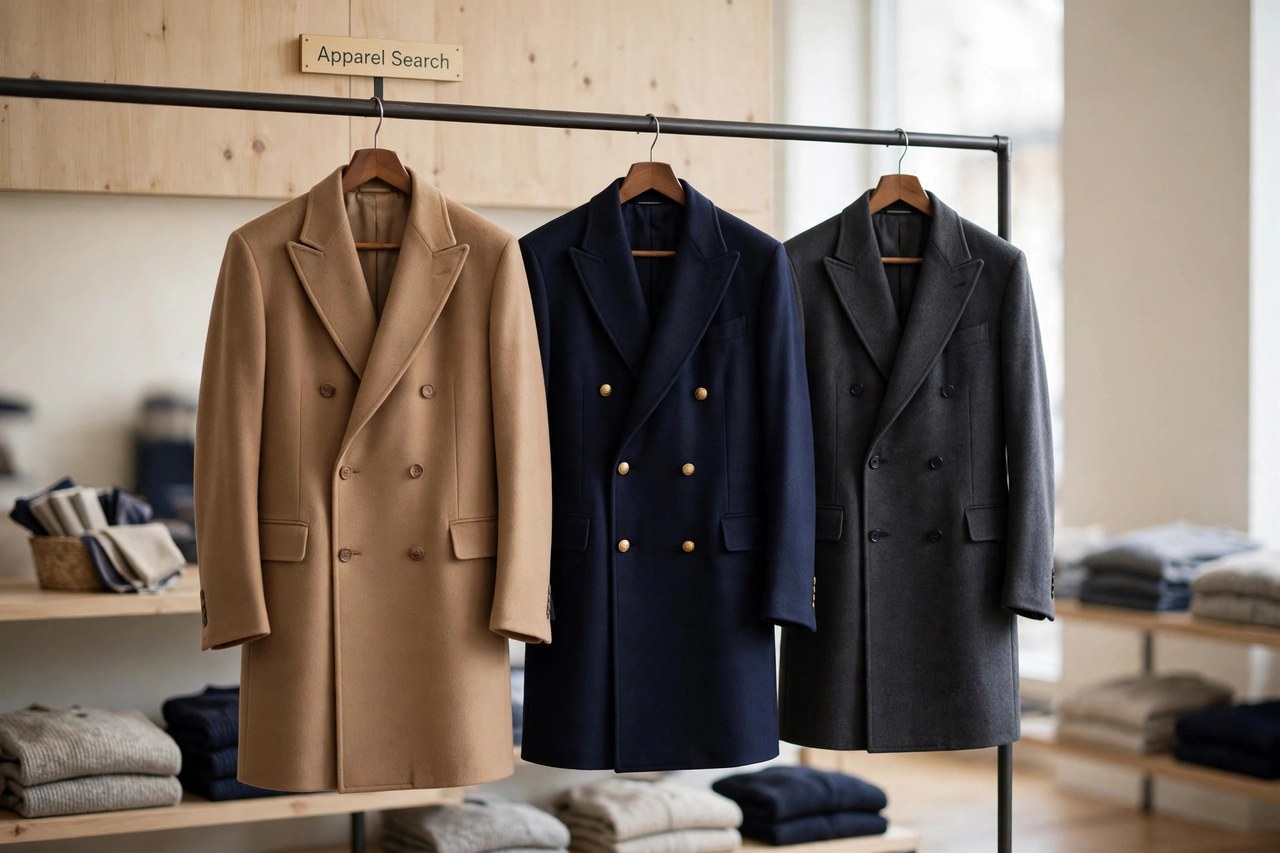
A topcoat is a lightweight dress overcoat — the same single-breasted, knee-length silhouette as a full winter overcoat, cut from cloth roughly half the weight. The name is literal: it is the coat that goes on top, over a suit, in weather that is cold but not brutal. In much of the country that makes it the most-used formal coat a man owns, working from the first frost through the last raw week of spring.
Because it carries less bulk, the topcoat is also the easiest tailored coat to wear well. It follows the shoulder of the jacket beneath, moves when you walk, and never gives the padded, armoured feeling a heavy overcoat can. Men who travel for work rate it highly: it packs flatter, wrinkles less consequentially, and looks as correct over a suit in a hotel lobby as it does over knitwear on the flight home.
Topcoat, Overcoat or Chesterfield?
The three terms describe one family at different weights and formality levels. An overcoat is the generic heavy garment; a Chesterfield is the formal, often velvet-collared member of the family; a topcoat is defined mainly by cloth weight — typically a wool twill, gabardine or covert cloth in the 350-to-500 gram range, against 650 grams and up for a deep-winter coat. Construction is lighter too: less chest canvas, softer shoulders, sometimes a half lining or none.
That lightness decides when each coat comes out. Below freezing with wind, the heavy overcoat or Chesterfield wins. In the large middle band of the cold season — dry days between about 30 and 50 degrees Fahrenheit — the topcoat is warmer than a raincoat, smarter than a quilted jacket, and comfortable indoors for the few minutes before you check it. Read the product name loosely, though: some makers call any dress coat a topcoat, so check the fabric weight and lining rather than the label.
Fabrics and Colours
Wool gabardine is the classic topcoat cloth: tightly woven, smooth-faced, naturally shower-resistant and resistant to creasing, which is why it has clothed travellers for a century. Covert cloth — a steep twill in fawn or sage with a flecked surface — brings a country accent, while a fine herringbone or a wool-cashmere twill reads pure city. Cotton gabardine versions shade into raincoat territory and suit milder climates.
Camel is the topcoat colour of popular imagination, and it earns the place: it warms up navy and grey suits and looks intentional over denim. Navy is the safer first buy for a man whose wardrobe is mostly dark tailoring, and charcoal is the most formal. Because the coat is the first thing seen, an even, matte surface matters more than pattern; keep checks for the suit underneath.
Fit Over a Suit, and Care
Try a topcoat on over a jacket, always. Size labels assume tailoring underneath — if you plan to wear it mostly over knitwear, consider the smaller of two sizes. Shoulders should match your own, the front should close without pulling at the middle button, sleeves should cover the jacket sleeve and show a sliver of shirt cuff, and the hem should land at or just above the knee.
A single centre vent keeps the coat from riding up when you sit in a car or train seat, and that detail is worth insisting on for a travelling coat. Care mirrors any tailored garment: brush it down, hang it broad, rest it between wears, and dry-clean sparingly — once a season is usually enough for a coat worn over clean tailoring. Store it bagged in summer; moths find wool gabardine exactly as appealing as you do.
Common Questions
When do you wear a topcoat instead of an overcoat?
Whenever the weather is cold but not severe — roughly the 30-to-50-degree band, dry days, and most business travel. The topcoat's lighter cloth keeps you comfortable walking between buildings and sitting in heated rooms, where a heavy overcoat quickly becomes a burden to carry and check.
Is a topcoat warm enough for winter?
For a typical city winter day over a suit, yes, with a scarf and gloves covering the gaps at neck and wrist. For prolonged outdoor time well below freezing, layer a fine knit under the suit jacket or choose the heavier overcoat — a topcoat is engineered for transit, not for standing on a platform for an hour.
What colour topcoat should a man buy first?
Navy, if his suits are navy, grey and charcoal — it disappears correctly over all of them and works after dark. Camel is the better first choice for a man who also wants the coat to lift casual outfits of denim and knitwear, and who does not mind a coat that is noticed.
More Men's Outerwear & Wardrobe Basics Guides
All thirteen guides in this cluster, in alphabetical order — classic coats, jackets, tailoring, trousers and shoes:
More to Explore on Apparel Search
Looking for Men's Clothing Stores?
This guide helps you choose a men's topcoat in the right weight for the season. To browse where to buy, visit our mens clothing store directory, where you can find retailers that carry them.