Men's Overcoats Guide
An overcoat is a long coat intended to be worn as the outermost garment, which usually extends below the knee. A coat itself is a garment worn for warmth or fashion, typically with long sleeves, open down the front and closing by buttons, zippers, hook-and-loop fasteners, toggles, a belt or a combination of them, with possible collars, shoulder straps and hoods. Overcoats are most commonly used in winter, when warmth is more important, and they are the tailored summit of our outerwear family: the coat a suit wears outdoors. This guide covers the styles, the cloth, and the distinction that defines the category - overcoat against topcoat.
Shop Men's Overcoats Now
Shop Men's Overcoats on Amazon Shop Men's Overcoats on eBayThe Amazon and eBay links on this page are affiliate links. If you make a purchase through them, Apparel Search may earn a commission.
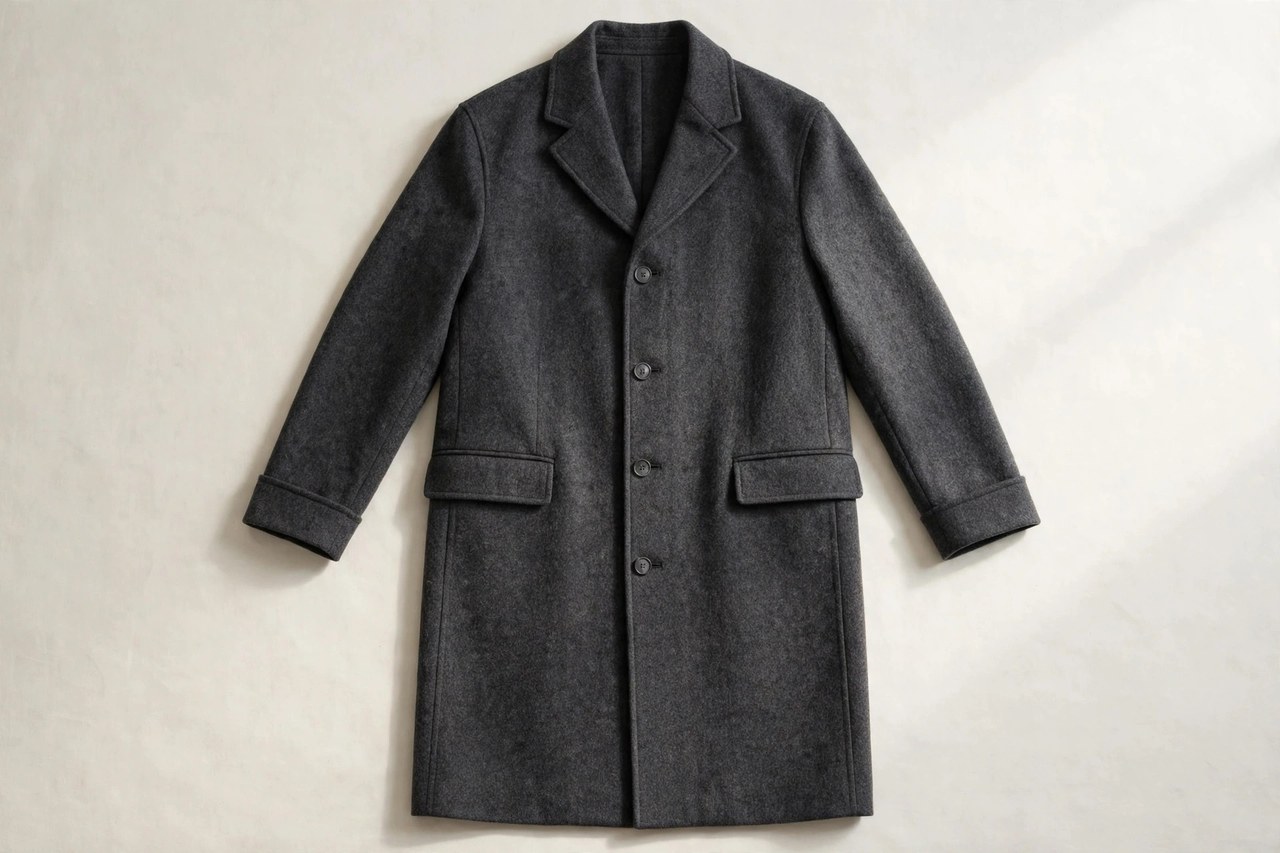
An overcoat is a long coat intended to be worn as the outermost garment, which usually extends below the knee. A coat itself is a garment worn for warmth or fashion, typically with long sleeves, open down the front and closing by buttons, zippers, hook-and-loop fasteners, toggles, a belt or a combination of them, with possible collars, shoulder straps and hoods. Overcoats are most commonly used in winter, when warmth is more important, and they are the tailored summit of our outerwear family: the coat a suit wears outdoors. This guide covers the styles, the cloth, and the distinction that defines the category - overcoat against topcoat. This guide covers the styles worth knowing, the fit points that decide comfort, the fabrics and construction that separate a good buy from a regret, and the simple care that makes the garment last.
Overcoat, Topcoat, Outercoat
Hold the overcoat/topcoat line firmly, because shops blur it. Together they are the outercoats, but an overcoat is made from heavier cloth and cut to end below the knee, while a topcoat is shorter, ending at or above the knees, and usually made from lighter-weight cloth such as gabardine or covert. Within overcoats, the classic styles are the Chesterfield (single-breasted, fly-front, the formal default), the double-breasted polo and British warm (military in origin, the warmest tailored cut), the raglan-sleeved balmacaan in rougher tweeds, and the duffle with its toggles and hood. Cloth decides both warmth and life: heavy wool and wool-cashmere for the dress coats (see the cashmere overcoats guide in C), covert and gabardine at the topcoat end, and melton and tweed where weather matters more than ceremony. A good overcoat is built like tailoring, because it is tailoring: canvassed chest, set sleeves, a lining that lets it glide over a jacket.
Outerwear value hides below the surface: taped versus merely stitched seams, a zipper whose slider runs true under one hand, cuffs and hems that adjust to seal weather out, and a lining slippery enough to glide over the layers beneath. Shoulder build decides the hang over knitwear or a jacket, and pocket engineering decides whether hands and kit ride where your body expects them. Specify for the worst honest day, not the brochure day.
Fit It Over the Jacket
Fit an overcoat over a jacket, because that is its job: it should close over a suit coat or heavy sweater without pulling at the buttons, its own shoulders sitting over the jacket's without extending past them into costume. Length is the category's signature - below the knee, traditionally to mid-calf for full weather coverage, though modern cuts stop just below the knee; anything at or above the knee is a topcoat whatever the label says. Sleeves should cover the jacket sleeve and shirt cuff and reach the base of the thumb's first knuckle with arms relaxed, and the collar should stand against wind without strangling the scarf it will hold. Try it sitting, driving-reach and buttoned to the top: an overcoat is worn in weather and in cars, not in front of mirrors, and it must work in both postures it will actually meet.
Fit outerwear over the bulkiest layer it will honestly cover, and test the working range: arms forward as if driving, arms overhead, sitting with every closure fastened. The coat's shoulders should echo yours rather than extend past them, closures should meet without strain, and the hem must reach the coverage the garment exists to give. A coat fitted over a T-shirt alone belongs to a climate you may not live in.
A Decade Garment's Care
An overcoat is a decade garment, and its care is a tailor's routine rather than a laundry. Brush it down after wear, hang it on a broad hanger that fills the shoulders, rest it a day between wearings, and store it for summer clean, in a breathable garment bag with cedar against moths - never sealed in plastic, never put away with the season's soil in the cloth. Dry-clean sparingly, once a season at most, because each cleaning costs the cloth a little life; spot-clean and press between. Buttons, lining tears at the armhole and moth attention are the three failures to catch early, at the autumn inspection, when a tailor can still fix each in minutes. Kept this way, heavy wool overcoats routinely outlast the suits they were bought to cover.
Hang outerwear on broad hangers that carry the shoulders, rest it between wears, and resist washing it often - spot-clean first, and wash by the maker's method with the detergent the fabric demands when a full clean is due. Refresh water-repellent finishes when rain stops beading, never store a coat dirty or compressed, and send leather and tailored pieces to professionals rather than experimenting at home.
Common Questions
What is the difference between an overcoat and a topcoat?
Length and cloth weight. An overcoat is a long coat worn as the outermost garment, usually extending below the knee, and made from heavier cloth because it is used in winter when warmth matters more. A topcoat is shorter, ending at or above the knees, and usually made from lighter-weight cloth such as gabardine or covert. Together the two are known as outercoats - and a coat sold as an overcoat that stops above the knee is, by the classic definition, really a topcoat.
What are the classic men's overcoat styles?
The Chesterfield - single-breasted with a concealed fly front - is the formal default over a suit. The double-breasted polo coat and the military-derived British warm are the warmest tailored cuts. The balmacaan, with raglan sleeves, suits rougher tweeds and wetter weather, and the duffle closes with toggles and carries a hood. Cloth follows style: wool and wool-cashmere blends for dress coats, melton and tweed for weather, gabardine and covert at the lighter topcoat end.
How should an overcoat fit over a suit?
It must close over the jacket without pulling, with its shoulders sitting over the suit's shoulders rather than extending past them. Length should reach below the knee - mid-calf in the traditional cut - sleeves should cover jacket sleeve and cuff, and the collar should stand against the wind while leaving room for a scarf. Test it sitting and reaching as if driving, buttoned fully: those are the postures an overcoat actually works in.
More in Men's Clothes Guide O
Overcoat Against Topcoat
A coat is a garment worn by both men and women, for warmth or fashion; coats typically have long sleeves and are open down the front, closing by means of buttons, zippers, hook-and-loop fasteners, toggles, a belt, or a combination of some of these, and other possible features include collars, shoulder straps and hoods. An overcoat is a type of long coat intended to be worn as the outermost garment, which usually extends below the knee. Overcoats are most commonly used in winter when warmth is more important. They are sometimes confused with or referred to as topcoats, which are shorter and end at or above the knees; topcoats and overcoats together are known as outercoats. Unlike overcoats, topcoats are usually made from lighter weight cloth such as gabardine or covert, while overcoats are made from heavier cloth or fur.
Looking for Men's Clothing Stores?
This guide explains men's overcoats. To browse where to buy, visit our men's clothing store directory, where you can find retailers that carry them.