Men's Outdoor Apparel Guide
Outdoor apparel is clothing built for the outdoorsman - for fishing, hunting, hiking, rock climbing, snowboarding and every other form of outdoor adventure. Yes, most clothing can be worn outdoors; this category is narrower and more serious: garments engineered for the open air, the countryside away from cities and buildings, where weather, terrain and hours outside are the design brief. Where our outerwear guide in this same letter covers the outermost layer as a garment class, this guide covers the whole outdoor kit as a system - base, insulation, shell, legs, hands, head and feet working together.
Shop Men's Outdoor Apparel Now
Shop Men's Outdoor Apparel on Amazon Shop Men's Outdoor Apparel on eBayThe Amazon and eBay links on this page are affiliate links. If you make a purchase through them, Apparel Search may earn a commission.
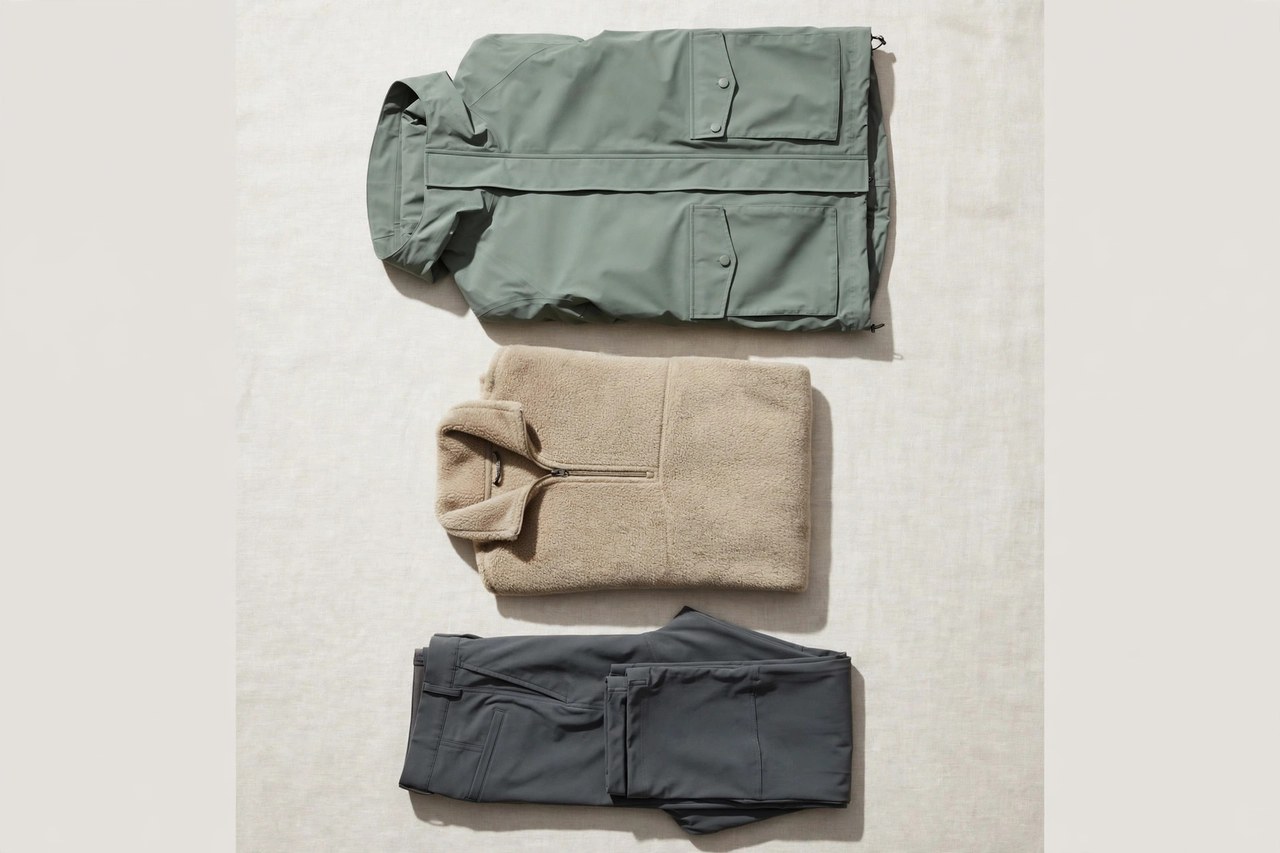
Outdoor apparel is clothing built for the outdoorsman - for fishing, hunting, hiking, rock climbing, snowboarding and every other form of outdoor adventure. Yes, most clothing can be worn outdoors; this category is narrower and more serious: garments engineered for the open air, the countryside away from cities and buildings, where weather, terrain and hours outside are the design brief. Where our outerwear guide in this same letter covers the outermost layer as a garment class, this guide covers the whole outdoor kit as a system - base, insulation, shell, legs, hands, head and feet working together. This guide explains what to look for, how the sizing actually works, which fabrics and constructions earn their price, and how to care for the garment so it keeps doing its job season after season.
The Layering System, Head to Foot
Build the kit by layers, because no single garment does an outdoor day. The base layer manages moisture against the skin - merino wool or synthetics, never cotton, which chills when wet. The mid layer insulates: fleece, down or synthetic fill chosen by how wet the day may be, since down loses its loft soaked and synthetics keep most of theirs. The shell layer - the province of our outerwear guide - stops wind and rain. Legs follow the same logic: quick-drying trekking trousers such as the nylon pants in our N guide, ski pants and skiwear for snow, alongside hunting apparel, hats, gloves and boots. Retailers for the category include Backcountry, REI, L.L.Bean, Sierra and Dick's Sporting Goods, and brands such as The North Face, Patagonia, Salomon, Osprey and Coleman build their ranges around exactly this layering logic. The sustainable fashion questions matter here too, because outdoor gear lives or dies by how long it stays in service.
The fabrics behind each layer — the wicking base layer, the insulating mid layer and the waterproof-breathable shell — are covered fabric by fabric in our Performance Fabrics Guide.
Workwear is judged at the stress points, because the job finds them first: bar-tacked pocket corners and belt loops, double or triple-stitched main seams, reinforced knees, elbows and seats, and hardware - zippers, snaps, rivets - rated for daily cycling rather than occasional wear. Fabric weight is a specification, not a brag: heavier cloth resists abrasion and holds shape, lighter cloth breathes and dries, and the right answer is the one matched to the actual shift, climate and laundry the garment will live in.
Fit for the Activity
Fit outdoor apparel by activity, not by mirror. A shell must close over the bulkiest mid layer you own without binding when you reach, paddle, cast or climb; a base layer must touch the skin everywhere without a tourniquet anywhere, because air gaps are cold gaps and compression is a cold line. Trousers get the dynamic test - high step, squat, kneel - with the boots they will actually meet, and lengths that clear the ground rather than wick it. Hats and gloves fit by measurement: head circumference for one, hand length and width for the other, and both are better bought a fraction generous than a fraction tight, because tight extremities are cold extremities once blood flow slows in the cold.
Fit workwear in the postures of the job: reach overhead, bend, kneel, climb, sit through a charting session or a cab ride. Seams should never be the thing that stops a movement, waistbands should stay where they were put without a belt doing structural work, and lengths should clear the floor and the machinery. Work garments are sized generously by design - buy your measured size and let the cut do its job, rather than sizing down into a uniform that fights every task.
Care for Technical Treatments
Outdoor gear repays a care routine matched to its treatments. Technical shells wash with technical detergent - household detergents and softeners clog breathable membranes and water-repellent finishes - and their repellency refreshes with heat or a reproofing treatment when rain stops beading. Down dries in a tumble dryer on low with clean tennis balls or dryer balls to restore loft; synthetics line dry in an hour. Store insulation uncompressed so its loft survives the off-season, hang shells rather than stuffing them, and repair early: a patched shell and a resewn seam are the category's normal mid-life, and the outdoor wardrobe that gets mended is the one still working a decade on.
Work garments earn a laundry system, not a laundry day: wash by the employer's or the label's hygiene rules, treat stains before heat can set them, and inspect as you fold - a pocket corner letting go, a hem fraying, a button hanging by a thread are all two-minute repairs now and garment failures next month. Keep the rotation honest: a spare set washed and ready is what makes daily laundering possible without wearing any single set to death.
Common Questions
What counts as outdoor apparel, as opposed to ordinary clothes worn outside?
Clothing designed for outdoor pursuits - fishing, hunting, hiking, rock climbing, snowboarding and other outdoor adventure - where weather, terrain and long hours in the open air set the requirements. Most clothing can be worn outdoors, but this section is about clothing for the outdoorsman, built as a system of moisture-managing base layers, insulating mids and protective shells rather than as street clothes used outside.
Why do outdoor guides insist on layering instead of one warm coat?
Because conditions change faster than a wardrobe can. A base layer moves sweat off the skin, a mid layer traps warmth, and a shell stops wind and rain - and each can be added, vented or shed as the day warms, cools or turns wet. One heavy coat commits you to a single guess at the morning's weather; three light layers adjust all day. The system also spreads cost and wear across pieces that each do one job well.
How should outdoor clothing fit differently from street clothing?
It is fitted over and for movement. Shells must close over your bulkiest insulation and still let you reach, cast, paddle or climb; base layers must contact the skin without constricting it; trousers must pass a high-step, squat and kneel test in the boots they will be worn with. Extremities run generous - a slightly roomy glove or hat stays warmer than a tight one, because constricted blood flow is what actually chills hands and heads.
More in Men's Clothes Guide O
Clothing for the Outdoorsman
The outdoors is essentially the natural environment in the open air, countryside away from cities and buildings, and outdoor apparel is for fishing, hunting, hiking, rock climbing, snowboarding, and any other form of outdoor adventure — clothing for the outdoorsman, a man who spends time in outdoor pursuits or sports, whether that means a quick day hike, a weekend adventure or an extended excursion. Outdoor retailers include Back Country, REI, L.L.Bean, Sierra Trading Post and Dick’s Sporting Goods, and the category’s brands include The North Face, Coleman, O’Neill, Diamondback, Osprey, Salomon and Patagonia, noting that quality outdoor gear improves the experience of biking, hiking, camping and everything in between.
Looking for Men's Clothing Stores?
This guide explains men's outdoor apparel. To browse where to buy, visit our men's clothing store directory, where you can find retailers that carry them.