Men's Ski Pants Guide
Men's ski pants (and their close sibling, snow pants) are waterproof, insulated trousers built for the mountain: a weatherproof shell, warmth that works while you are moving and freezing while you are not, and a cut shaped around a ski boot. They are the bottom half of the skiwear system, and they are specified like equipment - waterproof ratings, venting and boot gaiters matter more here than in any other trouser a man owns.
Shop Men's Ski Pants Now
Shop Men's Ski Pants on Amazon Shop Men's Ski Pants on eBayThe Amazon and eBay links on this page are affiliate links. If you make a purchase through them, Apparel Search may earn a commission.
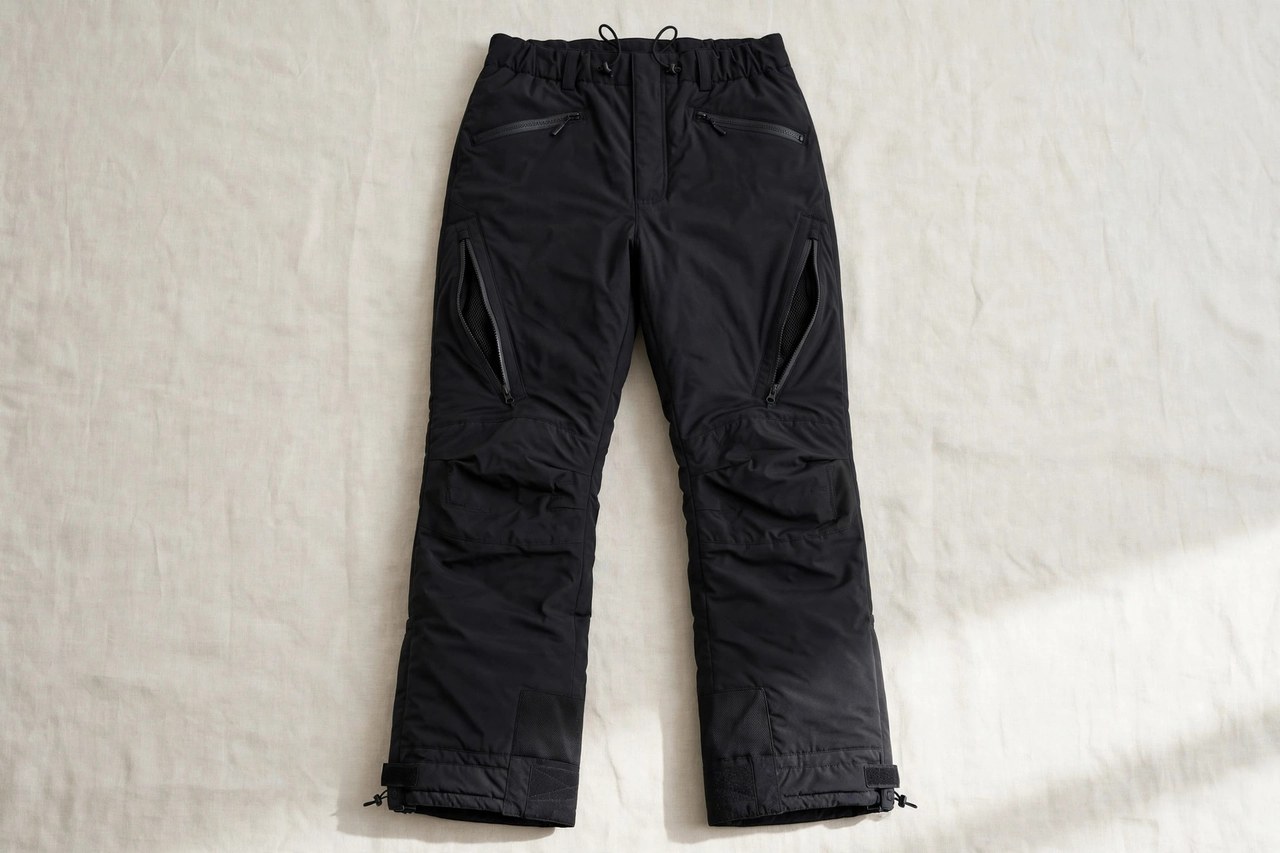
Men's ski pants (and their close sibling, snow pants) are waterproof, insulated trousers built for the mountain: a weatherproof shell, warmth that works while you are moving and freezing while you are not, and a cut shaped around a ski boot. They are the bottom half of the skiwear system, and they are specified like equipment - waterproof ratings, venting and boot gaiters matter more here than in any other trouser a man owns. This guide walks through the choices that matter - style, fit, fabric and finish - with the practical detail a product listing rarely gives you, and closes with the care habits that keep the garment in service.
Membranes, Insulation and Boot-Proof Details
The specifications are printed on better pants, and they mean things. Waterproof ratings (5,000 to 20,000+ mm) and breathability ratings describe the membrane or coating; fully taped seams separate genuine weatherproofing from marketing. Insulation divides the market: lightly insulated pants for resort skiers who run warm, shell pants worn over base layers for touring and spring, and warmly insulated pants for the coldest lifts. The ski-specific details are the real checklist: internal boot gaiters that seal over the boot, reinforced scuff guards where edges bite the inner ankle, zippered thigh vents for the climb or the chairlift sun, and articulated knees cut for a bent-leg sport.
For any leg garment the rise is the first specification, because it decides sitting comfort before fabric gets a vote: measure from front waistband through to back and compare it with a pair that already works. Then audit the stress points - bar-tacked belt loops and pocket corners, double-stitched inseams, hems finished evenly - and the pocketing, which should be deep, smooth and strong enough to carry what the garment's pockets invite you to carry.
Fit and Sizing
Fit ski pants over the base layer you will actually wear, and size for the crouch: a skier's working position is a deep knee bend, and the waistband should stay at the waist with suspenders or a belt rather than migrating. Length runs to cover the boot, and the cuff should sit on the boot's upper without dragging behind the heel into the binding zone. The mountain test in the shop is unglamorous and decisive: squat fully, lift a knee to your chest, and sit - if anything pulls, it will pull at altitude with consequences.
Measure where the waistband will actually sit, plus inseam to your preferred break, and thigh and seat for closer cuts. Then sit, squat and climb a step in the fitting room - a leg garment that only works standing still does not work. Waistbands relax roughly half an inch in wear and inseams shrink most in early washes, so buy the fit you want after those changes rather than the fit in the mirror.
Wearing and Care
Air ski pants out after every day - the linings hold a day's moisture - and wash them by the maker's method with technical detergent when dirt dulls the finish, never with fabric softener, which poisons membranes and DWR alike. Reproof when water stops beading. Check the scuff guards and gaiter elastics at season's end, store clean and uncompressed, and a good pair of pants will see a decade of seasons.
Wash leg garments inside out and cool; heat is the agent that fades dye, tires elastic and shortens inseams. Dry low or on the line, hang or fold promptly, and crease deliberately or not at all. Walk the stress points each season - hem edges, pocket corners, seat and inner thigh - and mend the small fray while it is still small: leg garments fail gradually, then suddenly, and the two-minute October repair prevents the November replacement.
Common Questions
Ski pants or snowboard pants - is there a difference?
Less every year, but the heritage shows: ski pants traditionally run a touch slimmer with reinforced inner-ankle scuff guards against steel edges and cuffs shaped for ski boots; snowboard pants run baggier with heavier seat and knee reinforcement for sitting and kneeling in snow. Modern crossover designs carry both feature sets. Buy for your sport's boot and your own build - the membrane ratings matter more than the label.
Insulated ski pants or a shell with layers?
Insulated pants are the simple, warm default for resort skiing in cold climates - put them on over a base layer and go. A shell plus chosen layers is the flexible system: touring, spring skiing and skiers who run hot control temperature by combination. If you ski one cold mountain all winter, insulation; if your season spans temperatures and efforts, the shell system earns its keep.
What do the waterproof numbers on ski pants mean?
The first number (in millimeters) is the water column the fabric resists before leaking - 10,000mm is solid resort weatherproofing, 20,000mm is storm-grade. The second (grams) is breathability, how much vapor escapes in a day. Seams decide whether either number is real: untaped seams leak through any membrane, so 'fully taped' is the phrase to find on the label.
More in Men's Clothes Guide S
Salopettes and Snow Pants
Ski pants, or salopettes when part of a two-piece ski suit, are usually made in the same fabric and color as the corresponding ski jacket, sometimes in the form of bib-and-brace with the jacket worn over them, and are also sometimes referenced as snow pants; their general purpose is to keep the wearer warm and dry. They belong to the suit family - the ski suit or snowsuit, one-piece or two - with the racers set apart: the one-piece race suits or speed suits worn by professional and junior racers to improve their speed. See also the pant styles terminology page.
Looking for Men's Clothing Stores?
This guide explains men's ski pants. To browse where to buy, visit our men's clothing store directory, where you can find retailers that carry them.