Men's Stretch Pants Guide
Men's stretch pants are trousers and casual pants woven or knitted with a percentage of elastane (or mechanical-stretch construction) so the cloth itself gives with the body - chinos that crouch, five-pocket pants that travel, dress trousers that sit through a working day without negotiation. Stretch is the defining material story of modern menswear's bottom half, and this guide explains what the percentages mean, where stretch helps, and where it quietly costs.
Shop Men's Stretch Pants Now
Shop Men's Stretch Pants on Amazon Shop Men's Stretch Pants on eBayThe Amazon and eBay links on this page are affiliate links. If you make a purchase through them, Apparel Search may earn a commission.
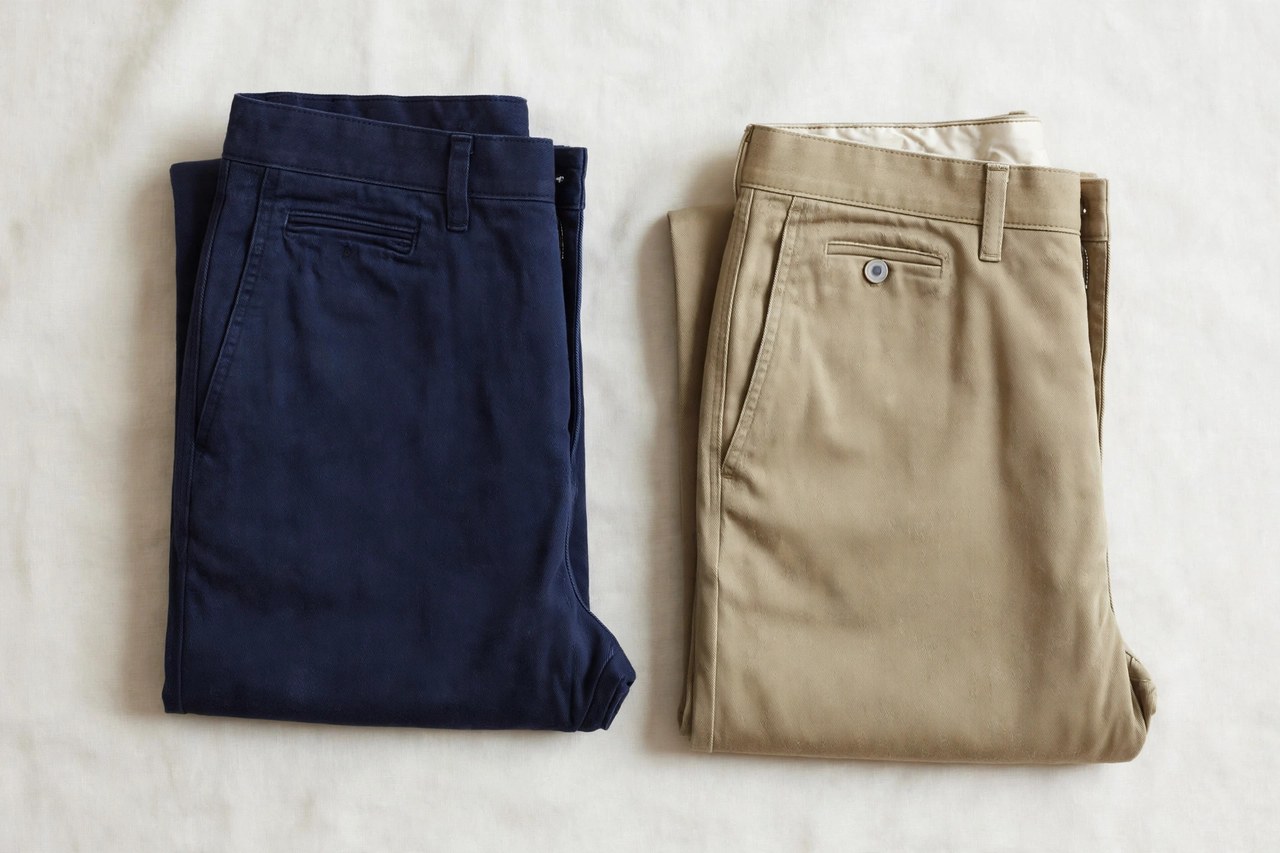
Men's stretch pants are trousers and casual pants woven or knitted with a percentage of elastane (or mechanical-stretch construction) so the cloth itself gives with the body - chinos that crouch, five-pocket pants that travel, dress trousers that sit through a working day without negotiation. Stretch is the defining material story of modern menswear's bottom half, and this guide explains what the percentages mean, where stretch helps, and where it quietly costs. This guide covers the styles worth knowing, the fit points that decide comfort, the fabrics and construction that separate a good buy from a regret, and the simple care that makes the garment last.
Percentages, Mechanical Stretch and Recovery
Stretch comes in honest and dishonest forms. One to two percent elastane in a cotton or wool twill is the professional standard: the cloth moves, recovers, and looks like the classic garment it is. Higher percentages (three to five) build the travel and commuter pant - nearly a legging's ease in a trouser's clothes. Mechanical stretch, from yarn and weave structure without elastane, is the quiet premium answer, immune to elastane's eventual fatigue. The costs are real and should be bought knowingly: elastane degrades with heat (the dryer is its executioner), high-stretch cloth shines and bags at the knee sooner than honest twill, and recovery - the pant returning to its line by morning - is the specification that separates good stretch from a slow surrender.
For any leg garment the rise is the first specification, because it decides sitting comfort before fabric gets a vote: measure from front waistband through to back and compare it with a pair that already works. Then audit the stress points - bar-tacked belt loops and pocket corners, double-stitched inseams, hems finished evenly - and the pocketing, which should be deep, smooth and strong enough to carry what the garment's pockets invite you to carry.
Fit and Sizing
Fit stretch pants to their future, not their first hour: they should be comfortable at purchase without being merely painted on, because they will relax half a size at the waist and knee across early wears, then stabilize if the cloth is good. The rise and seat checks still rule - sit, crouch, climb - but they now pass more easily, which is the point and the trap: a pant that only fits because it stretches everywhere is a pant sized wrong, wearing its elasticity as a crutch until the elasticity retires.
Measure where the waistband will actually sit, plus inseam to your preferred break, and thigh and seat for closer cuts. Then sit, squat and climb a step in the fitting room - a leg garment that only works standing still does not work. Waistbands relax roughly half an inch in wear and inseams shrink most in early washes, so buy the fit you want after those changes rather than the fit in the mirror.
Wearing and Care
Care is elastane conservation: wash cool, inside out, and dry low or on the line - every hot dryer cycle spends recovery the pant cannot earn back. Rest stretch pants a day between wears so the fibers complete their return; a rotation of two outperforms one hero pair noticeably in this category. Retire them when the knees bag permanently and the waist needs a belt's charity - in stretch, those are not patina, they are the material reporting its end.
Wash leg garments inside out and cool; heat is the agent that fades dye, tires elastic and shortens inseams. Dry low or on the line, hang or fold promptly, and crease deliberately or not at all. Walk the stress points each season - hem edges, pocket corners, seat and inner thigh - and mend the small fray while it is still small: leg garments fail gradually, then suddenly, and the two-minute October repair prevents the November replacement.
Common Questions
How much stretch should pants have?
For dressed and office wear, one to two percent elastane is the sweet spot: genuine movement, classic appearance, durable recovery. Three to five percent builds the comfort and travel category - wonderful on a plane, visibly casual in a boardroom. Above that you are in athleisure, whatever the label calls it. The label's percentage is a real specification; shop it like one.
Do stretch pants last as long as regular pants?
The cloth's base fiber lasts; the stretch does not, quite. Elastane fatigues with heat and time, so a stretch pant's second year is usually a little less recovered than its first, even washed cold and line dried. Mechanical-stretch and high-quality elastane constructions narrow the gap considerably. Expect a good stretch pant to give most of a comparable regular pant's life, with comfort as the dividend for the difference.
Why do my stretch pants bag at the knees?
The elastane at the knee - the highest-flex zone - has fatigued, usually heat-assisted. Prevention is the cure: cool washing, no hot dryer, rest days between wears, and buying quality recovery at the start. A garment steamer and a rest day recover early bagging; established bagging is structural and permanent, the pant's way of announcing its retirement.
More in Men's Clothes Guide S
Two-Way and Four-Way
The concept of stretch allows something to be made longer or wider without tearing or breaking, a property helpful for many garments; stretch fabric is a synthetic fabric which stretches, in two forms - two-way stretch fabrics stretch in one direction, usually from selvedge to selvedge, while four-way stretch fabrics, such as spandex, stretch in both directions, crosswise and lengthwise. Trousers are occasionally made with these stretch fabrics.
Looking for Men's Clothing Stores?
This guide explains men's stretch pants. To browse where to buy, visit our men's clothing store directory, where you can find retailers that carry them.