Men's Cashmere Overcoats Guide
A men's cashmere overcoat is the formal member of the coat family: a knee-length (or longer) tailored coat in cashmere or cashmere-rich cloth, worn over a suit or jacket, cut on the Chesterfield and polo-coat grammar of lapels, closed fronts and clean lines. It is the coat of occasions and of men whose winters are formal - and the single garment in which cashmere's drape produces its most visible effect, a coat that falls like poured cloth.
Shop Men's Cashmere Overcoats Now
Shop Men's Cashmere Overcoats on Amazon Shop Men's Cashmere Overcoats on eBayThe Amazon and eBay links on this page are affiliate links. If you make a purchase through them, Apparel Search may earn a commission.
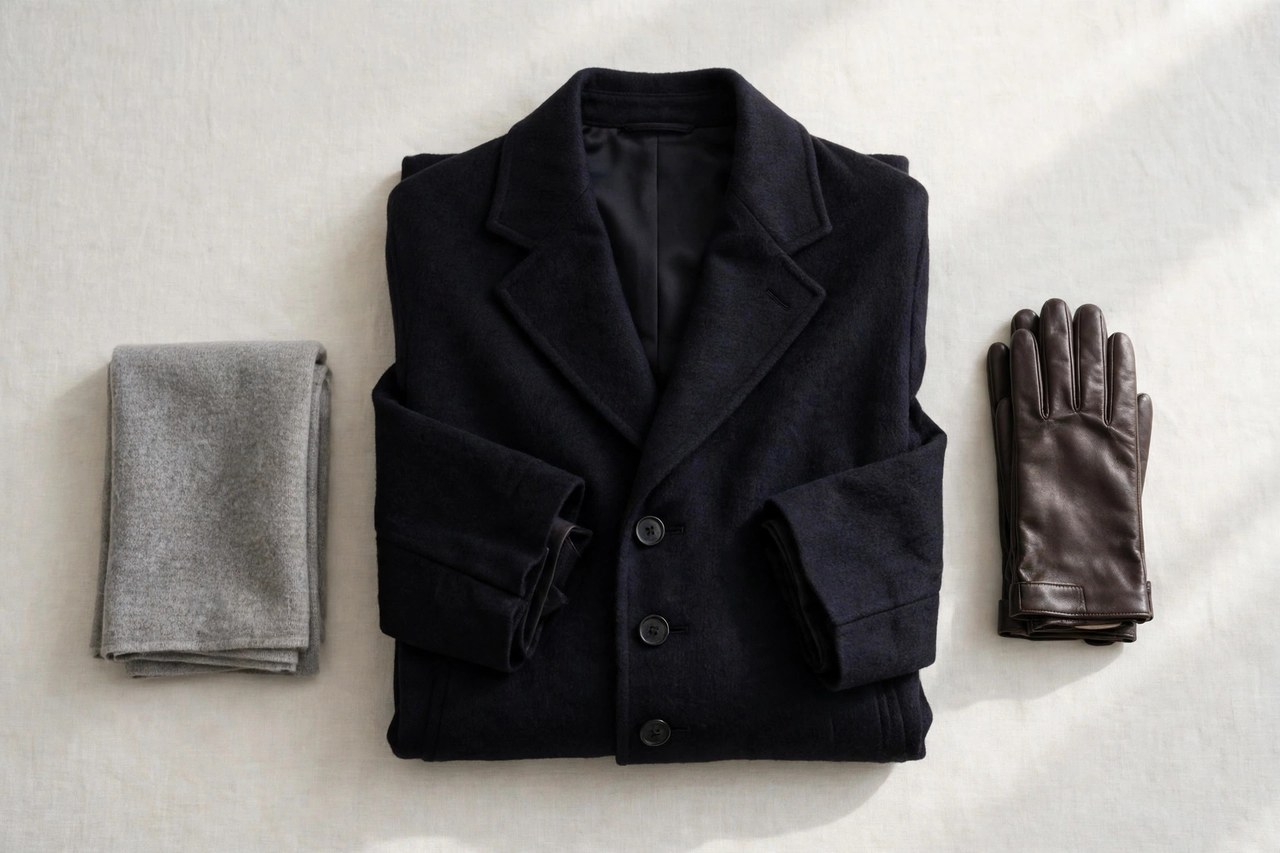
A men's cashmere overcoat is the formal member of the coat family: a knee-length (or longer) tailored coat in cashmere or cashmere-rich cloth, worn over a suit or jacket, cut on the Chesterfield and polo-coat grammar of lapels, closed fronts and clean lines. It is the coat of occasions and of men whose winters are formal - and the single garment in which cashmere's drape produces its most visible effect, a coat that falls like poured cloth. This guide is built around the questions buyers actually ask: which style, which size, which fabric, and what will it look like after a year of real use - answered in order, with the trade-offs stated plainly.
Styles and Construction
Overcoat cashmere is woven denser and heavier than the family's other cloths, frequently double-faced and often blended with fine wool at the points of wear; camel and navy are the canonical colors, charcoal and black the city alternatives. Construction is tailoring: a canvassed chest to hold the lapel's roll, hand-set sleeves in the best makes, a lining that lets the coat slide over a suit without dragging. Single-breasted fly-front styles read most formal; double-breasted and belted polo styles read most grand. Weight is the paradox to verify in hand - the right overcoat feels improbably light for its coverage.
Outerwear value hides below the surface: taped versus merely stitched seams, a zipper whose slider runs true under one hand, cuffs and hems that adjust to seal weather out, and a lining slippery enough to glide over the layers beneath. Shoulder build decides the hang over knitwear or a jacket, and pocket engineering decides whether hands and kit ride where your body expects them. Specify for the worst honest day, not the brochure day.
Fit and Sizing
Fit an overcoat over a suit, always: the shoulders must clear the jacket's without stacking into bulk, the chest must close over it with ease, and the sleeves should cover the jacket's sleeves to the same relationship the jacket keeps with the shirt. Length at or below the knee protects the suit's trousers and reads correctly formal; the modern just-above-knee cut suits shorter men and drivers. The coat should hang closed by its own balance when buttoned once.
Fit outerwear over the bulkiest layer it will honestly cover, and test the working range: arms forward as if driving, arms overhead, sitting with every closure fastened. The coat's shoulders should echo yours rather than extend past them, closures should meet without strain, and the hem must reach the coverage the garment exists to give. A coat fitted over a T-shirt alone belongs to a climate you may not live in.
Wearing and Care
Treat an overcoat as the wardrobe's capital asset: shaped hanger, two days' rest between wears, brushing after every use, spot-cleaning before professional cleaning, and summer storage cleaned and bagged with cedar in a closet that is not packed tight. Its cloth is too soft to forgive crushing and too valuable to risk to moths; the storage ritual is part of the purchase price, paid annually in ten minutes.
Hang outerwear on broad hangers that carry the shoulders, rest it between wears, and resist washing it often - spot-clean first, and wash by the maker's method with the detergent the fabric demands when a full clean is due. Refresh water-repellent finishes when rain stops beading, never store a coat dirty or compressed, and send leather and tailored pieces to professionals rather than experimenting at home.
Common Questions
What is the difference between a cashmere coat and a cashmere overcoat?
The overcoat is the tailored, formal subset - knee-length, structured, made to be worn over a suit - while 'cashmere coats' covers the whole family including car coats and casual styles. This guide treats the formal overcoat; the family page covers the rest. In shopping, the word overcoat on a short casual coat is marketing; judge by length and construction.
Single or double-breasted overcoat?
Single-breasted is the versatile default - it suits more builds, opens gracefully, and layers over both suits and knitwear. Double-breasted is warmer (double cloth over the chest) and grander, suiting taller frames and formal intent. Belted polo styles in camel are the classic third option, casual-formal in a way neither plain style manages.
How warm is a cashmere overcoat compared with wool?
As warm or warmer at noticeably less weight - the fiber's insulating efficiency is its point. Where wool wins is wind-beating density at the budget end and abrasion over years. For city winter formality, cashmere's warmth-to-weight plus its drape is the complete package; for rural winters and storms, a heavier wool or a technical coat serves harder use.
More in Men's Clothes Guide C
Looking for Men's Clothing Stores?
This guide explains men's cashmere overcoats. To browse where to buy, visit our men's clothing store directory, where you can find retailers that carry them.