Men's Cashmere Suits Guide
Men's cashmere suits are two-piece (occasionally three-piece) tailored suits in cashmere-blend suiting - the summit of the fiber's tailored range, where cashmere's drape and surface are applied to the most structured garment a man wears. Almost never pure cashmere, these suits blend the fiber with fine wool for the resilience a suit's trousers and seat demand, and they are bought by men who already own suits and are purchasing a sensation as much as a garment.
Shop Men's Cashmere Suits Now
Shop Men's Cashmere Suits on Amazon Shop Men's Cashmere Suits on eBayThe Amazon and eBay links on this page are affiliate links. If you make a purchase through them, Apparel Search may earn a commission.
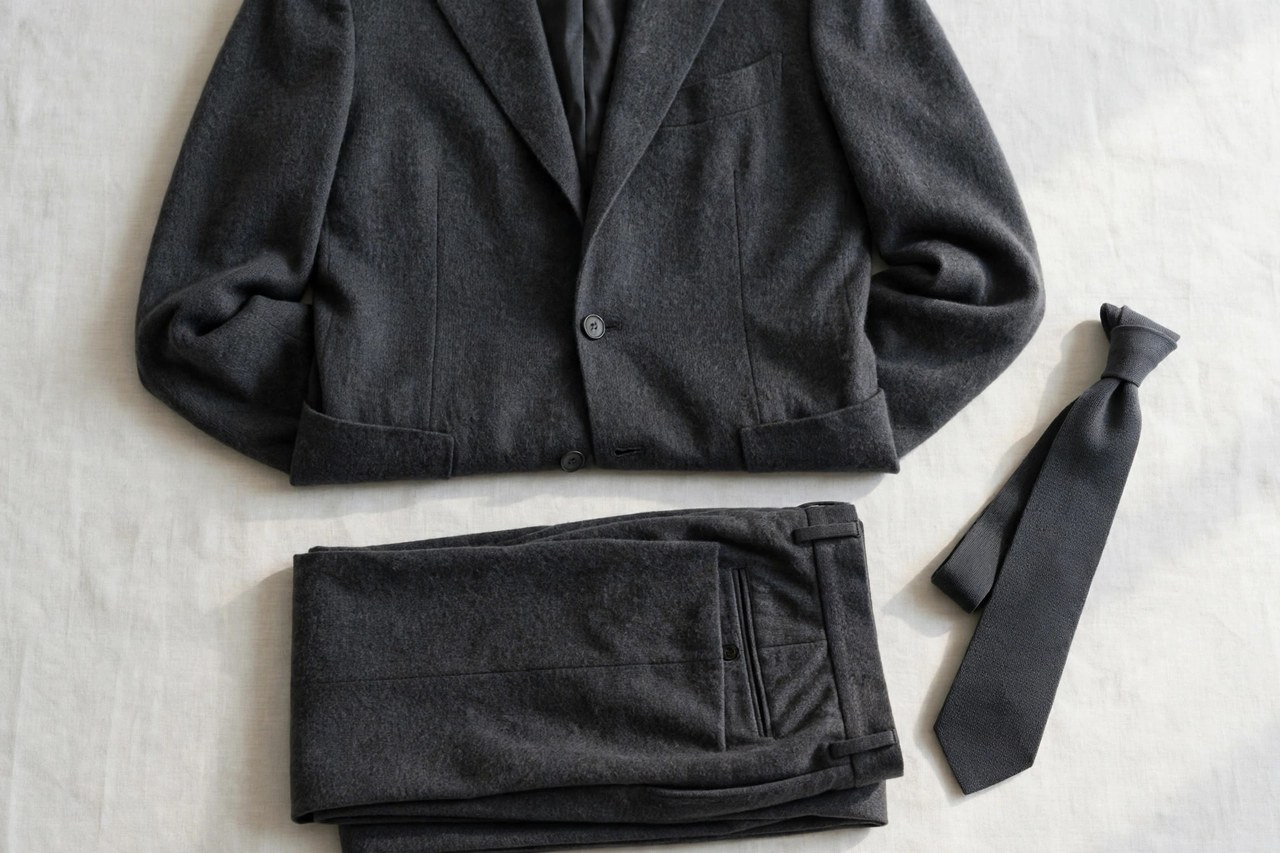
Men's cashmere suits are two-piece (occasionally three-piece) tailored suits in cashmere-blend suiting - the summit of the fiber's tailored range, where cashmere's drape and surface are applied to the most structured garment a man wears. Almost never pure cashmere, these suits blend the fiber with fine wool for the resilience a suit's trousers and seat demand, and they are bought by men who already own suits and are purchasing a sensation as much as a garment. This guide is built around the questions buyers actually ask: which style, which size, which fabric, and what will it look like after a year of real use - answered in order, with the trade-offs stated plainly.
Styles and Construction
Suiting blends run from a whisper of cashmere (a marketing suit) to fifteen or twenty percent (a true luxury cloth) and occasionally higher in jacket-only luxury makes; the hand difference is real but modest, and construction - canvassing, handwork, cutting - still outweighs fiber in a suit's total quality. Cashmere-blend cloth drapes softer and creases more kindly than crisp worsted, wrinkles relax out overnight with unusual completeness, and the surface reads matte and deep. It is a cloth for the man whose suits travel between meetings rather than building sites: abrasion at the trouser seat and inner thigh remains its honest limitation.
Outerwear value hides below the surface: taped versus merely stitched seams, a zipper whose slider runs true under one hand, cuffs and hems that adjust to seal weather out, and a lining slippery enough to glide over the layers beneath. Shoulder build decides the hang over knitwear or a jacket, and pocket engineering decides whether hands and kit ride where your body expects them. Specify for the worst honest day, not the brochure day.
Fit and Sizing
Fit a cashmere suit by pure tailoring rules - shoulders, chest, stance - with a lighter hand on alterations afterwards, since the soft cloth shows aggressive tapering as strain. Because the cloth relaxes, a cashmere suit that fits precisely on day one wears perfectly on day thirty; a tight one merely wears thin at its tight points faster. Buy the fit correct and let the cloth do its small settling without your help.
Fit outerwear over the bulkiest layer it will honestly cover, and test the working range: arms forward as if driving, arms overhead, sitting with every closure fastened. The coat's shoulders should echo yours rather than extend past them, closures should meet without strain, and the hem must reach the coverage the garment exists to give. A coat fitted over a T-shirt alone belongs to a climate you may not live in.
Wearing and Care
Rotate cashmere suits at least two days between wears - they are the wardrobe's most rest-dependent garments - brush after use, hang on proper suit hangers in space, and clean as rarely as honest care allows, with a cleaner trusted by tailors. Trousers are the wear item: some men order a second pair with the suit, the oldest wisdom in luxury tailoring, because the jacket will outlive one pair of trousers by years.
Hang outerwear on broad hangers that carry the shoulders, rest it between wears, and resist washing it often - spot-clean first, and wash by the maker's method with the detergent the fabric demands when a full clean is due. Refresh water-repellent finishes when rain stops beading, never store a coat dirty or compressed, and send leather and tailored pieces to professionals rather than experimenting at home.
Common Questions
Is a cashmere suit a good first suit?
No - it is a connoisseur's later suit. A first suit needs maximum versatility and abuse tolerance, which fine worsted wool provides at a fraction of the price. The cashmere suit rewards the man who already has the rotation to rest it and the calendar of indoor, seated occasions it suits. Buy it third or fourth, and it will feel like the summit it is.
How much cashmere should be in a cashmere suit?
Enough to feel: below five percent, the effect is mostly label. Ten to twenty percent in a fine wool base gives the genuine hand and drape with a tailored garment's wear life. Judge by the cloth in hand against a pure worsted - the cashmere blend should feel noticeably softer and fall noticeably softer when draped over your arm.
Do cashmere suits wrinkle?
They crease softly rather than wrinkling sharply, and they recover unusually well - a night's hanging releases most of a day's sitting creases, a property of the fiber's resilience in a woven cloth. They do not hold a trouser crease as crisply as hard worsteds; men who want a razor crease should choose their cloth accordingly.
More in Men's Clothes Guide C
Suit Fabrics
A cashmere suit belongs inside the wider tailoring library — the men’s suits guide and a survey of types of suit fabrics — because a cashmere suit is a fabric decision before it is a fashion one, and the blend question is part of that decision.
More to Explore on Apparel Search
- Men's Cashmere Clothing
- Men's Suits
- Men's Clothes
- Clothes
- Fashion Designers
- Popular Brands
- Cashmere fiber News
- Cashmere Definition
- Suits Definition
- bespoke
- made to measure
- difference between bespoke and made to measure
- ready-to-wear
- Men's Cashmere Clothing
- Men's Cashmere Fashion
- Men's Clothes Guide H-P
- Men's Clothes Guide Q-Z
Looking for Men's Clothing Stores?
This guide explains men's cashmere suits. To browse where to buy, visit our men's clothing store directory, where you can find retailers that carry them.