Men's Driving Shoes Guide
A moccasin with rubber pebbles where a sole should be: the driving shoe was engineered for pedals and adopted by summer everywhere.
Shop Men's Driving Shoes Now
Shop Men's Driving Shoes on Amazon Shop Men's Driving Shoes on eBayThe Amazon and eBay links on this page are affiliate links. If you make a purchase through them, Apparel Search may earn a commission.
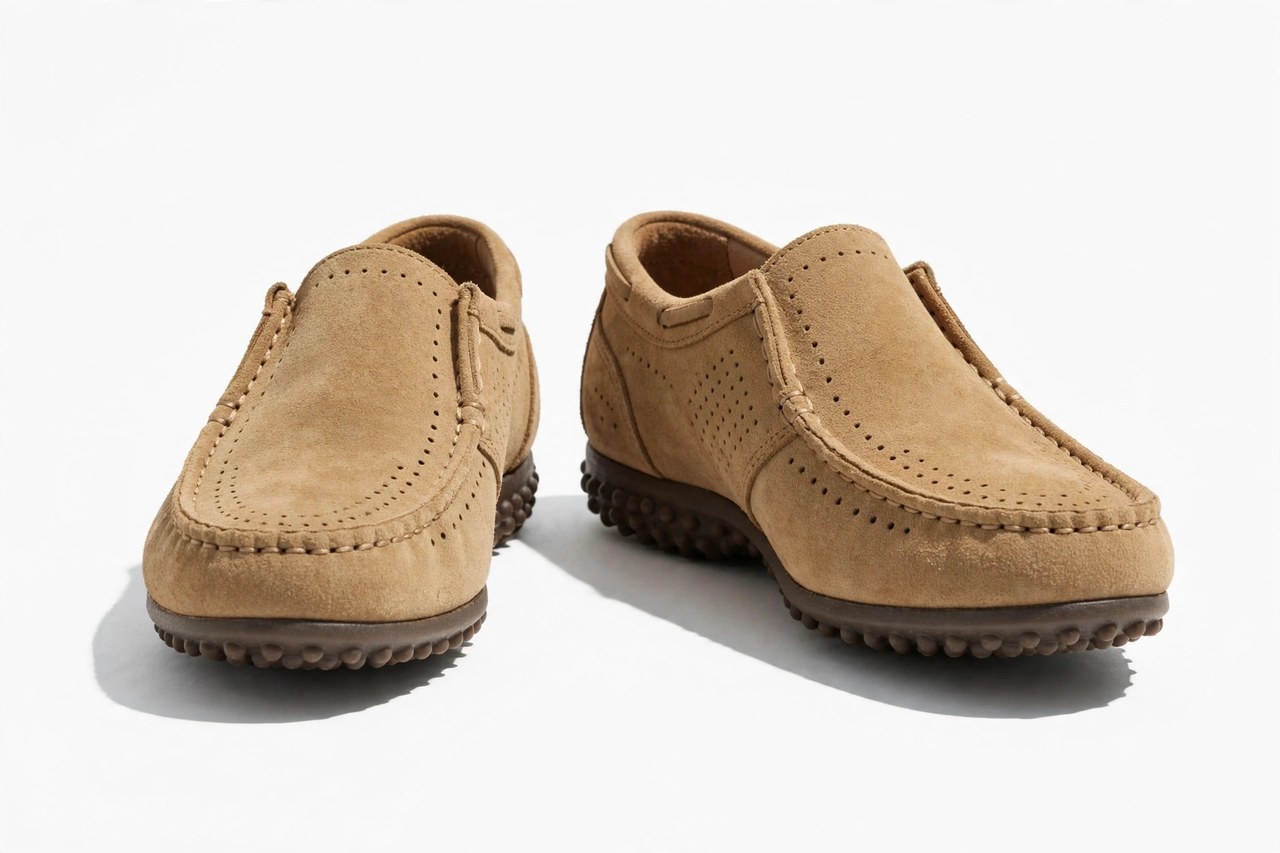
The driving shoe is a moccasin rebuilt for the car. Gianni Mostile patented the idea in Italy in 1963 and sold it as The Car Shoe: a soft moccasin upper with a sole made of small rubber pebbles — gommini — that grip a pedal, wrap up the heel where a driver's foot pivots, and flex like a slipper. Diego Della Valle's Tod's took the same construction worldwide in the late 1970s, and the gommino became one of the most recognisable soles in menswear.
Its purpose explains both its pleasures and its limits. A driving shoe is the most comfortable closed shoe most men will own — unstructured, glove-soft, made to be worn barefoot in summer — and precisely because its sole is a field of rubber studs rather than a road sole, it is not built for miles of pavement. Worn for what it is, it is irreplaceable.
Construction: Pebbles, Moccasin Stitching and the Heel
The true driving sole is a single piece of rubber-studded material running under the foot and curving up the back of the heel, so the heel rests on rubber, not leather, when it rolls against a car's floor. The pebbles — 133 of them on the famous Tod's pattern — are moulded studs that flex independently, giving the pedal feel and the floor grip the design exists for. Segmented soles, where rubber pads are set into a leather base, are the harder-wearing variant and the better choice if the shoes will walk more than they drive.
Above the sole, construction is moccasin work: a single piece of leather wraps under the foot and is gathered and stitched to the apron at the toe, which is why genuine driving shoes have that distinctive hand-stitched seam. Many carry the style's signature bow or a short lace tie at the vamp — a inheritance from boat shoes and moccasin tradition — and most are unlined, so the leather shapes itself to the foot within a few wears.
Suede, Leather and Colour
Suede is the classic upper and the most forgiving: it moulds quickly, hides the flex creases that mark smooth leather, and suits the shoe's casual register in tan, sand, chocolate and the bright blues and reds Italian makers love. Smooth and grained leathers read a fraction dressier, last longer on the toe, and in dark brown or black can stand in for loafers with tailored summer trousers at a pinch — though the pebble sole always keeps the shoe honest about being casual.
Colour choice is a commitment to a season: driving shoes live in the warm months and in warm-month palettes, with chinos, linen trousers and shorts. A first pair in a mid-brown suede goes with nearly all of it; the vivid suedes are second pairs, bought by men who already know the style works for them. Whatever the colour, protect suede before first wear — the low, open design drinks splashes and road dust alike.
Fit, Socks and the Honest Limits
Fit close. Driving shoes stretch — unlined suede especially — and a pair that starts loose ends sloppy, flopping at the heel it was designed to protect. Snug across the instep and just touching at the toes is correct on day one; a week of wear does the rest. They are traditionally worn without socks, or with invisible socks for hygiene, and that barefoot ease is half the product.
Now the limits, plainly: pebble soles wear fast on concrete, have no support for long walks, and offer nothing in the rain beyond regret. Rotate them, keep them for driving, evenings and short summer errands, and resole expectations accordingly — most cannot be resoled at all, so their life is measured in seasons of the use they were designed for. Care is suede care: brush, erase marks, spray protector, cedar trees to hold the shape, and never store them crushed under heavier shoes.
Common Questions
Why do driving shoes have pebbles on the sole?
The rubber gommini grip the pedals, flex with the foot, and wrap up the heel so the part of the shoe that pivots on the car floor is rubber rather than leather. The same studs also make the shoe feel like a slipper on short walks — but they are a pedal design, not a hiking sole.
Can you walk long distances in driving shoes?
Not comfortably or for long — the thin pebble sole wears quickly on pavement and gives no arch support. They are made for driving and light summer use. If you love the look but walk miles, choose a loafer on a full rubber or leather sole instead, and keep the driving shoes for their intended job.
Do you wear socks with driving shoes?
Traditionally no — the unlined moccasin design is a barefoot summer shoe, and that is how it looks best with shorts and cropped trousers. Invisible no-show socks are the practical modern compromise, giving the same look with better hygiene and less wear on the lining.
More Men's Outerwear & Wardrobe Basics Guides
All thirteen guides in this cluster, in alphabetical order — classic coats, jackets, tailoring, trousers and shoes:
More to Explore on Apparel Search
Looking for Men's Clothing Stores?
This guide helps you choose men's driving shoes with a proper pebble sole. To browse where to buy, visit our mens clothing store directory, where you can find retailers that carry them.