Men's Slip-On Loafers Guide
Men's slip-on loafers are the original laceless leather shoe: a moccasin-derived slip-on with a low heel, a stitched apron toe and a vamp ornamented - or not - by a penny saddle, tassels, a horsebit or nothing at all. This guide is devoted to the loafer itself, the most versatile shoe a man owns: its patterns, its leathers, and its unmatched range from shorts to suits.
Shop Men's Slip-On Loafers Now
Shop Men's Slip-On Loafers on Amazon Shop Men's Slip-On Loafers on eBayThe Amazon and eBay links on this page are affiliate links. If you make a purchase through them, Apparel Search may earn a commission.
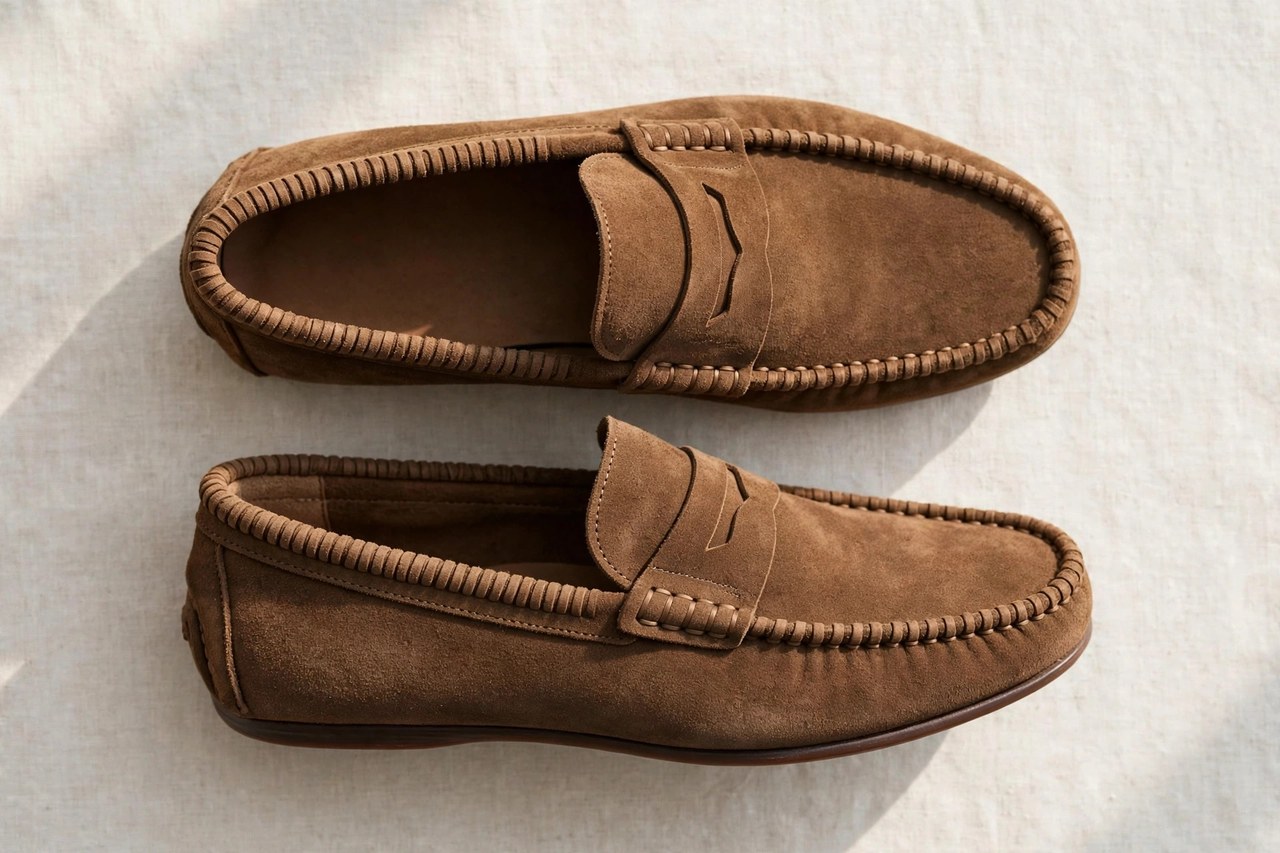
Men's slip-on loafers are the original laceless leather shoe: a moccasin-derived slip-on with a low heel, a stitched apron toe and a vamp ornamented - or not - by a penny saddle, tassels, a horsebit or nothing at all. This guide is devoted to the loafer itself, the most versatile shoe a man owns: its patterns, its leathers, and its unmatched range from shorts to suits. This guide walks through the choices that matter - style, fit, fabric and finish - with the practical detail a product listing rarely gives you, and closes with the care habits that keep the garment in service.
Penny, Tassel, Bit and Venetian: The Loafer Atlas
The loafer family is a small, complete atlas. The penny loafer - a saddle strap with a diamond cutout - is the American classic, born on prep campuses and at home with everything. The tassel loafer adds formality's flourish. The horsebit, with its metal snaffle, is the Italian register: sleeker, dressier, boardroom-capable. The venetian loafer strips the vamp bare and gains elegance by subtraction. Leathers steer the register further than patterns do: polished calf dresses up, suede dresses down beautifully, shell cordovan is the connoisseur's heirloom, and an unlined summer loafer in soft calf wears like a slipper with a public license. Construction runs from stitched and resoleable to featherweight cemented - buy the tier your rotation justifies.
Judge footwear by attachment and compound: cemented soles are light and affordable, stitched or welted constructions cost more and can be repaired, and the outsole rubber decides grip against longevity - soft compounds bite, hard compounds endure. Linings decide comfort over hours, removable insoles decide whether your own supports can come along, and honest weight decides whether the pair disappears on the foot or taxes every mile of the day.
Fit and Sizing
Loafer fit obeys the slip-on law, sharpened: no laces will ever save you. Heel nearly locked from new, instep snug under the vamp, toes with their thumb of room, and the knowledge that suede and unlined leathers relax most of all. Penny loafers are traditionally worn close enough that a loafer sock or no sock at all is part of the pattern - size for how you will actually wear them, bare-ankled in summer or socked in winter, because half a size of sock is a real measurement in a shoe with no adjustment.
Fit footwear late in the day in the socks you will actually wear, with roughly a thumb's width beyond the longest toe, the heel held without lift, and the foot's widest point meeting the shoe's widest point. Sizes are unstandardized between makers - trust your measured length and width over the printed number, and require no break-in argument: a shoe that needs excuses in the shop delivers them on the road.
Wearing and Care
Loafers ask the standard leather liturgy with one addition: protect the vamp's shape. Trees between wears, rotation by the day, conditioning for calf and a suede brush and protector for suede, and resoling before the sole's wear reaches the apron stitching that gives the shoe its face. Unlined loafers should rest a full day between summer wears - they absorb more than they show. Stored on trees away from heat, a good loafer's second decade looks better than its first year.
Rotation is the first care rule: a day of rest between wears lets linings dry and cushioning rebound, and it doubles a rotation's life compared with daily wear of one pair. Clean after use, dry at room temperature away from radiators, hold shape with trees or paper, and condition leather on a schedule rather than when it looks thirsty. Reproof weather finishes when water stops beading, and resole stitched footwear before the wear reaches the welt.
Common Questions
What is the difference between penny, tassel and bit loafers?
The vamp's ornament, and the formality it signals. The penny loafer's plain saddle is the all-rounder - campus to office. Tassels add a flourish that reads dressier and more traditional. The horsebit's metal bar is the sleekest and most formal of the three, the Italian business register. All share the same moccasin-derived body; choose the ornament by the rooms the shoe will enter.
Can loafers be worn with suits?
Yes, with the dressier patterns and leathers: a polished calf penny, tassel or bit loafer on a leather sole is established suit footwear everywhere below the most formal rooms. Suede loafers dress a suit down deliberately - a summer move, made knowingly. What a suit cannot carry is the chunky, lug-soled or sneaker-bottomed loafer: the silhouette under the trouser hem is the whole test.
Should loafers be worn with or without socks?
Both are correct, by season and register. Socks - especially over-the-calf dress socks - make the loafer office-formal and protect the shoe's interior. The sockless (or invisible-sock) wear is the summer pattern with shorts, cropped trousers and casual tailoring. What is never right is the athletic sock: the loafer's low vamp displays whatever it finds, so choose the sock as part of the outfit.
More in Men's Clothes Guide S
Wildsmith and the Penny
All loafer-style footwear is of the slip-on variety. One of the first loafer designs was introduced in London by Wildsmith Shoes, called the Wildsmith Loafer; a less casual, earlier type of slip-on is made with side gussets, shaped like lace-up Oxfords but lacking the laces, with elasticated inserts that let the shoe be removed easily yet remain snug; and the term penny loafer has uncertain beginnings, one explanation being American prep school students in the 1950s wishing to make a fashion statement.
More to Explore on Apparel Search
Looking for Men's Clothing Stores?
This guide explains men's slip-on loafers. To browse where to buy, visit our men's clothing store directory, where you can find retailers that carry them.