Men's Slip-On Dress Shoes Guide
Men's slip-on dress shoes are laceless leather shoes built to dress standards - loafers in their formal register, elastic-gored dress shoes, monk straps and sleek venetian styles - that pair with suits and tailored trousers while skipping the lacing ritual. This guide takes the dress end of the slip-on family specifically: how a shoe with no laces earns a place under a suit, and where its limits honestly lie.
Shop Men's Slip-On Dress Shoes Now
Shop Men's Slip-On Dress Shoes on Amazon Shop Men's Slip-On Dress Shoes on eBayThe Amazon and eBay links on this page are affiliate links. If you make a purchase through them, Apparel Search may earn a commission.
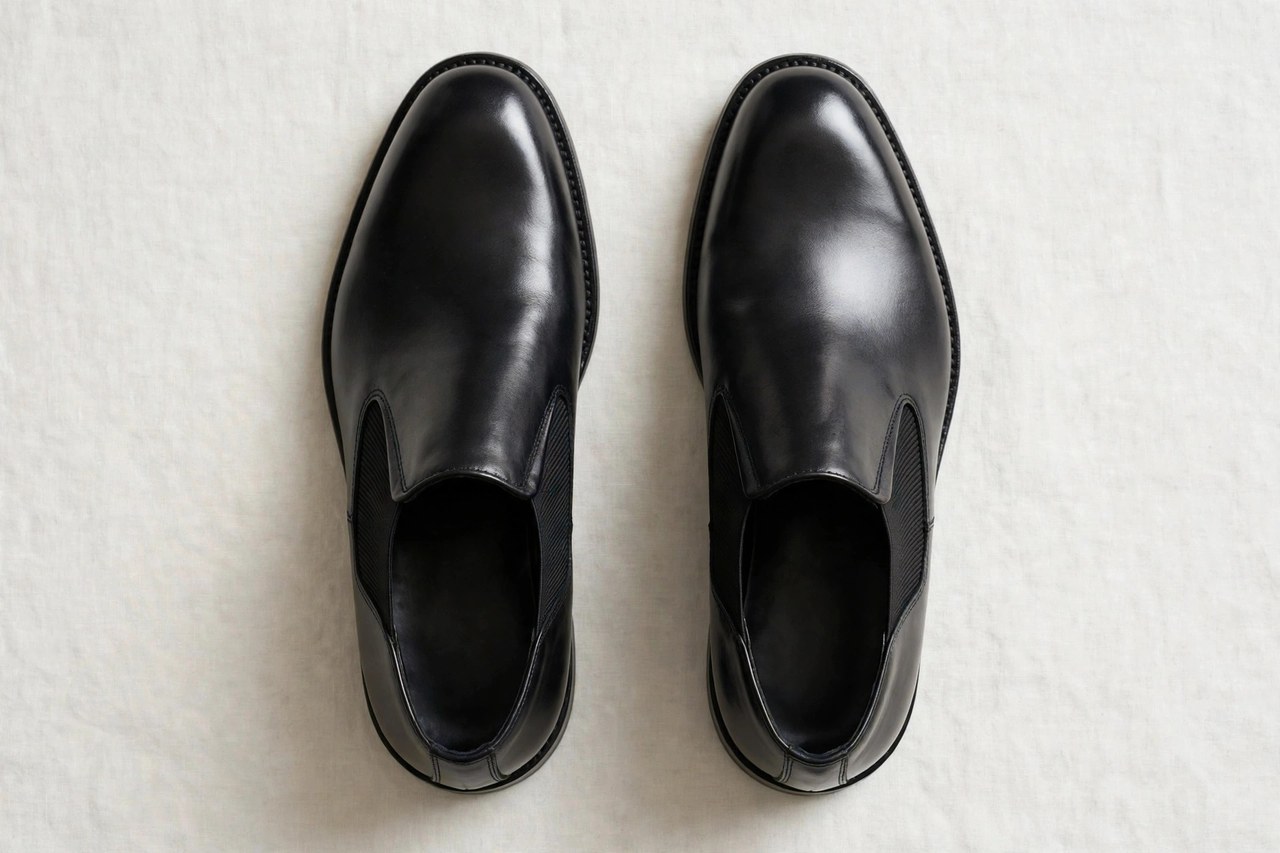
Men's slip-on dress shoes are laceless leather shoes built to dress standards - loafers in their formal register, elastic-gored dress shoes, monk straps and sleek venetian styles - that pair with suits and tailored trousers while skipping the lacing ritual. This guide takes the dress end of the slip-on family specifically: how a shoe with no laces earns a place under a suit, and where its limits honestly lie. This guide is built around the questions buyers actually ask: which style, which size, which fabric, and what will it look like after a year of real use - answered in order, with the trade-offs stated plainly.
The Formality Line: What Makes a Slip-On a Dress Shoe
The dress slip-on walks a formality line, and construction decides which side it lands on. A loafer in polished calf with a slim leather sole, a low heel and a clean vamp stands with tailoring anywhere below black tie's strictest rooms; add a penny saddle, a tassel or a horsebit and you gain character as you shed a degree of formality. Elastic gores hidden in clean quarters, monk straps with a single buckle, and apron-toe stitching each move the dial. What the category cannot survive is a chunky sole, a sneaker hybrid bottom or visible athletic padding - the slip-on dress shoe is a dress shoe first, judged by every rule of the oxford except the laces it replaced.
Judge footwear by attachment and compound: cemented soles are light and affordable, stitched or welted constructions cost more and can be repaired, and the outsole rubber decides grip against longevity - soft compounds bite, hard compounds endure. Linings decide comfort over hours, removable insoles decide whether your own supports can come along, and honest weight decides whether the pair disappears on the foot or taxes every mile of the day.
Fit and Sizing
Fit is the slip-on's whole battle, because nothing adjusts. The heel must hold with barely a slip from new - a loafer that flops at the heel in the shop becomes a loafer abandoned by spring - and the vamp should feel snug across the instep, since leather relaxes and the shoe you buy is the loosest it will ever legitimately be, inverted. A finger's pressure at the heel counter, a thumb's width past the toes, and a walk on hard floor are the ritual. Many men wear slip-ons a half size closer than their lace-ups for exactly this reason.
Fit footwear late in the day in the socks you will actually wear, with roughly a thumb's width beyond the longest toe, the heel held without lift, and the foot's widest point meeting the shoe's widest point. Sizes are unstandardized between makers - trust your measured length and width over the printed number, and require no break-in argument: a shoe that needs excuses in the shop delivers them on the road.
Wearing and Care
Dress slip-ons are leather dress shoes in every care respect: trees between wears (which also hold the vamp's shape that laces would have disciplined), a day's rest in rotation, brushing and conditioning, and resoling stitched pairs before the wear reaches the welt. Elastic gores are the wear item - inspect them each season, because a tired gore is the difference between a shoe that holds and a shoe that travels. Keep a shoehorn at the door: crushing a slip-on's heel counter to save three seconds is how good pairs die young.
Rotation is the first care rule: a day of rest between wears lets linings dry and cushioning rebound, and it doubles a rotation's life compared with daily wear of one pair. Clean after use, dry at room temperature away from radiators, hold shape with trees or paper, and condition leather on a schedule rather than when it looks thirsty. Reproof weather finishes when water stops beading, and resole stitched footwear before the wear reaches the welt.
Common Questions
Can slip-on shoes be worn with a suit?
Yes - the right ones. A polished calf loafer or sleek gored dress shoe with a leather sole pairs with most suits in most settings, and travels better than any lace-up. The limits are real: not for black tie, not the chunky or sneaker-soled hybrids, and tassel or bit loafers read a notch more casual than a plain or penny vamp. When the room's formality is unknown, the oxford remains the safe answer.
Why do my slip-on dress shoes slip at the heel?
Because leather relaxes and nothing retightens it. A slip-on should be bought with the heel nearly locked and the instep snug, anticipating the give; bought comfortable-plus, it becomes loose. Tongue pads and heel grips recover a small amount of room; a full size of flop is a purchase error, not a care problem. This is the category's one unforgiving rule, and it is why trying on late in the day matters here most.
Loafers or gored slip-ons for travel?
Both clear security quickly; the choice is wardrobe range. A dark penny or plain loafer dresses up and down the widest arc - suits to chinos - and is the classic traveler's single shoe. Gored slip-ons (Chelsea-pattern dress shoes) wear slightly more formal and handle weather better with their higher quarters. Either beats a lace-up for the airport-and-meetings day.
More in Men's Clothes Guide S
Dress Shoes, Without Laces
A dress shoe is a shoe to be worn for business, often with dress pants such as slacks or with a suit, and when worn with dress pants the outfit is often paired with a sports coat or blazer; dress shoes serve smart casual attire and more formal events, in contrast to the athletic shoe’s casual situations. Slip-ons are typically low, lace-less shoes - the style most commonly seen, known as a loafer, has a moccasin construction - and it is not unusual for a man’s loafer to carry a tassel.
Looking for Men's Clothing Stores?
This guide explains men's slip-on dress shoes. To browse where to buy, visit our men's clothing store directory, where you can find retailers that carry them.