Men's Trucker Jacket Guide
Short, fitted and made of denim history: from Levi's Type I of 1905 to the Type III every wardrobe knows — plus the suede and cord versions beyond denim.
Shop Men's Trucker Jackets Now
Shop Men's Trucker Jackets on Amazon Shop Men's Trucker Jackets on eBayThe Amazon and eBay links on this page are affiliate links. If you make a purchase through them, Apparel Search may earn a commission.
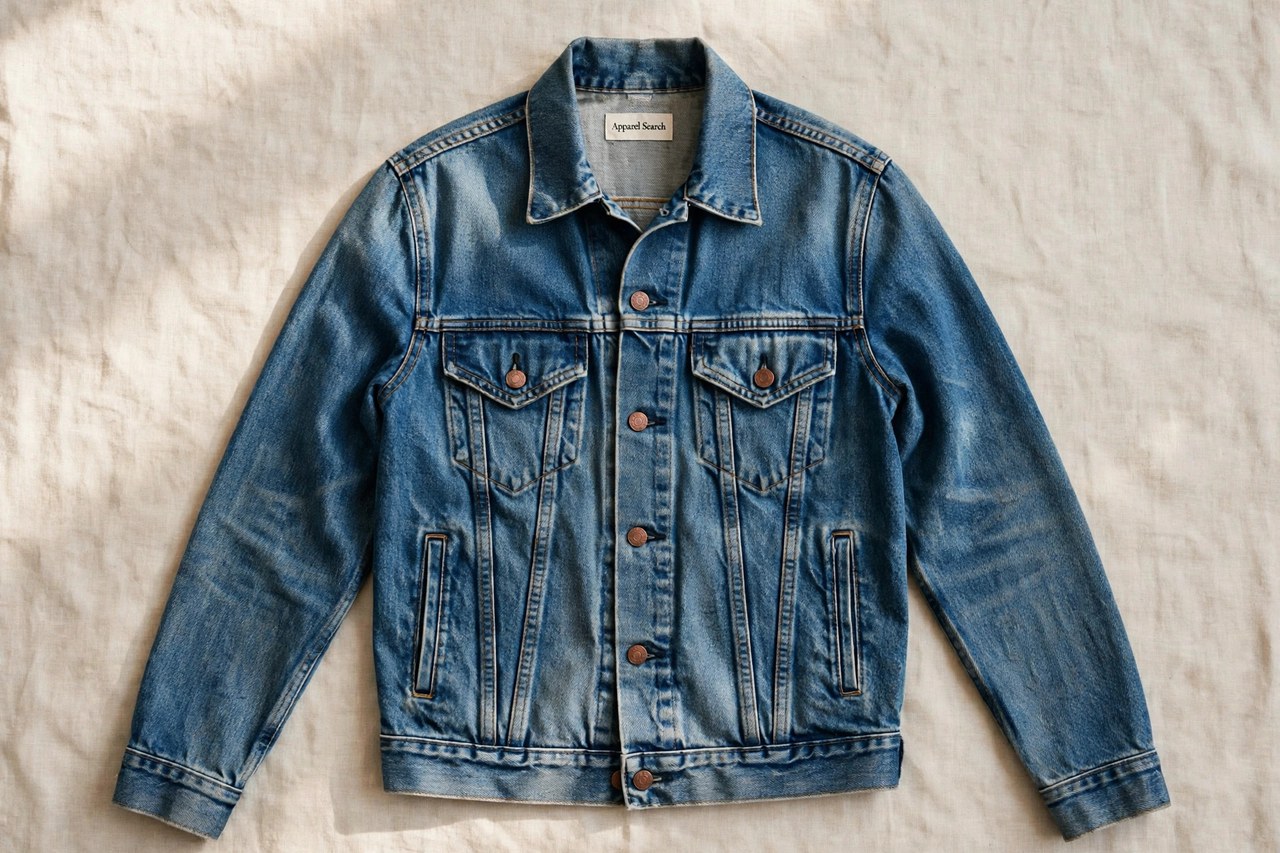
The trucker jacket is the jean jacket with a pedigree. Levi Strauss & Co. built its ancestors as work blouses for miners and railroad men: the Type I of about 1905 with its single pocket and cinch back, the Type II of 1953 with two pockets and pleats, and the Type III of the early 1960s — pointed flap pockets, a slimmer body, bar-tacked stress points — which became the template every maker on earth now follows. The name 'trucker' attached itself in the years when the jacket had become standard issue for the men driving America's freight.
It belongs in the same conversation as our men's denim fits guide, because a trucker is chosen the way jeans are: by fabric weight, wash and fit, with raw versions that fade into a personal record. In its classic form it ends at the waist, fits close, and works as a light jacket in spring and autumn and as a layer under a coat in winter — a working garment that became a permanent style.
Types I, II and III: Reading the Pattern
The differences are a collector's shorthand for real design changes. Type I: one chest pocket, a buckle-back cinch to adjust the waist in the days before numbered sizes, and pleats running down from the pockets. Type II: two chest pockets, the pleats retained, side buttons replacing the cinch as sizing standardised. Type III: the modern jacket — two flap chest pockets with pointed flaps, vertical seams replacing pleats, a slightly longer and slimmer body, and hand-warmer pockets on many contemporary versions, an addition purists debate and cold hands appreciate.
Beyond Levi's pattern, the trucker silhouette now comes in suede and roughout leather — the version associated with western wear and 1970s film — in corduroy with blanket or sherpa linings for winter, and in black, ecru and coloured denim. The sherpa-lined trucker deserves its own note: with the collar turned up and the lining doing real thermal work, it is a legitimate cold-weather jacket, not just a lined novelty.
Denim, Wash and Weight
Classic truckers are cut from 12-to-14-ounce denim, stiff when new and moulding to the wearer over the first season. Raw and rigid versions fade at the elbows, pockets and button placket exactly as raw jeans fade at the knee — see the fits guide for how whiskering works — while stonewashed and mid-wash versions arrive pre-softened and need no breaking in. Black truckers, whether in sulphur-dyed denim that fades grey or in suede, are the easiest to dress up.
Match the jacket's denim weight to its job. An unlined 12-ounce jacket is a three-season layer; a blanket- or sherpa-lined version is winter outerwear and should be sized accordingly, up from your unlined fit if you layer knitwear under it. Whatever the wash, the hardware tells the quality story: metal shank buttons, properly riveted or bar-tacked pocket corners, and chain-stitched hems on heritage-grade examples.
Fit and the Double-Denim Question
A trucker fits close and short: shoulders on the shoulder point, chest buttoning without strain over a shirt — or over a hoodie, if that is its intended partner — sleeves to the wrist, and the hem at the belt line so it meets jeans without overlapping them awkwardly. It is the one jacket in this cluster that should not be bought oversized by default; the pattern's crispness is its style.
Double denim — trucker over jeans — works when the two denims differ clearly in wash or colour: a mid-wash jacket over dark indigo or black jeans, or a black trucker over blue jeans. Identical washes head to foot read as a uniform unless the fit is impeccable. The jacket also earns its keep over chinos, cords and tailored trousers with boots, and under an overcoat as a mid-layer. Care follows denim discipline: wash rarely, cold, inside out, and hang dry to keep both colour and shape.
Common Questions
What is the difference between a trucker jacket and a denim jacket?
Almost none in ordinary use — trucker is the name for the classic fitted, waist-length denim jacket pattern, especially the Type III. 'Denim jacket' is the broader term that also covers looser chore-coat and overshirt styles in denim. If it has the two flap chest pockets and shank buttons, it is a trucker whatever the label says.
Can you wear a trucker jacket with jeans?
Yes, with contrast. Keep the washes clearly different — light jacket over dark jeans, black over blue, ecru over indigo — and the combination reads deliberate. Matching head-to-toe mid-wash denim is the version that draws the 'Canadian tuxedo' joke, unless the fit is sharp enough to carry it.
How should a trucker jacket fit?
Close, like a tailored shirt jacket: shoulder seams on your shoulders, chest buttons closed without pulling, sleeves ending at the wrist and the hem at the belt. Size up only if you intend to wear it over hoodies or heavy knitwear, as with a lined winter version.
More Men's Outerwear & Wardrobe Basics Guides
All thirteen guides in this cluster, in alphabetical order — classic coats, jackets, tailoring, trousers and shoes:
More to Explore on Apparel Search
Looking for Men's Clothing Stores?
This guide helps you choose a men's trucker jacket in the right type and wash. To browse where to buy, visit our mens clothing store directory, where you can find retailers that carry them.