Men's Tuxedo Pants Guide
One satin stripe, no belt loops, no cuffs: tuxedo trousers follow the strictest rules in menswear — and that is what makes them easy to choose.
Shop Men's Tuxedo Pants Now
Shop Men's Tuxedo Pants on Amazon Shop Men's Tuxedo Pants on eBayThe Amazon and eBay links on this page are affiliate links. If you make a purchase through them, Apparel Search may earn a commission.
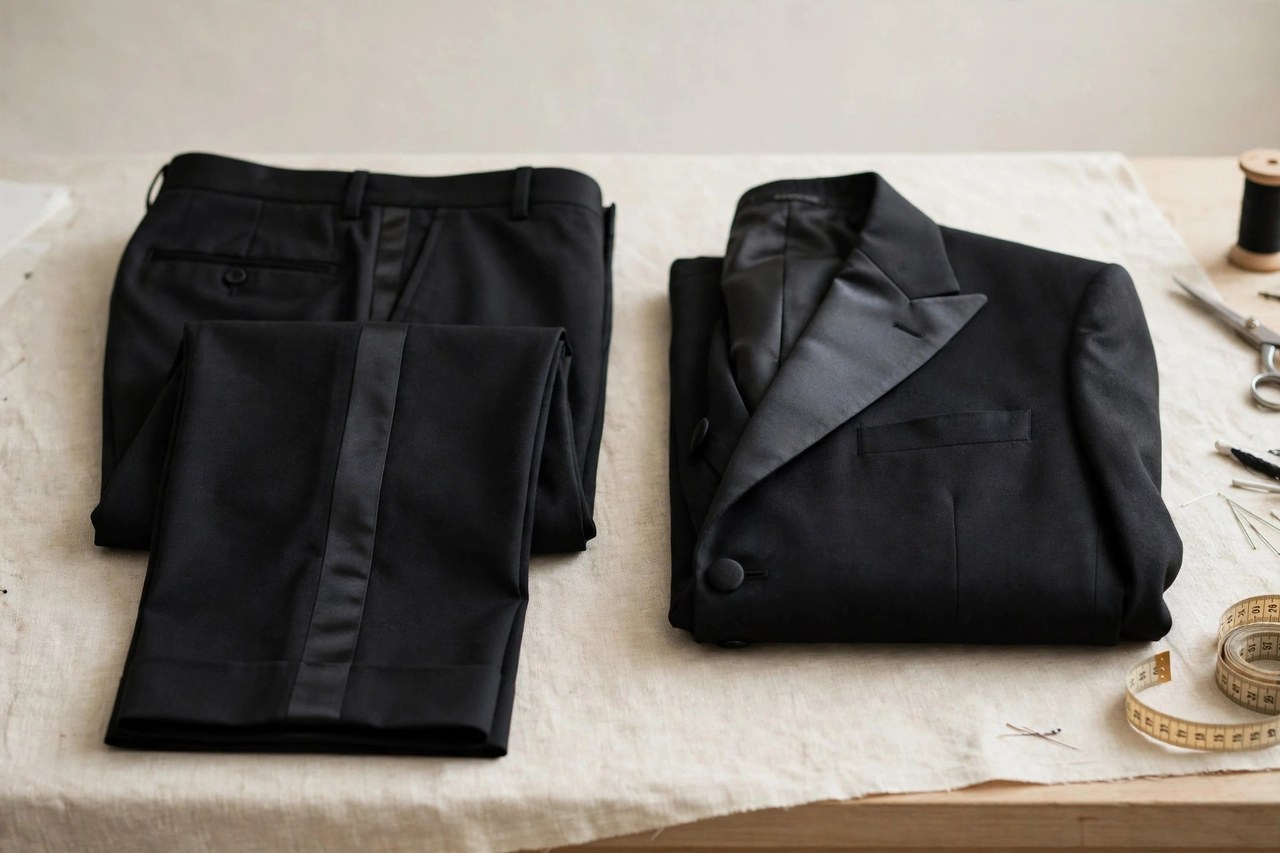
Tuxedo pants — dinner trousers in British usage — are the most rule-bound garment in a man's wardrobe, and the rules are mercifully simple. They are black or midnight-navy wool trousers, cut like the lower half of a suit, distinguished by a single stripe of satin or grosgrain down each outer leg seam, matching the facings of the dinner jacket they are worn with. Everything else about them is a study in things deliberately left off.
No belt loops. No cuffs. No crease-breaking clutter of any kind. The tuxedo trouser exists to form an unbroken, formal line from the jacket's hem to a polished shoe, working with the whole black-tie outfit described in our men's tuxedos guide. Because the pattern barely changes, a well-bought pair lasts decades and across every formal invitation you will ever receive.
The Rules: Stripe, Waistband and Hem
The stripe is the definition. A single braid of silk satin or grosgrain, about half an inch wide, covers the outseam of each leg and must match the jacket's lapel facings in fabric and lustre — satin with satin, grosgrain with grosgrain. Double stripes belong to military and marching-band dress, not to civilian black tie. The trouser cloth itself is a plain wool barathea or a fine twill, sometimes with a subtle self-stripe woven in, in black or the midnight blue that famously reads blacker than black under evening light.
The waistband is designed for the traditional supports: suspender buttons inside or out, side adjusters on better pairs, and no belt loops anywhere, because a belt is never worn with black tie. A formal waist covering — cummerbund or low waistcoat — hides the waistband in wear, which is why closures are simple and flat. Pockets are on-seam and discreet, sometimes with one buttoned back pocket, and the hem is plain and unfinished by ornament: cuffs would break the line and collect the wrong kind of attention, so they are simply not done.
Fit With a Dinner Jacket
Fit follows the jacket's register: a trim, clean line without tightness, because formal clothes that strain look instantly cheap. The rise should be a touch higher than your everyday trouser if you wear suspenders — as tradition intends — so the trousers hang from the shoulders and the waistband sits at the natural waist, keeping the shirt's front and the waist covering in their designed positions. Take the jacket when fitting: the trouser waistband should meet the dinner jacket's button point exactly.
Length is the detail most often botched. Tuxedo trousers are hemmed to a slight break or none at all, kissing the top of a polished oxford or patent shoe — never stacking, never pooling, because the satin stripe draws the eye straight down the leg and reports every error. The leg shape should mirror your suit trousers, moderately tapered; wide evening trousers exist in fashion cycles, but the classic slim-straight leg is the one that will still look right in photographs in twenty years.
Buying, Separates and Care
Buy tuxedo pants with the jacket whenever possible: 'matching' black wools from different makers rarely match under event lighting, and the stripe fabrics must agree as well. Separates make sense when replacing a worn pair for an existing jacket — take the jacket to the shop and compare cloth and satin under daylight and warm indoor light before committing. A second pair bought with a first is an old formal-wear trick: trousers wear faster than jackets, and a spare doubles the outfit's working life.
Rental trousers are the fallback, and their fit is exactly where rentals show — insist on your correct waist and have the length right even if it means trying three pairs. Care for your own pair as you would a suit: rest between wears, brush the wool, steam rather than press the legs yourself since a shine on barathea is hard to reverse, and dry-clean sparingly. Store the stripe protected from abrasion; a crushed or shiny satin braid is the one detail that can make an otherwise perfect pair look tired.
Common Questions
Can you wear a belt with tuxedo pants?
No. Tuxedo trousers are made without belt loops by design; they are held by suspenders or side adjusters, and the waistband is covered by a cummerbund or formal waistcoat. If a pair has belt loops, it is a suit trouser with a stripe added, not a true dinner trouser.
Should tuxedo pants have cuffs?
No — plain hems are a firm black-tie rule. Cuffs are a business and country detail; on evening trousers they break the clean line the satin stripe creates and read as a mistake to anyone who knows the code. Hem them plain, to a slight break or none.
What shoes go with tuxedo pants?
Highly polished black oxfords are the correct default, patent leather oxfords the most formal option, and black wholecuts the elegant modern choice. The trouser hem should just meet the shoe's vamp; opera pumps are the traditional court option but rare enough today to read as a deliberate statement.
More Men's Outerwear & Wardrobe Basics Guides
All thirteen guides in this cluster, in alphabetical order — classic coats, jackets, tailoring, trousers and shoes:
More to Explore on Apparel Search
Looking for Men's Clothing Stores?
This guide helps you choose men's tuxedo pants that follow black-tie rules correctly. To browse where to buy, visit our mens clothing store directory, where you can find retailers that carry them.