Men's Tuxedos Guide
A men's tuxedo - the dinner suit - is black-tie formalwear: a black (or midnight blue) jacket with silk-faced lapels, matching trousers with a silk side stripe, worn with a tuxedo shirt, bow tie, cummerbund or waistcoat, and patent or polished dress shoes. It is a uniform in the best sense: a solved problem, unchanged in essentials for a century, whose quality shows entirely in cloth, fit and the discipline of its few permitted variations.
Shop Men's Tuxedos Now
Shop Men's Tuxedos on Amazon Shop Men's Tuxedos on eBayThe Amazon and eBay links on this page are affiliate links. If you make a purchase through them, Apparel Search may earn a commission.
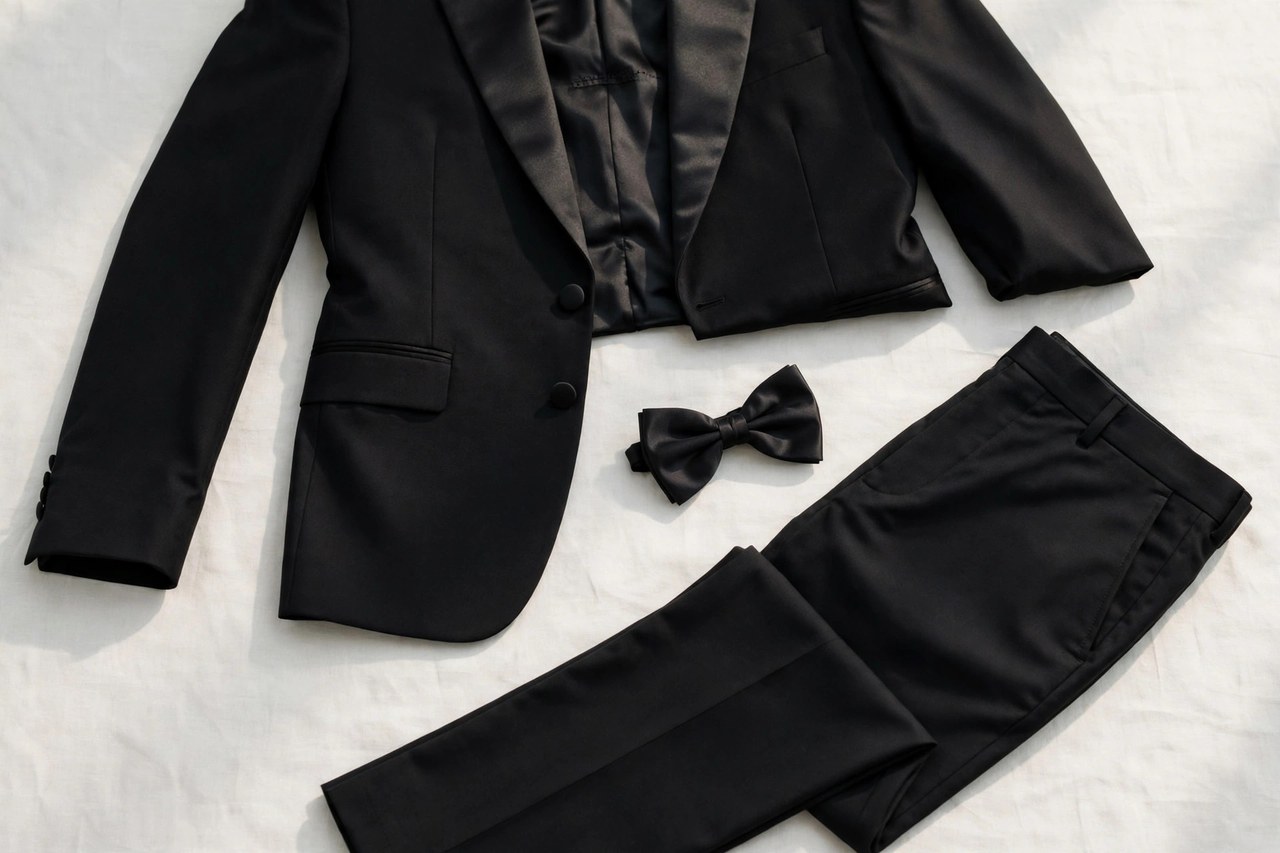
A men's tuxedo - the dinner suit - is black-tie formalwear: a black (or midnight blue) jacket with silk-faced lapels, matching trousers with a silk side stripe, worn with a tuxedo shirt, bow tie, cummerbund or waistcoat, and patent or polished dress shoes. It is a uniform in the best sense: a solved problem, unchanged in essentials for a century, whose quality shows entirely in cloth, fit and the discipline of its few permitted variations. This guide covers the styles worth knowing, the fit points that decide comfort, the fabrics and construction that separate a good buy from a regret, and the simple care that makes the garment last.
Styles and Construction
The jacket's decisions are lapel and closure. Peaked lapels faced in grosgrain or satin silk are the most formal and the classic; shawl collars are equally correct and softer in effect; the notched lapel is a business-suit borrowing that purists reject. One button is the standard closure, vents are traditionally absent (a center vent is the modern concession), and buttons are covered in the lapel's silk. Midnight blue - which reads blacker than black under artificial light - is the connoisseur's cloth; black remains the standard. Trousers carry a single silk braid down the outseam, are worn with braces or a clean waistband (never a belt), and are hemmed without cuffs. Cummerbund pleats face up; waistcoats, when worn, are cut low in the tuxedo pattern.
The durable buying order is job, specification, budget - in that sequence. Decide what the garment must do, translate that into fiber, weight, construction and size numbers, and only then shop price. Read labels as specifications, inspect the garment inside out where finishing is unposed, and prefer the maker who publishes measurements to the one who publishes adjectives. A garment that matches your measurements, climate and laundry will be worn; one that misses any of the three becomes expensive storage.
Fit and Sizing
Fit a tuxedo as precisely as your best suit, then a fraction more carefully, because there is nowhere for error to hide: shoulders exact, chest closing without pull, sleeves showing the half-inch of shirt cuff, trousers breaking cleanly over the dress shoe. Renting serves a one-time need; a man facing two or more black-tie events a year recovers a purchase quickly, and owns the fit besides. If buying, choose the classic specification over the fashionable one - the tuxedo's whole economy is that it never goes out of style.
Measure yourself once a year and keep the numbers - chest, waist, inseam, foot, head - because bodies drift gradually while size habits never do. Shop from measurements, try garments under real conditions (over layers, in your own shoes, late in the day for footwear), and be honest about alterations: lengths and small waist changes tailor beautifully; shoulders, rises and patterns are the garment you bought forever.
Wearing and Care
Rest and brush a tuxedo like fine tailoring, clean it professionally and sparingly, and store it hung in a breathable garment bag. Keep the full kit together - bow tie (self-tie), studs and links, cummerbund or waistcoat, formal shoes polished - because black tie allows no improvisation at 6 p.m. Patent shoes need only a wipe and a soft cloth; calf Oxfords worn instead should be polished to the highest shine you own.
Five minutes when a garment comes off - shake it out, hang or fold it correctly, note the stain and the loose button - prevents most of the damage later blamed on quality. Keep a small kit where the clothes live: brush, lint roller, conditioner suited to your leathers, black, navy and grey thread. Clothing rarely dies at once; it fades by small neglects, and small attentions reverse the process at the same pace.
Start with the ensemble itself: our dinner suit guide covers the terminology - dinner suit, dinner jacket and tuxedo - and how the black tie system fits together.
For daytime formality, the ladder runs from the stroller suit up to full morning dress.
Common Questions
Tuxedo or black suit - is there really a difference?
Yes, and it is visible across a room: silk-faced lapels, covered buttons, a trouser braid, the formal shirt with studs and the bow tie make the tuxedo a different garment system, not a black version of a suit. A black suit with a long tie at a black-tie event is underdressed by the invitation's own terms - the one occasion where the distinction is the whole point.
Black or midnight blue tuxedo?
Midnight blue is the traditional connoisseur's choice: under evening light it reads deeper and richer than black cloth, which can go slightly green or grey by comparison. Black is never wrong and matches more rental and accessory stock. Either satisfies black tie completely - the decision is aesthetic, and both are classics rather than trends.
Should I buy or rent a tuxedo?
Buy if you will attend two or more black-tie events a year, or one important recurring event: the fit alone justifies it, and a classic tuxedo is a decade-plus garment. Rent for a single occasion, choosing the most classic specification available and booking early enough to have the fit adjusted. Either way, own your shirt, bow tie and studs - those are personal, inexpensive and always fit.
More in Men's Clothes Guide T
Background and History
Men's Tuxedos guide and information resource about Men's Tux Men's Tuxedos Guide Directory and Information Regarding Men's Tuxedos presented by Apparel Search Men's Clothes Men's Tuxedo Shirts Cummerbunds Clothes Fashion Clothing Retail Stores Clothes Shopping Fashion News Fashion Designers Popular Brands Apparel Tuxedo Definition Do you like dressing so that you look like a penguin? Welcome to the worlds greatest guide to Men's Tuxedos . Are you actually looking for Men's Tuxedos? Well, we hope you are because the reality is that you have found our Men's Tuxedos page. In American English this type of garment is called a tuxedo or a "tux" for short. In British English, it may be referenced as a dinner jacket, DJ, or dinner suit. This item is a semi-formal evening suit distinguished primarily by satin or grosgrain facings on the jacket's lapels and buttons and a similar stripe along the outseam of the trousers. The primary difference between a suit and a tuxedo is the satin. Sometimes it is difficult to tell the difference
Looking for Men's Clothing Stores?
This guide explains men's tuxedos. To browse where to buy, visit our men's clothing store directory, where you can find retailers that carry them.