Men's Cummerbund Guide
A men's cummerbund is the pleated sash of black-tie dress: a broad band of silk or satin worn around the waist, pleats facing upward, covering the waistband of the trousers and the shirt's bottom buttons. It descends from the kamarband of British India, adopted by officers dining in the heat and carried home into the tuxedo's canon - where it remains one of evening dress's two waist coverings, the other being the low-cut waistcoat.
Shop Men's Cummerbund Now
Shop Men's Cummerbund on Amazon Shop Men's Cummerbund on eBayThe Amazon and eBay links on this page are affiliate links. If you make a purchase through them, Apparel Search may earn a commission.
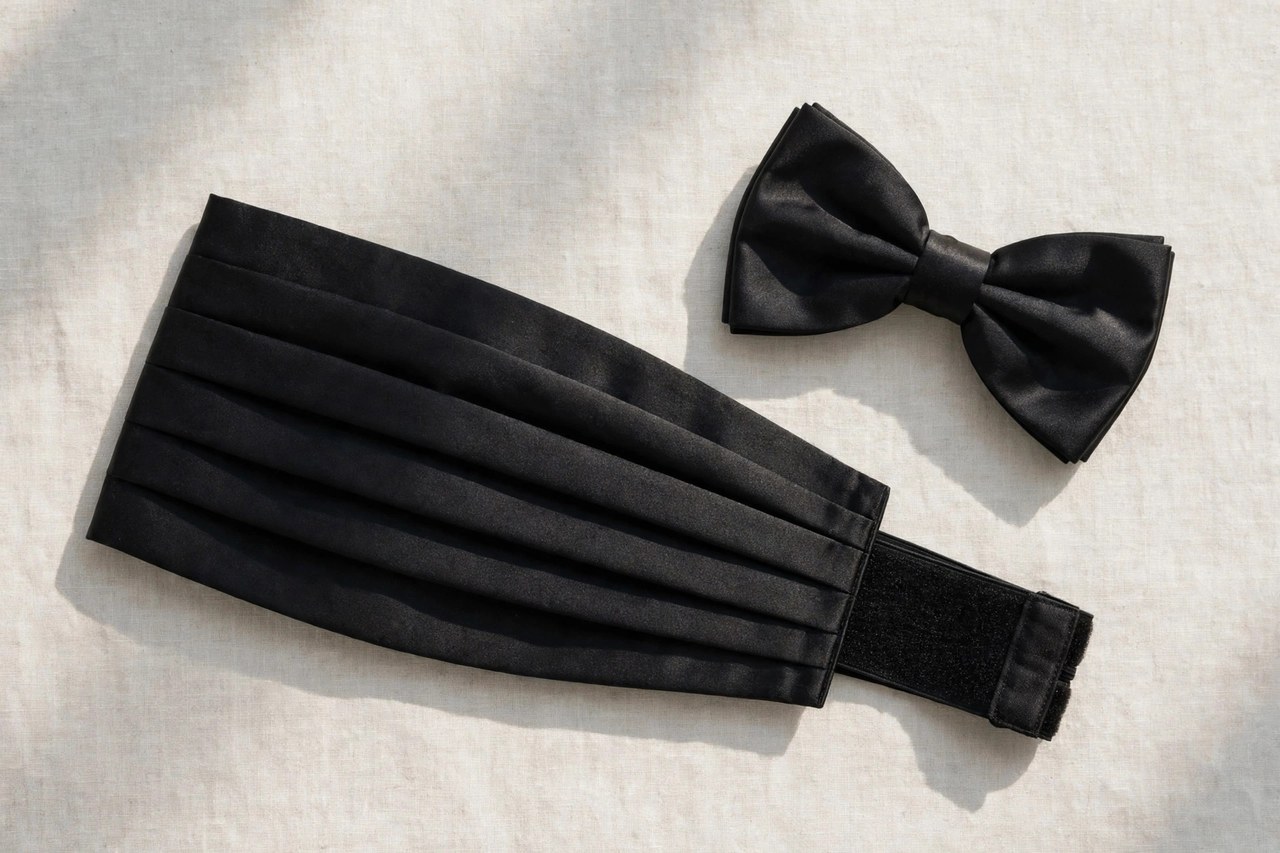
A men's cummerbund is the pleated sash of black-tie dress: a broad band of silk or satin worn around the waist, pleats facing upward, covering the waistband of the trousers and the shirt's bottom buttons. It descends from the kamarband of British India, adopted by officers dining in the heat and carried home into the tuxedo's canon - where it remains one of evening dress's two waist coverings, the other being the low-cut waistcoat. This guide explains what to look for, how the sizing actually works, which fabrics and constructions earn their price, and how to care for the garment so it keeps doing its job season after season.
Styles and Construction
The rules are pleasingly exact. The cummerbund is worn with pleats up - tradition says they held theater tickets and crumbs; etiquette simply says up is correct - and it must be wide enough to cover the trouser waistband and meet the shirt's covered placket, typically four to five inches. Color is black for classic black tie, matching the bow tie and the suit's facings; deep burgundy and other dark colors appear at festive black tie, and patterned cummerbund-and-tie sets belong to the most relaxed end of the code. Silk or satin should match the lapel facings' sheen; a grosgrain lapel wants a grosgrain sash.
Accessories reward material honesty: solid metal over plated base metal, full-grain leather over bonded scraps, stitching over glue wherever fabric or hide is joined. Work every moving part through its full travel before paying - clasps, hinges, springs, adjusters - because small hardware fails before large materials do. And budget the care with the purchase: conditioner, the right cloth, a dry drawer; an accessory you can maintain will outlast a finer one you cannot.
Fit and Sizing
Fit is a matter of position and coverage: the band sits at the natural waist - over the trousers' waistband, never at the hips like a belt - fastens snugly at the back, and should stay put through an evening of sitting, standing and dancing. Adjustable backs make rental sizing possible; check the closure's hold, because a cummerbund that creeps down under the belly has inverted its purpose. With the sash on, no shirt or waistband should show beneath it when you raise your arms reasonably.
Accessories have exact fits and exact measures: belt length to the middle hole of a belt you own, hat size as head circumference, a watch case within the wrist's width. Makers' accessory charts vary more than apparel charts, so measure and use the chart rather than ordering a habitual letter - ninety seconds with a tape prevents the most avoidable returns in menswear.
Wearing and Care
Cummerbunds want little care and specific storage: brush after wear, spot-clean silk rather than washing it, have stains handled by a cleaner who knows evening silks, and store the sash rolled or hung flat - never folded in a crease - so the pleats keep their architecture. Keep it with the bow tie it matches; evening dress fails in the details of matching sheens, and a stored set prevents the mismatch.
Store accessories deliberately: leather away from sun and plastic, metal dry, belts rolled or hung by the buckle rather than folded at the same crease forever. Condition leather a few times a year, polish metal with the cloth meant for its finish, and repair hardware early - a loose screw today is a lost cufflink or a failed clasp next month. Rotate daily pieces in pairs and both will outlast a single workhorse.
Common Questions
Cummerbund or waistcoat for black tie?
Both are correct classics; the choice is climate and silhouette. The cummerbund is cooler, simpler and the traditional partner of the single-breasted dinner jacket in warm rooms and summer. The waistcoat (low-cut, matching or white) reads more formal and covers more, suiting winter and the most traditional invitations. What is not optional is one or the other - an uncovered waistband is unfinished black tie.
Why do cummerbund pleats face up?
By convention fixed in the sash's military origins - the pleats of the original kamarband carried small items, and the story of tickets and crumbs kept the orientation memorable. Practically, upward pleats present a clean shadow line and match every reference photograph of correct dress; downward pleats read instantly as a mistake to anyone who knows the garment.
Can you wear a cummerbund with a regular suit?
No: the cummerbund belongs to black tie alone, with a dinner jacket, formal shirt and bow tie. With a lounge suit it reads as costume. Its cousin for daytime waist coverage does not exist - a suit's waist is covered by the buttoned jacket and, in three-piece dress, a waistcoat.
More in Men's Clothes Guide C
The Tuxedo Family
The cummerbund sits inside its whole evening family — the tuxedo guide, the tuxedo shirt guide and the cufflink guide — because black tie is a system in which no piece is chosen alone. The sash matches the tie, the facings and the occasion, in that order.
Looking for Men's Clothing Stores?
This guide explains men's cummerbund. To browse where to buy, visit our men's clothing store directory, where you can find retailers that carry them.