Cummerbund Retailers
Stores selling cummerbunds for formal wear
A cummerbund is the pleated silk sash worn at the waist with a tuxedo, covering the waistband and the shirt's lower front where a waistcoat is not worn. It came into British formal dress from India, where the kamarband was a sash worn with military and civilian dress, and it settled into black tie as the lighter alternative to a waistcoat, especially in warm weather and warm ballrooms. The retailer listed here is Men's Wearhouse, founded in 1973 and one of North America's largest specialty retailers of men's apparel, with 752 stores at the time of its listing, carrying designer, brand name and private label suits, sport coats, furnishings and accessories, with tuxedo rentals in its Men's Wearhouse and Moores stores. That rental trade is where most cummerbunds are actually supplied: a rented tuxedo arrives with its cummerbund and bow tie matched. Buyers dress the same outfit from the cufflink and tuxedo retailer pages linked here, and the cummerbund definition in the terms section gives the garment's full background.
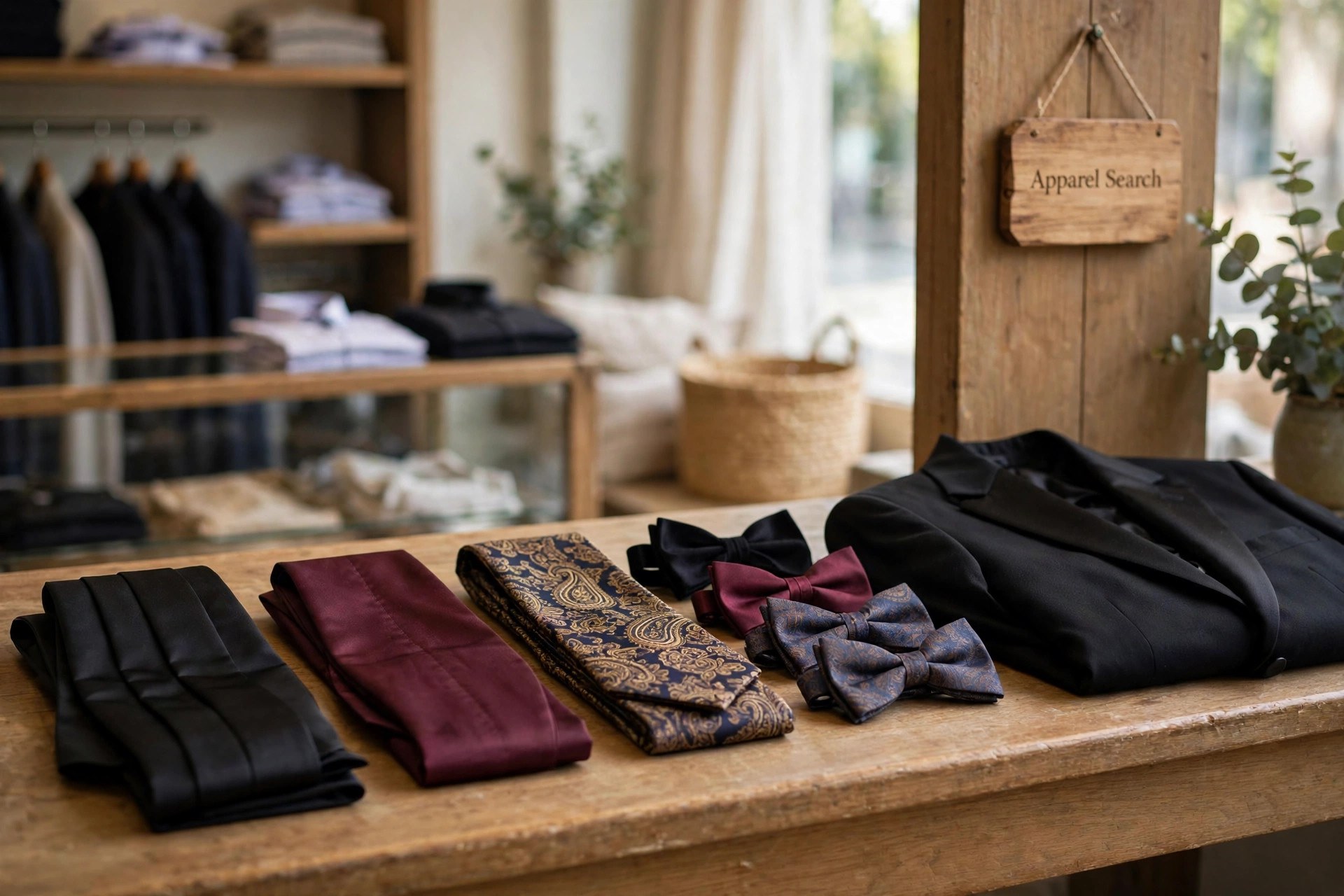
Cummerbunds Retail Stores
Cummerbund Definition Cummerbund Factory Retail Clothing Stores Retail by Category Women's Clothing Stores Men's Clothing Stores Fashion Clothes Shopping Apparel Link Fashion Accessory Stores Fashion News Fashion Jobs
 Men's Wearhouse : Founded in
1973, Men's Wearhouse is one of North America's largest specialty
retailers of men's apparel with 752 stores. The stores carry a full
selection of designer, brand name and private label suits, sport coats,
furnishings and accessories, including tuxedo rentals available in the
Men's Wearhouse and Moores stores.
If you are buying a cummerbund you may also have interested in checking out the cufflink retailers and tuxedo retailers.
The Cummerbund's Origin
The word comes from the Hindi and Urdu kamarband, kamar meaning waist and band meaning sash, a garment worn across South Asia for centuries. British officers in India adopted it in the 19th century as a cooler alternative to the waistcoat in tropical heat, wearing it with the dinner jacket, and it traveled home into British evening dress and from there into international black tie. The pleats, the silk fabric and the matching bow tie all descend from that adoption. Victorian and Edwardian wearers sometimes chose colored cummerbunds as the one permitted flourish in formal dress, a role the garment still plays.
Buying and Renting
Most cummerbunds reach wearers through tuxedo rental, fitted with the jacket and returned with it, and Men's Wearhouse's listing reflects that trade at scale. Buying makes sense for repeat formal wearers: a black silk cummerbund and bow tie set, bought once, covers a lifetime of black tie at less than repeated rental accessory fees, and silk takes dye and holds its pleats better than synthetic satins. Fit is by waist size with an adjustable back strap, and the sash should sit flat without rolling, which is a matter of wearing it at the natural waist rather than on the hips.
Care of Silk Formal Accessories
Silk cummerbunds are spot-cleaned or dry cleaned, stored flat or rolled to protect the pleats, and kept with the bow tie so the set stays matched. Pleats are pressed from the reverse with a cool iron if they soften. Because the garment is worn a few hours at a time and mostly indoors, a good silk set ages slowly; the usual failure is a lost or stained bow tie, which is why sets are sold and stored together.
Common Questions
How is a cummerbund worn, pleats up or down?
Pleats up. The pleats of a cummerbund face upward, a convention usually explained by their original use holding theater tickets and small items, like a pocket worn at the waist. Worn correctly, the sash sits at the natural waist, covering the trousers' waistband and the bottom of the shirt front, with the bow tie above it and no shirt or belt showing between. Pleats-down is the visible error that marks a first-time wearer, which is why rental shops fit the cummerbund as part of the tuxedo.
Cummerbund or waistcoat with a tuxedo?
Both are correct black tie; the choice is climate and taste. A waistcoat, especially a low-cut evening waistcoat, is the more formal and traditional option and suits cold weather. A cummerbund is lighter, cooler and simpler, the standard choice for summer formals, warm climates and proms, and it adds a possible note of color, burgundy and patterned silks are common, where a waistcoat usually matches the suit. The rule that does not change: one or the other is worn, since black tie does not leave the waistband bare.
What colors of cummerbund are appropriate?
Black is the default and always correct. Deep burgundy is the accepted classic alternative, and dark jewel tones and subtle patterns appear at proms, weddings and less strict formals. The cummerbund and bow tie are traditionally matched as a set, which is how retailers and rental shops sell them, including the tuxedo rental trade at Men's Wearhouse. A bright or novelty set moves the outfit from black tie toward costume, which is right for some parties and wrong for formal invitations.