
What to wear to a job interview comes down to one reliable rule: dress one level more formally than the people doing that job every day, in clothes that fit well, are clean and pressed, and need no adjusting once you sit down. For most office, professional, and customer-facing roles that means a tailored suit or blazer outfit for both women and men. For creative, tech, trade, and warehouse roles it means the neat, deliberate version of that workplace's normal clothes. The interviewer should remember your answers, not your outfit — and everything on this page is aimed at that quiet, confident result.
Outfit Formulas for Women and Men
For women: a navy, charcoal, or black suit — trousers or a knee-length skirt — with a simple blouse or shell; or tailored trousers and a blazer over a plain top; or a structured sheath or wrap-style dress at or near the knee with a blazer. Closed-toe pumps with a modest heel, loafers, or polished flats complete it. Keep jewelry small and quiet, carry a structured bag that holds your résumé folder, and choose one accent — a scarf, a watch, a simple necklace — rather than several competing ones.
For men: a navy or charcoal suit, white or pale blue dress shirt, and a conservative tie remains the safest answer in law, finance, sales, and management. Where the workplace is business casual, dress trousers, a button-down shirt, and a blazer without a tie hits the same note. Leather dress shoes — oxfords or loafers — polished, with a belt that matches, finish the outfit. A suit that fits beats an expensive suit that does not: sleeves should show a sliver of shirt cuff, trousers should break lightly at the shoe, and the jacket should button without pulling.
Color works quietly in your favor. Navy reads trustworthy, charcoal reads serious, and a white or light blue shirt keeps the focus on your face. Save strong patterns, novelty ties, and fashion-forward cuts for after you have the job and have read the room for a few weeks.
Match the Outfit to the Industry
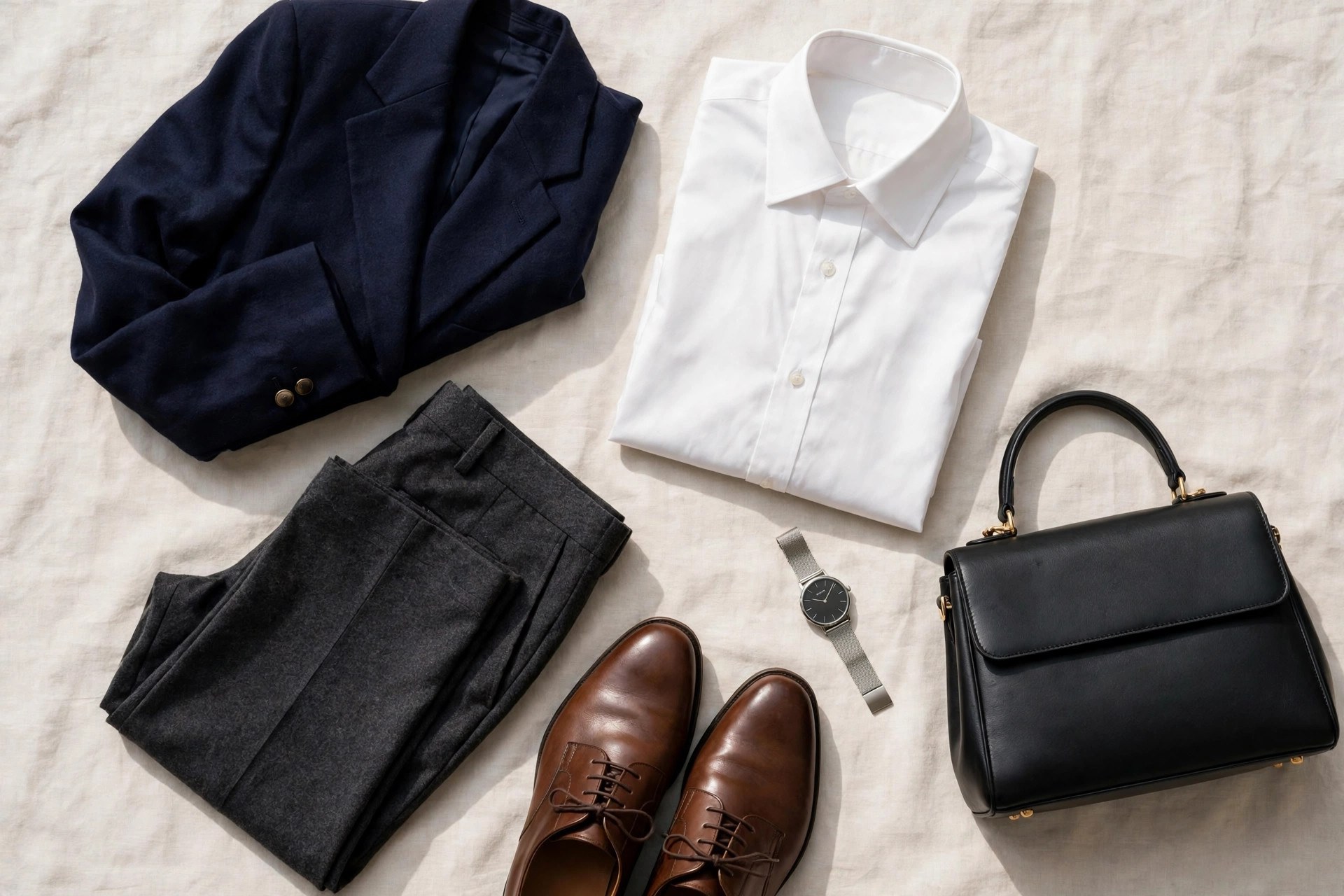
Research the workplace before you choose. A corporate law firm, a bank, and a hospital administration office still expect a suit. A software company, design studio, or start-up may find a full suit stiff — there, smart trousers or dark chinos, a neat button-down or fine knit, clean minimal sneakers or loafers, and a tidy blazer in your bag show you understand the culture. Retail and fashion roles allow — and reward — more personality: this is the one industry where a considered, current outfit is itself evidence. Apparel Search's own employment section has covered interview dressing for fashion careers for years, including interview attire for a fashion job interview and classic advice on acing the job interview and the résumé — both worth reading alongside this modern guide, and both linked from our employment hub.
For hands-on roles — trades, kitchens, warehouses, salons — interviewers expect clean, safe, work-ready clothes: neat trousers or jeans without rips, a plain shirt or polo, closed shoes, and hair secured. Bring or wear nothing that would be unsafe on a walk-through of the site. When you genuinely cannot tell, call reception and ask what people wear, or aim one notch above the job's daily dress; overdressing slightly is forgiven far more often than underdressing.
Fit, Grooming, and the Night-Before Check
Try the complete outfit on the night before, sitting, standing, and walking in it. Check that buttons close comfortably, hems are secure, shoes are broken in, and nothing needs tugging. Lay out everything including socks, underwear, belt, and bag so the morning has no improvisation in it. Shoes should be clean and polished, clothes pressed and lint-free, and a spare shirt or blouse is cheap insurance against a coffee spill on the way.
Grooming carries as much weight as the clothes: clean, trimmed nails, neat hair, light or no fragrance — interview rooms are small and some interviewers are sensitive — and breath mints rather than gum. Covering tattoos and removing extra piercings is no longer expected in most industries, but in conservative fields it remains the lower-risk choice for a first meeting. Arrive ten to fifteen minutes early wearing the outfit, not carrying half of it.
Virtual Interviews and What to Avoid
On video, dress fully — it changes how you sit and speak — and favor solid mid-tone colors that read well on camera: navy, burgundy, deep green, and soft blue. Avoid tiny stripes and busy checks, which shimmer on screen, and pure white, which can blow out in bright light. Frame a clean background, test your lighting the day before, and keep a blazer handy even for casual companies; on camera, structure reads as professionalism.
The avoid list is short and consistent: anything wrinkled, stained, or ill-fitting; jeans, shorts, gym clothes, and flip-flops outside of genuinely casual site roles; revealing necklines or very short hemlines; loud logos and slogan shirts; hats worn indoors; and brand-new shoes. Finally, remember that interview dressing is a series, not a single event — the same care, adjusted down one notch, suits your first week, as our winter work outfits and dress codes explained guides cover in more depth.
Common Questions
- What should I wear to a job interview if I do not own a suit?
- Tailored trousers or a knee-length skirt with a blazer and a plain blouse or dress shirt reads as a suit in most interviews, especially in navy, charcoal, or black. Borrowed and well-fitting beats bought and baggy. For business-casual workplaces, dress trousers, a button-down, and clean loafers are enough.
- Can I wear jeans to a job interview?
- Only when the workplace is genuinely casual — some tech, creative, warehouse, and trade roles — and then choose dark, unripped jeans with a neat shirt or knit and clean shoes. When in doubt, wear trousers instead; nobody loses an offer for being one notch too smart.
- What colors are best for a job interview?
- Navy and charcoal are the safest suit colors, with white or pale blue shirts. Solid mid-tones such as burgundy and deep green work well on camera and in creative fields. Avoid neon, head-to-toe black for daytime professional roles, and busy patterns that distract from your face.
- How should I dress for a video job interview?
- Dress completely, exactly as you would in person, and choose solid mid-tone colors that do not shimmer or blow out on camera. Test lighting and background the day before, sit at eye level with the camera, and keep a blazer within reach to add structure.
More Occasion Outfit Guides
Whatever the invitation, there is a version of getting dressed that is comfortable, appropriate, and still feels like you. Browse the companion guides in this series.