Apparel Search » Fashion Jobs » Fashion Job Interview Questions
Two Tests in Every Fashion Interview
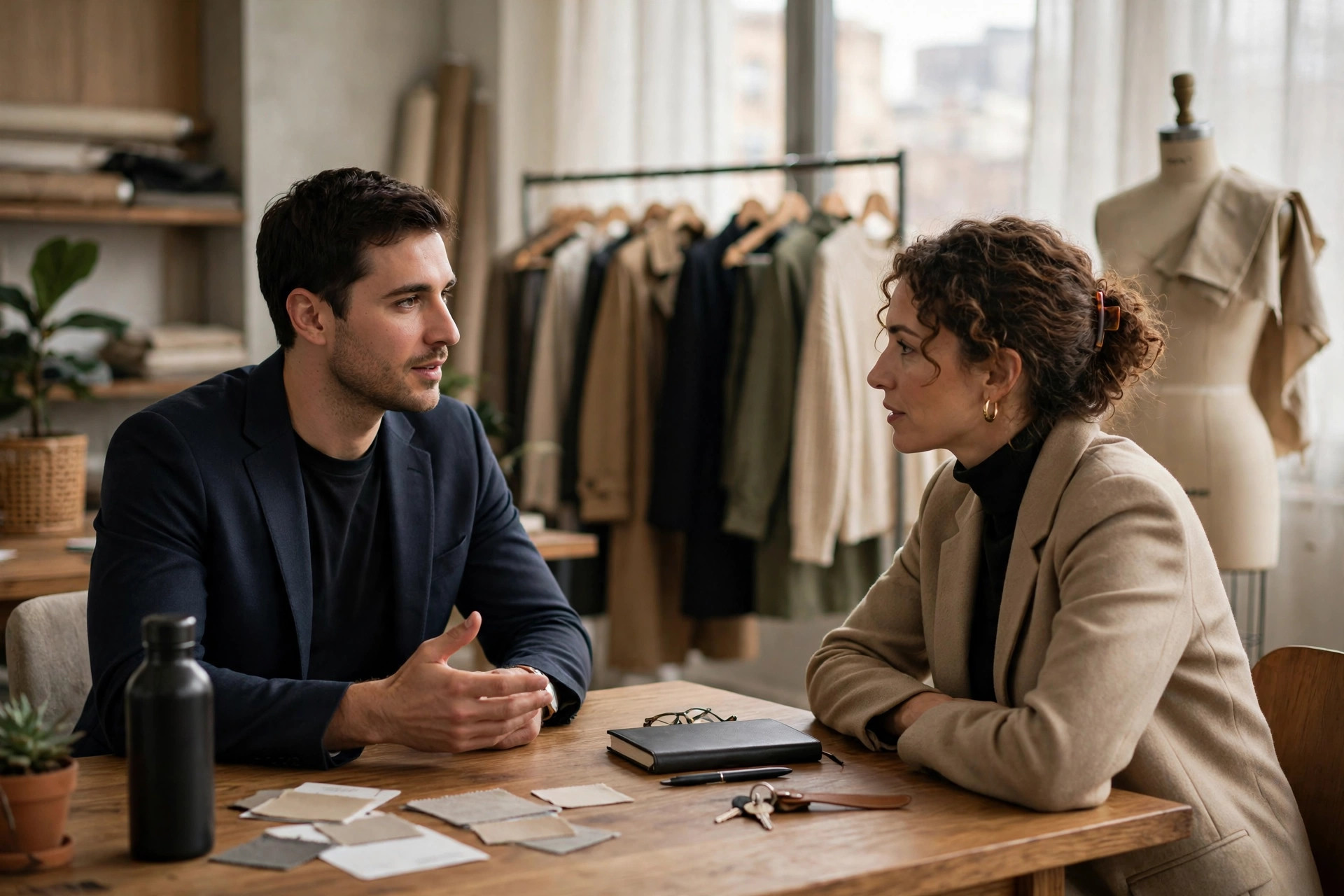
Every fashion job interview quietly runs two tests at once. The first is the standard one: can you do the work, are you reliable, will you fit the team. The second is specific to this industry: do you actually know and care about product. Interviewers in fashion ask about brands, customers, and trends not as small talk, but because genuine product sense is the skill they cannot teach quickly.
The questions below are the ones fashion candidates meet most often, grouped by what the interviewer is really trying to learn, with guidance on what a strong answer contains. Preparation has a second half, presentation, and our companion guide to what to wear to a job interview covers outfit formulas for women and men by industry. Our long-standing terminology guide to interviewing for a career in fashion is worth a read alongside this page.
Questions About You
"Tell me about yourself."
They are asking for your professional story, not your biography. Give a ninety-second arc: where you started, the experience most relevant to this role, and why you are sitting here now. End pointing forward, at this job, so the interviewer can pick up the thread. Practice this one out loud until it sounds like conversation rather than recitation.
"Why do you want to work in fashion?"
This filters out tourists. A strong answer is specific and a little personal: the store, product, designer, or part of the trade that hooked you, connected to the work itself. "I have always loved fashion" says nothing; explaining what you notice when you walk into a well-run store, or why you follow a particular category, shows the interest is real and observant.
"Why do you want to work for this company?"
The most important preparation question on this page. Answer with homework: name products, collections, campaigns, or decisions of theirs that you genuinely rate, and connect them to what you would bring. Candidates who cannot say anything specific about the company are telling the interviewer they would take any job, and interviewers believe them.
"Where do you see yourself in five years?"
They are checking direction and honesty, not demanding a prophecy. A good answer describes growth inside the craft: deeper responsibility in the role family you are entering, skills you intend to build, and results you want to be known for. Avoid naming a different company, and avoid promising to stay forever; neither is credible.
Questions About the Brand and the Product
"Who is our customer?"
This is the fashion interview's signature question. Describe the customer concretely: age and life stage, what they buy and how often, what they wear it for, what they will not spend, and where else they shop. Visit the store or site before the interview and build the answer from what you actually saw, including the price architecture on the racks.
"What trends are you watching right now?"
Name two or three, but tie each to the customer and the price point in front of you. A trend that is wrong for this shopper is a wrong answer even if it is all over social media. Bonus strength: mention how the trend would be translated, toned down, or priced for this brand.
"What would you change about our line, store, or website?"
A test of judgment and diplomacy. Choose something real but fixable, explain the reasoning from the customer's point of view, and acknowledge why it might be the way it is. Never trash the product wholesale; the people across the desk probably built it. One thoughtful, respectful improvement beats a list of complaints.
"Which competitors do you admire, and why?"
Choose competitors the company actually measures itself against, and be precise about what they do well: a fit reputation, a store experience, a social presence, a price position. This answer shows whether you understand the market the company competes in, which is exactly what they need you to do on the job.
Questions About Your Experience and Skills
"Walk me through your experience."
Go in order, spending the most time on whatever is closest to this role, and quantify wherever you honestly can: sales you were responsible for, department size, units, deadlines met, a sell-through you improved. In fashion, results with numbers attached are remembered; adjectives are not.
"Tell me about a difficult project, customer, or deadline."
Use the situation, action, result pattern: what the problem was, what you personally did, and how it ended. Seasonal work provides endless material: a late delivery during peak, a sold-out key item, a store event that went sideways. Choose an example where the ending is decent and the lesson is clear.
"What software and tools do you use?"
Answer accurately and specifically: spreadsheet skill level, any PLM, CAD, point-of-sale, or e-commerce platforms you know, and design tools if the role touches them. If a required tool is missing from your list, say so plainly and describe how you have picked up similar tools before. Interviewers forgive a gap; they do not forgive an exaggeration they discover in week two.
"How do you handle the pressure of season changeovers and market deadlines?"
Fashion runs on unforgiving calendars, so describe your system: how you prioritize when everything is due, how you communicate early when something slips, and an example of a crunch you handled well. Reliability under deadline pressure is one of the traits this industry promotes fastest.
Questions for Retail and Sales Roles
"How would you approach a customer who is just browsing?"
Retail interviewers want warmth without pressure: greet, read the customer's signals, offer a genuine point of interest such as a new arrival or a fit note, then give space while staying available. Mention watching for the moment browsing turns into trying on, because that is where good service converts.
"How do you handle a slow day, or a sales target?"
Describe productive slow-day habits: recovering the floor, learning new product, following up with past customers, reviewing what is selling. For targets, show you understand the levers: conversion, units per transaction, and honest attachment selling that serves the customer rather than the number alone.
Questions You Should Ask Them
The end of the interview is also your interview of them, and thoughtful questions signal seriousness. Ask what success in the role looks like at ninety days and at a year; how the team is structured and who you would learn from; what the season calendar looks like and where the busy peaks fall; and what the last person in the role went on to do. Ask about the product, too: which categories are growing, and what the team is excited about for next season. Save detailed questions about pay, hours, and benefits for the offer stage unless the interviewer raises them first.
How to Prepare
Research the company properly. Walk the store or study the site, read recent coverage, and look the company up in our fashion company profiles to understand its history and position. Research the role in our fashion job descriptions so your answers use the job's real vocabulary.
Prepare stories, not scripts. Have four or five short, true stories ready: a success, a problem you solved, a difficult customer or colleague, a deadline met. Most experience questions can be answered from that small stock, adapted on the spot.
Sort the presentation. Decide the outfit days ahead using our job interview outfits guide, try it on the night before, and bring printed resumes, a notebook, and your portfolio or work examples if the role is creative.
Read the classics. Our employment articles archive includes advice that has aged well, including interview attire for a fashion job interview and a classic piece on acing the job interview and the resume; browse the full set in the fashion job articles index.
Common Questions
How long should my answers be?
One to two minutes for most questions: long enough for a beginning, a middle with a concrete example, and a result; short enough to leave the interviewer room to follow up. If an answer passes three minutes, you are probably telling the whole story instead of the relevant part of it.
What if I don't know the answer to a question?
Say so briefly and honestly, then show your working: how you would find out, who you would ask, or the closest experience you can reason from. Fashion interviewers ask the odd question they know is a stretch precisely to see this. A calm, structured "here is how I would approach that" beats a bluff, which experienced interviewers spot immediately.
Should I ask about salary in the first interview?
Generally, wait. Let the employer raise compensation, or reach the stage where an offer is being shaped; asking in a first interview can read as though the money matters more than the work. Do your range research beforehand so that when the subject does come up, you can respond with a considered range rather than a guess.
What should I bring to a fashion job interview?
Printed copies of your resume (more than one, in case the panel grows), a notebook and pen, and, for creative and product roles, your portfolio or well-chosen work samples. Bring questions you want to ask, written down. And bring nothing that will distract: phone silenced and put away before you walk in.
Keep Going
Return to the Apparel Search fashion jobs hub for job listings, employment agencies, resume services, and the full set of career guides, including our guides on how to become a fashion buyer and how to become a fashion merchandiser.