Apparel Search Consumer Guides
What to Wear for Jury Duty
Business casual with an engineering brief: a long day, a cold room, and a court that is quietly reading the jury box.
Jury service is the one court appearance where the dress standard and the comfort standard have to be solved together. Our what to wear to court guide covers appearances generally; this page is the juror’s version — business casual as the working standard, chosen for hours of sitting, waiting and listening, inside courtroom rules that apply to everyone in the room. Dress like a respectful member of the institution for the day, because that is precisely the role.
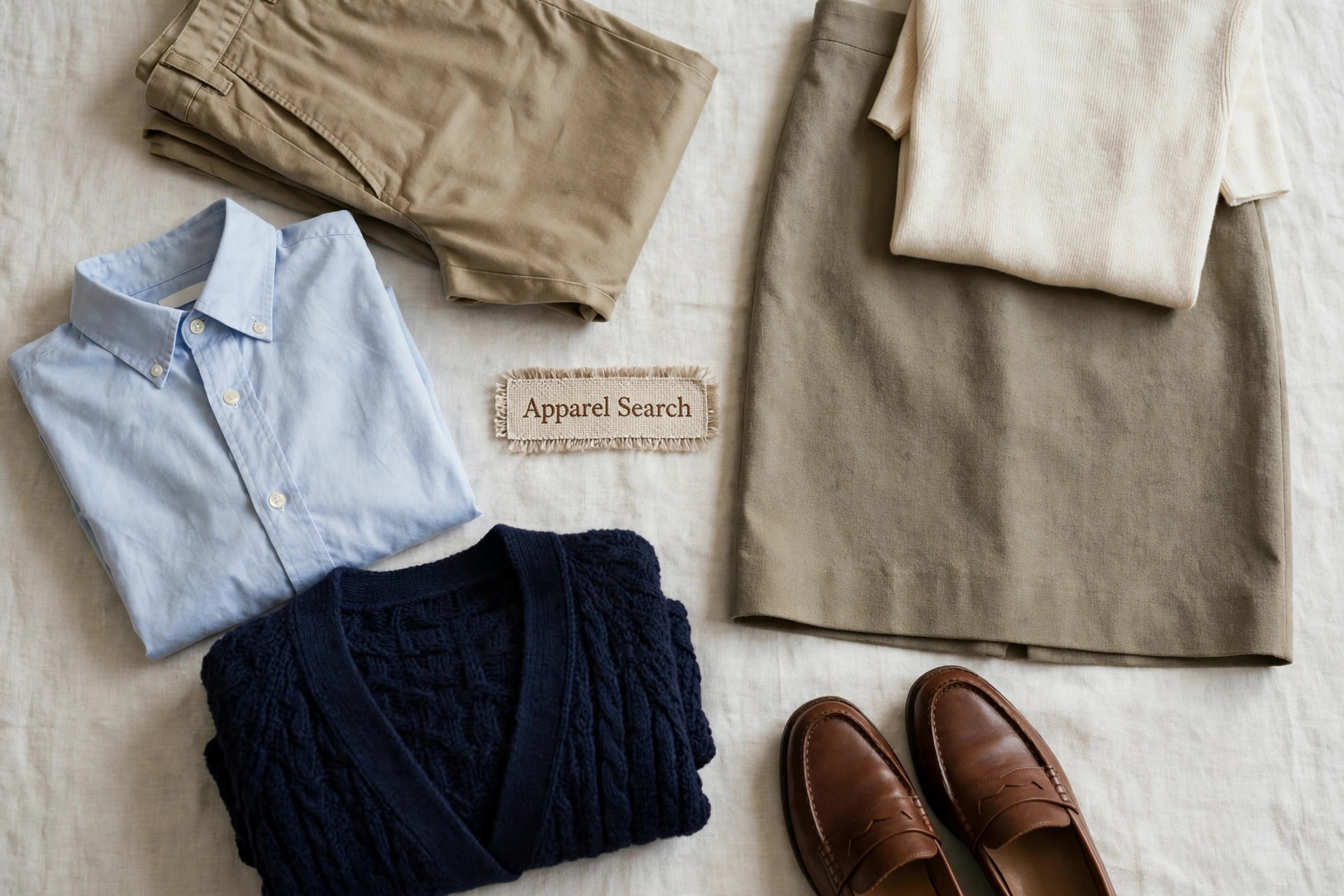
The Working Standard: Business Casual, Kept Neat
Courts that publish juror guidance describe the same outfit: the one our smart casual page would call its workplace form, a step below the suit standard of the dress codes ladder’s business formal rung. For men: trousers or neat chinos, a collared shirt, a sweater or blazer as the day requires, leather shoes. For women: trousers, a skirt or a dress in the same register, a blouse or fine knit, a layer for the room. Nobody expects a juror in full business formal — but the floor is real: shorts, athletic wear, beach clothing and anything with a message sit below it, and court staff may say so.
Comfort Is a Design Requirement
A trial day is a long sit interrupted by long waits, and the outfit has to survive both. Layers first: courtrooms are famously cold — air conditioning set for a full room under lights — while waiting areas run warm; a cardigan, sweater or blazer that reads as part of the outfit lets you adjust without ever looking undressed. Shoes for distance: security lines, courthouse corridors and stairs are the day’s exercise, so choose the comfortable end of respectable — loafers, flats, plain lace-ups — and skip anything new, stiff or heeled for height. Quiet fabrics: the courtroom is a listening room; rustling synthetics, jangling jewelry and squeaking soles are small sounds that carry, and a microphone may be closer than you think. Sitting clothes: waistbands that forgive hour four, fabrics that release their creases, nothing that needs adjusting every time you stand — the jury stands often, for the judge, and should be able to do it without a wardrobe moment.
The Rules That Touch Clothing
Whatever your role, the room’s standing rules apply in the jury box exactly as at the counsel table. Hats come off indoors — religious and medical coverings are the standing exception, and court staff handle those with routine courtesy. Sunglasses come off and stay off. Clothing carrying slogans, logos with messages, or anything referencing a case, a party or a cause does not belong: jurors are required to be visibly impartial, and a message shirt argues otherwise before you have said a word. Food, drink and gum stay outside the courtroom. Our court dress codes and mistakes page lists the full set of common errors; for jurors, the message rule and the hat rule are the two that actually catch people.
One Honest Caveat: It Varies by Court
There is no national juror dress code. Every court sets its own expectations, and many publish them — with the summons paperwork, on the court’s website, sometimes on a recorded phone line. That local word outranks any general guide. Read it the night before, dress a half-step above whatever it describes, and the clothing question is closed before the day begins.
The Night-Before Checklist
- Lay out the full outfit, layer included, and check it for the two words of the court standard: conservative and neat.
- Read your court’s own guidance — summons, website or phone line — and adjust to it, not to habit.
- Choose the shoes for standing: security lines and corridors, worn before, comfortable at hour six.
- Empty the outfit of messages: no slogan tops, no statement accessories, nothing a stranger could read as a position.
- Plan the layer for a cold courtroom, and keep a plain bag ready for the summons and paperwork.
Common Questions
Is there a dress code for jury duty?
Rarely a detailed written one, but most courts publish expectations with the summons or on their website — business casual is the standard they describe, and courtroom rules about hats, sunglasses and message clothing apply to everyone in the room, jurors included. Read your court's own page before the day; it outranks any general guide, including this one.
Can I wear jeans for jury duty?
In many courts, yes — dark, clean, unripped jeans with a proper top are widely accepted for jurors. But practice varies by courthouse, and a few posted rules ban denim outright. If your court's guidance does not say, chinos or trousers remove the question entirely, which is worth something on a morning that already has enough logistics.
Why does it matter what a juror wears?
Because the courtroom reads the jury box. Judges and attorneys take their cues about the panel's seriousness partly from how it presents, and fellow jurors take the room's tone from each other. You are not being judged on fashion — you are contributing to the room's working atmosphere, and neat, ordinary clothes are how that is done.
What should I bring for a long day of jury service?
A layer you can add and remove — courtrooms swing cold — and shoes chosen for standing in security lines and walking courthouse corridors. Bring the day's patience in clothing form: fabrics that do not crease into a map by noon, nothing that pinches by hour three, and pockets or a plain bag for the summons and paperwork, since phones stay off in the courtroom.
Back to the What to Wear to Court Guide
The full section: dressing by role — parties, witnesses, jurors and spectators — men's and women's formulas, and the practical half of security lines and cold courtrooms.