Apparel Search Consumer Guides
Court Dress Codes & Mistakes
What actually goes wrong in courtroom dressing — and why this code, alone among dress codes, comes with someone empowered to enforce it.
Our what to wear to court guide works the positive side of the subject — the principle, the roles, the formulas. This page is the negative space around it: the mistakes that court staff, judges and posted rule lists actually name, gathered in one place so they can be avoided in one reading. Almost none of them are exotic. Court dressing fails the way smart casual fails — far more often on condition and care than on the price of the clothes.
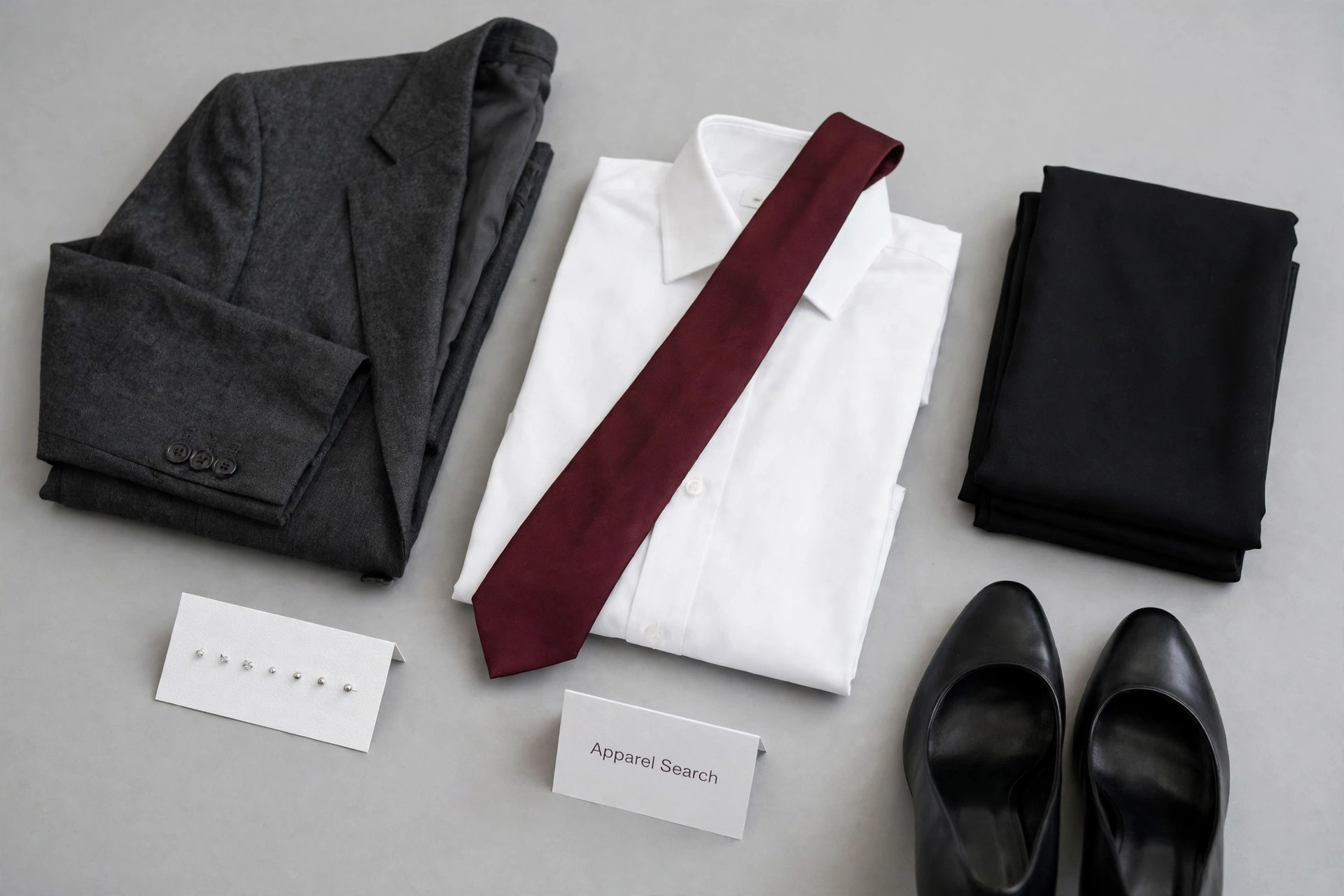
The Mistake List
Too casual. Shorts, flip-flops, tank tops, athletic wear, pajama-adjacent anything. This is the error posted rules name first, because it is the one they see most: dressing for errands on the way to a legal proceeding. If the outfit would work at the beach or the gym, it is below the floor of every courtroom in the country.
Message clothing. Slogans, causes, team loyalties, jokes, brand shouting. A courtroom is a neutral room by design, and clothing that argues — about the case, about politics, about anything — works against the wearer and can be barred outright. The rule peaks for jurors and supporters, who are part of the room’s picture, but it applies to everyone.
Too flashy. Sequins, metallics, statement jewelry worn in quantity, designer logos as decoration. Court is not an occasion; display reads as not understanding the room. The business formal standard — sober colors, small hardware, matte finishes — exists precisely to keep the person, not the wardrobe, in front of the court.
Revealing. Bare shoulders, low necklines, short skirts, midriffs, sheer layers. Posted rules name several of these directly, and the underlying principle is simple: nothing that makes the outfit a topic. A cardigan or jacket over a sleeveless dress repairs most cases on the spot.
Hats and sunglasses indoors. Caps, fashion hats, hoods up, sunglasses worn or parked on the head. All come off in a courtroom — religious and medical coverings excepted, as every court recognizes. It is the quickest rule to follow and one of the most commonly enforced.
Noise and scent. A courtroom is a listening room with microphones. Charm bracelets that chime, bangles that strike the bench, squeaking shoes, and fragrance dosed for an evening out all register. Keep jewelry silent and scent at the level of your own seat — the same courtesy our theatre and opera guide asks of a darkened auditorium.
Distressed and dirty. Torn jeans as fashion, stained shirts, scuffed-through shoes, yesterday’s clothes. Distress that reads as style elsewhere reads as disregard here; condition is the cheapest form of respect and the one entirely in your hands.
Why It Matters More Here
Elsewhere, a dress-code error costs embarrassment. In court it can cost process: a judge may have a spectator removed, require a party to return properly dressed another day, or note the presentation as part of the room’s general impression of credibility. Witnesses are believed in proportion to how seriously they appear to take the occasion; parties are asking the court for something, and the asking starts before a word is spoken. None of this requires expensive clothes. It requires reading the room correctly — and this room is the most conservative one most people ever dress for.
Courtroom Rules vs Workplace Dress Codes
The two systems look alike and behave very differently. A workplace code — even a strict one like business formal — is a policy: issued by an employer, interpreted by managers, enforced by conversation. A courtroom’s standard is closer to a condition of entry: set by the judge, applied by court officers at the door and in the room, and not negotiable on the day. Our dress codes explained hub decodes the named ladder from white tie to smart casual; a court appearance borrows the ladder’s formal end but adds enforcement the ladder never has. Dress for court the way you would for the strictest employer you can imagine — one who can reschedule your day.
The Ten-Second Test
Before you leave, look in the mirror and ask one question: if a stranger described the room afterwards, would my outfit be mentioned? In court, the correct answer is no. The parties’ clothes should disappear into the seriousness of the occasion — that disappearance is the whole art of dressing for it.
If Your Wardrobe Is Casual
A casual wardrobe is not a bar to a correct court appearance; it just takes a night of preparation. Clean and press the best trousers and shirt you own, add a belt, clean the shoes properly, and borrow or thrift a blazer if one is within reach — a single structured layer moves an outfit a full rung up the ladder. Cover shoulders, remove the message, silence the jewelry. The standard is condition and quiet, not labels, and both are achievable from almost any closet.
Common Questions
Can a judge really send me home over my clothes?
Yes. A judge controls the courtroom, and clothing that breaches the court's rules or distracts from the proceedings is within that control. In practice it usually means being told to change, to remove an item, or to come back another day properly dressed — an embarrassing outcome, and for a party to the case, a costly one. The posted rules at the courthouse door are the ones to read.
Are hats ever allowed in a courtroom?
Head coverings worn for religious or medical reasons are routinely honored — court staff are used to them and handle the question discreetly. Fashion hats, caps and hoods are a different matter: they come off indoors, and a bailiff will usually ask before a judge has to. If you wear a covering for a protected reason, a quiet word with court staff on arrival settles it.
What about a T-shirt with a slogan or a cause on it?
Leave it at home. Courtrooms restrict message clothing — judges may bar shirts that support or oppose a party, a case or an issue from the room, and spectators have been asked to turn them inside out or leave. The rule is about the room's neutrality, and it applies whatever the message says. A plain shirt is never the wrong answer in court.
What is the single most common court clothing mistake?
Dressing for errands. Shorts, flip-flops, gym clothes and a cap — the run-around outfit — is what court staff see most and what posted rules name first. It is rarely defiance; it is underestimating the room. The fix costs nothing but forethought: the same person in trousers, a collared shirt and closed shoes is inside every court's standard.
Back to the What to Wear to Court Guide
The full section: dressing by role — parties, witnesses, jurors and spectators — men's and women's formulas, and the practical half of security lines and cold courtrooms.