Apparel Search Consumer Guides
What to Wear to Court
The one everyday room where your clothes are read as respect — how to dress for it, role by role.
Almost every other dress code on this site arrives printed on an invitation or written into an employee handbook. Court is different: nobody sends you the code, yet the room enforces one — quietly, through a judge’s discretion and the first impression you make on everyone deciding your business. This guide sets out how to dress for a court appearance: the governing principle, what the court actually expects, and how the standard shifts with your role, whether you are a party to the case, a witness, a juror or a spectator. It sits beside our dress codes explained hub, which decodes the named codes, and our job interview outfits guide, which works the same high-stakes logic for a different room.
Search Apparel Search
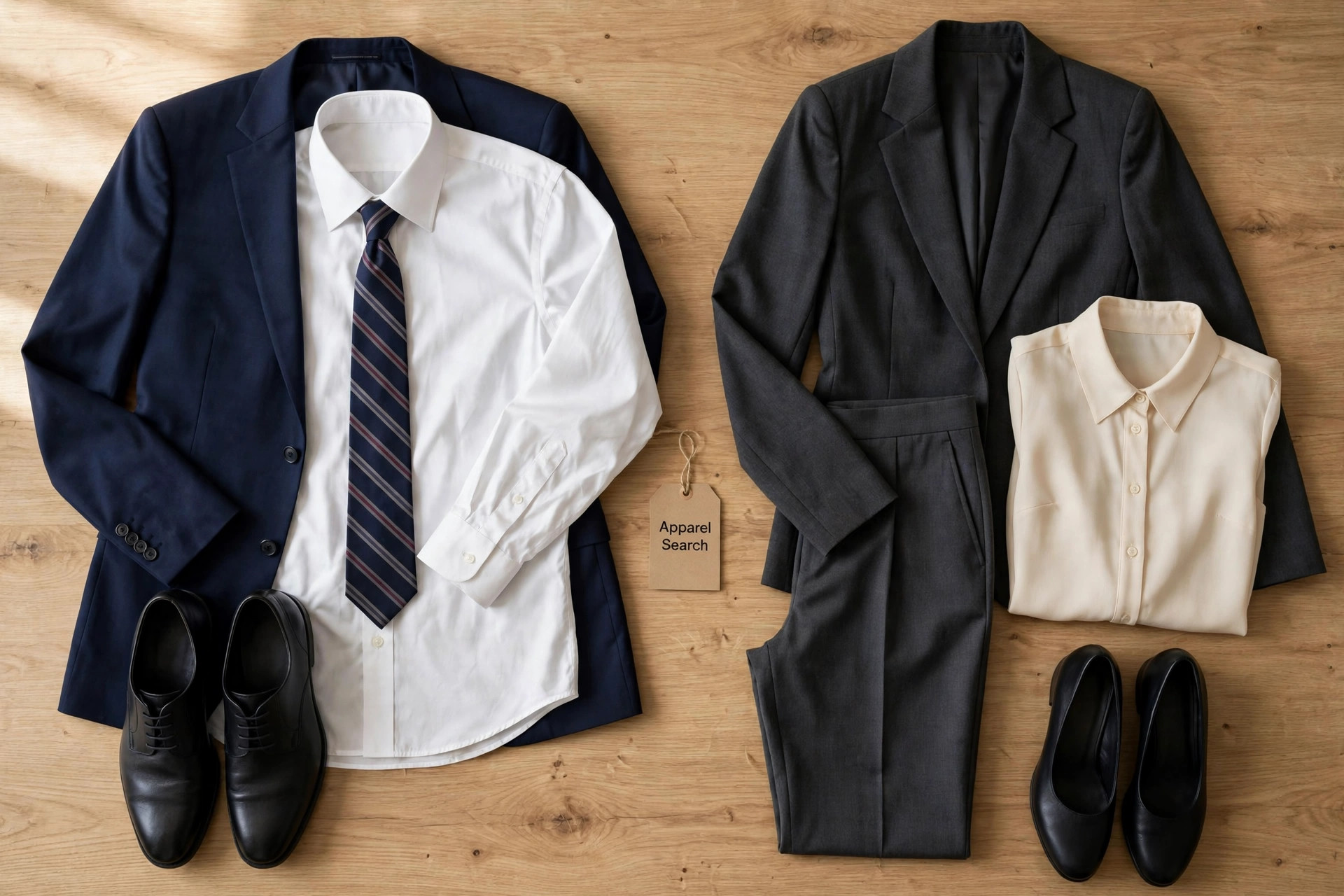
The Guides in This Section
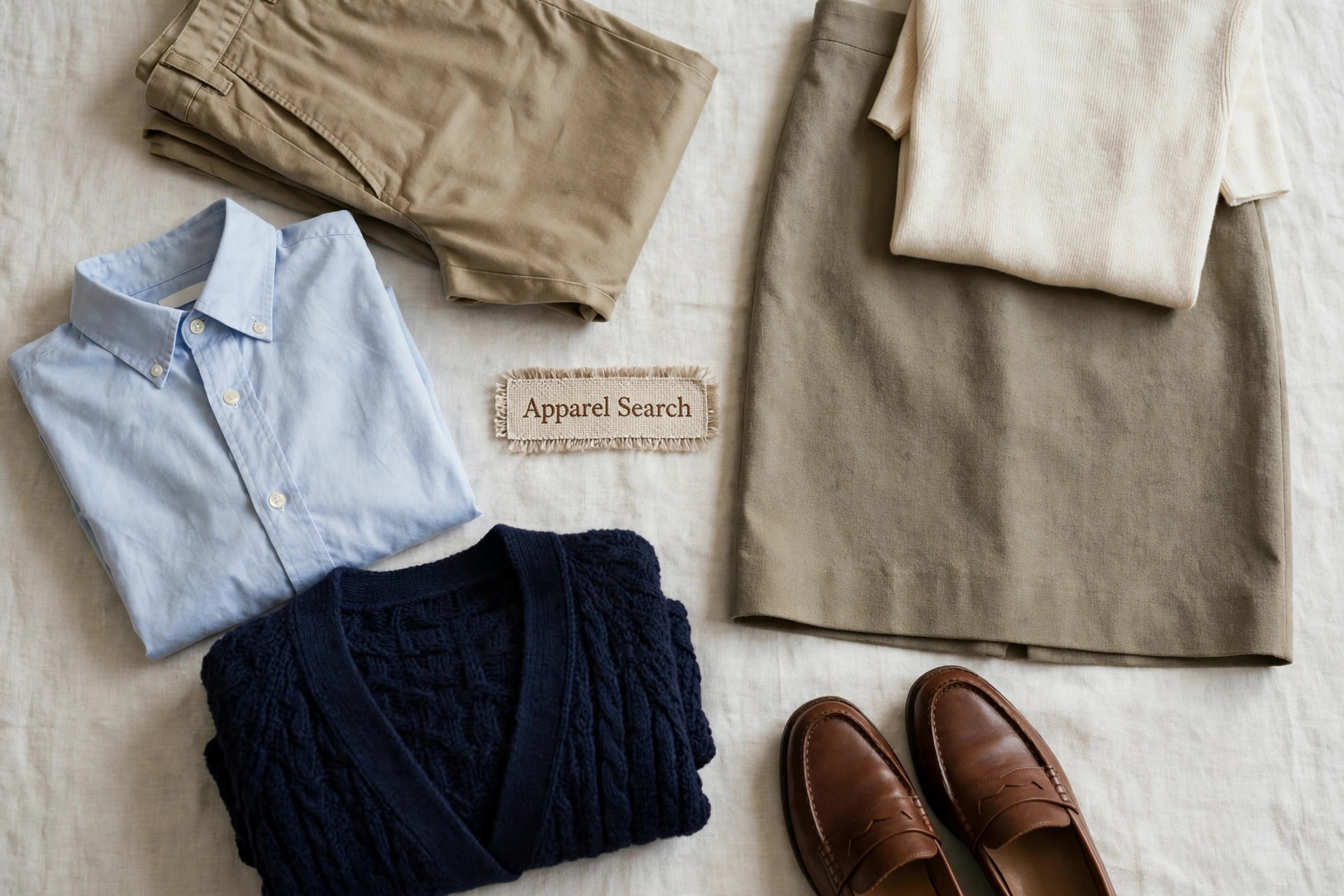 What to Wear for Jury DutyBusiness casual kept comfortable for a long day: layers for cold courtrooms, quiet shoes, and the clothing rules — hats, slogans, sunglasses — that courts post and enforce.
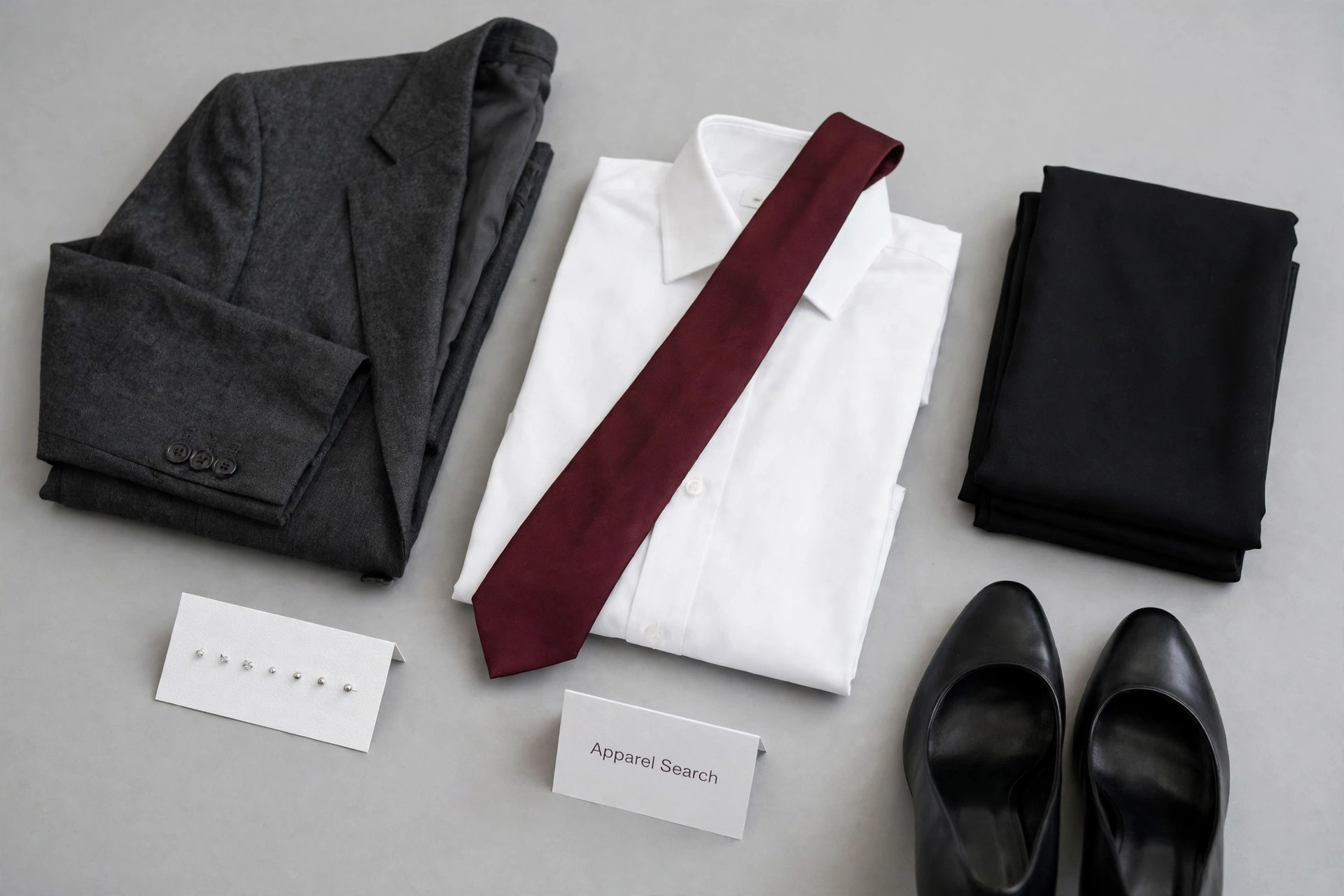 Court Dress Codes & MistakesThe errors that actually draw a judge's eye — too casual, too flashy, message clothing, noisy jewelry — and how courtroom rules differ from the dress codes at work.
The Governing Principle: Conservative and Neat
Every courtroom standard, written or unwritten, reduces to two words. Conservative: the outfit should argue nothing — no slogans, no team colors, no fashion statements, nothing that asks the room to think about your clothes. Neat: clean, pressed, complete and in good repair, because condition is the part of the message entirely in your control. A plain suit worn crisply does its job; a costly one worn carelessly fails it. When you are choosing between two options at any point in this guide, pick the quieter one — court is the rare setting where overdressing is almost impossible and underdressing is a real liability.
What the Court Expects
Courts run on decorum, and clothing is part of it. Many courthouses post a short list of rules at the door or on their website — hats and sunglasses off, no shorts or tank tops, no clothing with offensive or case-related messages — and court officers can and do turn people away to change. Even where nothing is posted, the judge controls the room and may address anything that distracts from the proceedings. The practical reading: dress so that no rule, posted or unposted, could possibly apply to you. Our court dress codes and mistakes page walks the specific errors; the short version is that the court’s standard sits at the formal end of the ladder our dress codes hub draws, and it does not bend for fashion.
Dressing by Role
Parties to the case. If the hearing is about you — defendant, plaintiff, petitioner — dress at the top of the range: a suit and tie, or the equivalent tailored outfit, in dark, sober colors. This is business formal territory, worn for the same reason lawyers wear it: the room reads care as credibility. Our suit fit guide covers the fitting half — an almost-right suit, pressed and clean, beats a perfect one that pulls and sags.
Witnesses. A witness is there to be believed, and believability dresses quietly: conservative separates or a simple dress, covered shoulders, nothing that photographs oddly or jingles when you move. Avoid anything connected to the case — no team jerseys, no employer logos, nothing that argues a side before you speak.
Jurors. The standard is lower but the day is longer: business casual, kept neat, built for hours of sitting in a cold room. That combination has its own page — see our jury duty guide.
Family and spectators. You are part of the picture the court sees, so the same rules apply at one notch less formality: neat, covered, quiet. Supporters sometimes coordinate colors or wear message clothing for a cause; courtrooms are the wrong place for it, and officers may ask you to remove or cover it.
For Men
The default formula is the business formal one: a dark suit — navy or charcoal — a white or pale shirt, a plain or quietly striped tie, a belt, and polished leather shoes with dark socks. Without a suit, the floor is dress trousers, a buttoned shirt with the tie, and a blazer; without a tie, you have left the standard for a party to a case, though a witness or spectator in a neat shirt and trousers is within range. Grooming carries unusual weight in this room: hair tidy, facial hair neat, nails short and clean, no hat, no sunglasses on the head.
For Women
The equivalents run parallel: a tailored suit — trousers or skirt — or a conservative dress with a jacket or cardigan, in dark or muted colors. Skirts at or near the knee, necklines that need no adjusting, sleeves or a layer over the shoulders. Shoes closed and walkable — you may stand in security lines and climb courthouse stairs — with jewelry kept small and silent. Makeup and hair follow the same principle as the clothes: neat, ordinary, and finished well before you arrive, because courtrooms offer no mirror-and-touch-up moment that does not feel out of place.
The Practical Half: Security, Waiting and Layers
Court dressing has logistics the ballroom never imposes. Security screening is airport-style at most courthouses: a big belt buckle, steel-toe boots or metal-heavy accessories slow the line and may have to come off — choose a plain belt and easy shoes. Courtrooms run cold, deliberately or not, so a layer that reads as part of the outfit — the blazer, a cardigan — is equipment, not styling. Waiting is the day’s main activity: cases are called in order, benches are hard, and phones must be off or silent, so wear clothes that sit comfortably for hours and shoes you can stand in. Arrive early, dressed complete; the corridor is not a changing room.
Court Dress, the Other Meaning
The phrase “court dress” also names the historic formal dress of royal courts and the legal profession’s prescribed robes and wigs — a subject with its own Apparel Search court dress definition. This guide covers the modern, practical question: what a member of the public wears to attend a court today.
When in Doubt, Dress One Step Up
No one has ever lost ground in a courtroom by being the slightly overdressed person in it. If you are torn between two outfits the night before, choose the more formal one, lay it out complete — belt, shoes, the works — and check it against the mistakes list. The morning of a hearing is stressful enough without a wardrobe negotiation.
Shop Court-Ready Clothing on Amazon
Ready to shop? Product links are kept in one place on the Apparel Search shopping guide:
Shop Clothing on AmazonThis link opens the Apparel Search shopping guide for Amazon, where the product links are kept in one place.
Common Questions
Do I have to wear a suit to court?
Not always — it depends on your role. If you are a party to the case, a suit or its equivalent is the safe standard, because your appearance is part of how you are heard. Witnesses and spectators have more room: neat business casual is the usual floor. Jurors have their own standard, covered in our jury duty guide. What never varies is the condition: clean, pressed, complete and quiet.
What should a witness wear?
Something credible and forgettable. A witness is there to be believed, and the outfit that serves that best is the one nobody describes afterwards: conservative colors, covered shoulders, no logos or messages, minimal jewelry. Think of the standard for a formal job interview, one notch calmer — our interview outfits guide works through the same logic.
Can I wear jeans to court?
It depends on the court and your role, and that is exactly the risk. Many courtrooms quietly tolerate dark, neat jeans on spectators and jurors; some posted court rules ban denim outright; and for a party to the case, jeans spend credibility you may need. If the outcome matters to you, wear the trousers — the room where it matters is not the place to test the local tolerance.
What if I do not own anything formal?
Wear the best version of what you have: your cleanest, best-fitting clothes, pressed, with a belt, tucked in, shoes cleaned, hair tidy. Condition carries most of the message — a plain outfit in perfect order reads as respect, while an expensive one worn carelessly reads as the opposite. Borrowing a blazer, or finding one second-hand, lifts almost any base outfit into range.