Apparel Search Consumer Guides
Professional Headshot Outfits
A head-and-shoulders crop makes the top eight inches of your outfit do all the work — necklines, collars, layers and colors that serve your face, for corporate and creative industries alike.
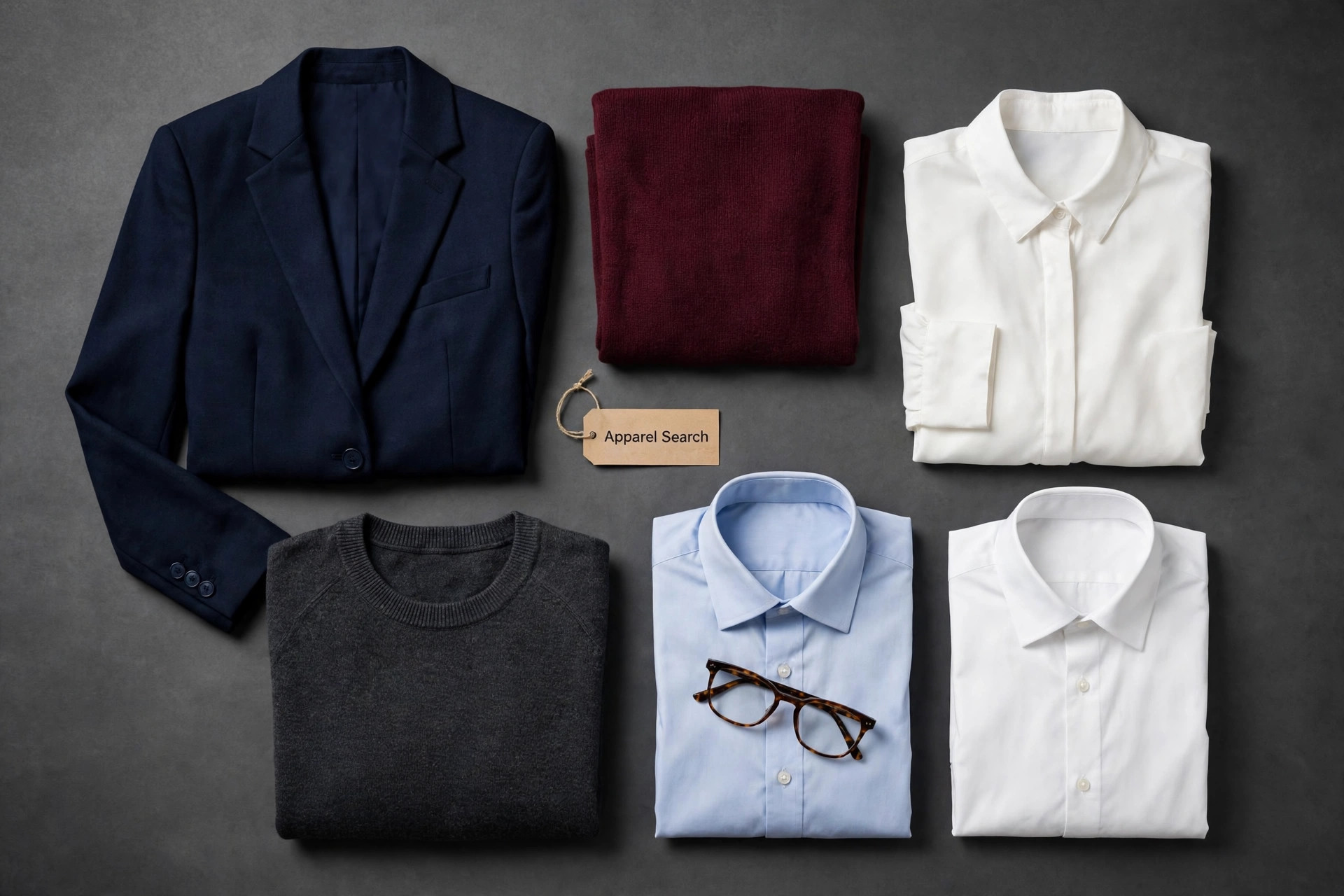
A professional headshot is the most cropped photograph of your life: head, shoulders, and roughly the top few inches of whatever you are wearing. That crop rewrites the wardrobe rules. Seams, hems and shoes vanish; the neckline, the collar, the shoulder line and the fabric nearest your face become the entire outfit. This guide works through what photographers and stylists consistently advise — how the right choice changes between a law firm and a design studio, which necklines serve which faces, why solids beat patterns on a sensor, and how to keep one reliable outfit ready so an update never starts from zero.
Start With the Crop
Everything visible in a headshot sits within a frame that usually ends somewhere between the chest and the shoulders. That means the garment’s top eight inches do all the work: neckline, collar, lapel, shoulder seam, and the fabric’s color and texture at the face. It also means the rest of the outfit is not irrelevant — dressing fully, rather than in a good top over gym shorts, changes posture and confidence in ways the camera registers — but when you are choosing between two tops, judge the part the frame will keep. Bring more than you will wear: photographers routinely ask clients to bring two or three options, because a color or collar that looked right at home can misbehave under studio light, and the second option saves the session.
Corporate vs Creative: Read Your Industry
Corporate headshots — law, finance, banking, senior corporate roles — run conservative for a reason: the photograph has to assure people who will never meet you. The standard kit is a suit jacket or blazer in navy or charcoal, a shirt or blouse with a clean neckline, a tie where the firm’s culture wears one, and nothing experimental. Fit carries the formality: a jacket that sits exactly on the shoulder and a collar that stands properly read as senior before a word is read.
Creative and technology headshots allow the person to show through: a textured knit, a soft unstructured jacket, an open-collar shirt, a color with some character, even a quality plain crew-neck in the most informal studios. The freedom is about personality, not slackness — the creative headshot wardrobe is still fitted, clean and deliberate, and its most common failure is dressing so casually that the sitter looks junior in their own industry. The honest middle rule for anyone between the two worlds: dress one notch above how you dress for an ordinary workday, which is also the core advice of our job interview outfits guide — a headshot is an interview that never ends.
Necklines, Collars and Layers
The neckline is the frame around the face, so it earns the most thought. V-necks and soft scoops lengthen the neck and suit most people; a collar — shirt, polo, jacket lapel — adds structure that reads as professional at any size. High crew necks can crowd the chin in a tight crop and shorten the neck visually, and wide boat necks have a habit of slipping off one shoulder mid-session. Necklines that sit very low pull focus from the face, which is the one place focus belongs. Layers are the headshot’s best tool: a blazer or cardigan over a simple top adds a clean shoulder line, gives the crop a finished edge, and creates a second look in thirty seconds — jacket on for the formal version, jacket off for the approachable one. Keep necklaces short enough to sit above the neckline’s edge or skip them in the frame; a pendant that lands mid-chest is cropped out anyway, and one that tangles with a collar reads as untidy at headshot magnification.
Solids Photograph, Textures Enrich, Prints Distract
The camera’s verdict on pattern is consistent. Solid colors keep attention on the face and hold up at every size the photo will ever be shown, from a directory thumbnail to a conference banner. Texture — knit, tweed, seersucker, a woven jacquard — photographs as richness without movement, and is the safe way to avoid a flat, plain look. Prints are the risk: bold patterns outshout the face, and very fine stripes or tight checks can shimmer and warp on digital sensors, an effect called moiré. If a patterned piece is a signature, keep it small in scale, low in contrast, and under a solid jacket.
Color, Background and Light
Choose color the way the camera will meet it. Mid-tones with gentle contrast against your skin — deep blues, burgundy, forest, teal, warm greys — are the dependable zone across skin tones and backgrounds. Ask the photographer what backdrop they shoot on: a grey studio background swallows a grey top; a white background makes a white shirt disappear into it while the face floats. A white shirt remains a classic under a darker jacket, where it becomes a controlled bright panel rather than the whole exposure. Jewelry in the frame should be quiet and matte where possible — highly polished pieces catch studio lights and throw bright points that retouchers have to chase; glasses wearers should ask about glare (a slight downward tilt of the frames, or shooting a few frames without lenses in the way, are the standard fixes), and if you wear glasses in life, wear them in the photograph — the point is to be recognized.
For Men: Collar, Tie and Shoulder
Men’s headshots live and die at three points. The collar: it must stand, sit close to the neck, and be symmetrical — a collar gaping or slumped on one side is the most common flaw in an otherwise good corporate portrait. The tie decision follows the industry: worn where clients wear one, skipped where they do not, and if worn, tied in a knot scaled to the collar and kept in a solid or near-solid pattern. The shoulder: the jacket’s shoulder seam belongs exactly on your shoulder bone — in a frame this tight, a drooping or pinched shoulder is the whole silhouette. An undershirt should never outline itself under a dress shirt in studio light; wear none, or one deep enough in the neckline to stay invisible. Our business formal attire guide covers the full corporate kit these portraits are drawn from, and one reliable version of it — kept pressed and ready — is the wardrobe answer to every future headshot. The pieces themselves are ordinary workwear; our Amazon shopping guide collects the marketplace options for blazers, shirts and knits in one place.
Refreshing an Outdated Headshot Wardrobe
Headshots expire quietly — the face changes slowly, but the clothes in the photograph date on fashion’s calendar, not yours. The tells: lapels and ties from a visibly different era, a neckline no one wears anymore, a jacket whose fit belongs to a different decade’s cut. The wardrobe fix is not a new wardrobe. Keep one designated headshot outfit — the jacket that fits now, the top that photographs well now — together in the closet, pressed and complete, reviewed once a year the way you review the photograph itself. When the picture stops looking like you, the outfit is already waiting, and the retake becomes an appointment instead of a shopping project. For the rest of the working wardrobe around it, see our guides to men’s work wardrobe essentials and business travel wardrobes.
Common Questions
What is the best thing to wear for a professional headshot?
A well-fitting top or jacket in a solid mid-tone color, with a neckline that frames your face and nothing that competes with it. For corporate settings that usually means a blazer or suit jacket over a shirt or a simple top; for creative industries, a neat knit, a textured jacket or an open-collar shirt in a color with some personality. The universal rules outrank the industry ones: solid over busy, fitted over loose, and clean and pressed over everything.
Do patterns work in headshots?
Mostly no, with one exception. Large or busy patterns pull the eye away from the face, which defeats the purpose of the photograph. Very fine stripes and tight checks carry a second risk: they can shimmer and distort on digital camera sensors. The exception is texture — a knit, a tweed, a subtle weave — which photographs as depth rather than pattern at headshot distance. When you want visual interest, take it in texture and in the cut of a collar or lapel, not in print.
What colors should I avoid in a headshot?
Avoid colors that fight the photograph: stark white on its own can overexpose and lose detail, neons and very bright saturated colors can cast their tint onto your skin, and a color close to the studio backdrop can make you blend into it — ask the photographer what background they use. Mid-tones with some contrast against your skin are the dependable zone. If a favorite piece is white, wear it under a jacket so it is a panel, not the whole frame.
How often should a headshot outfit be updated?
Whenever the photograph stops looking like you — and the wardrobe test is simple: if the outfit in your current headshot is one you would no longer wear to meet a client, the picture is due. Lapels, ties, collars and necklines date quietly. Many professionals keep one reliable headshot outfit ready in the wardrobe — a jacket that fits, a top that photographs well — so an update never starts from an empty closet.