Apparel Search Consumer Guides
Engagement Photo Outfits
Two people, one photograph: how couples coordinate outfits for engagement pictures — palettes instead of matching, colors that behave on camera, and dressing for the place you will be standing.
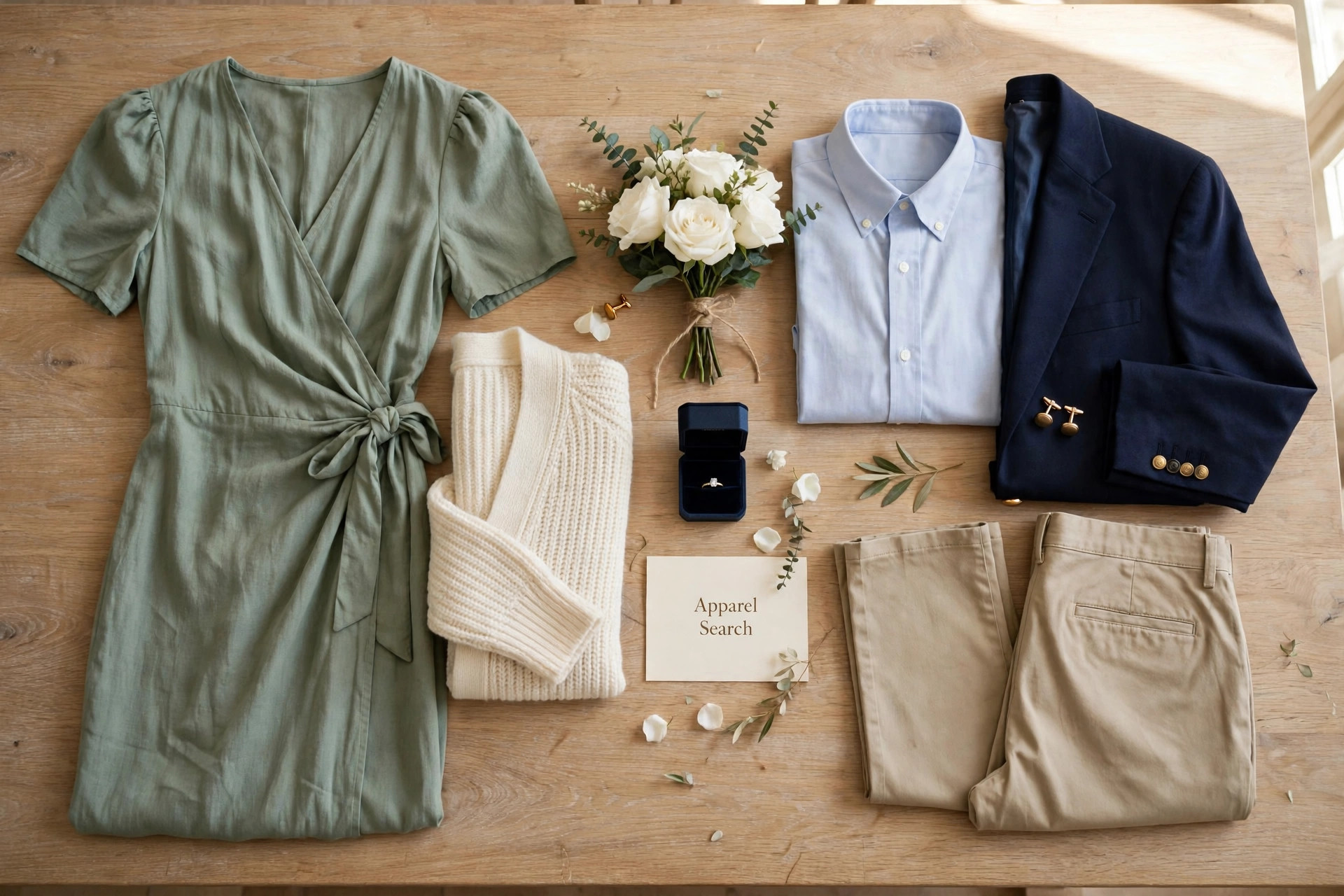
An engagement session is the one photo shoot most couples plan down to the last detail and then dress for at the last minute. That is a pity, because these pictures work harder than any others a couple owns: they announce the engagement, fill the save-the-dates and the wedding website, and get framed by two families. Photographers who shoot these sessions give strikingly consistent wardrobe advice, and this guide distils it — how a couple coordinates without matching, which colors behave on camera, how a two-outfit session runs, and the location logic that decides more outfits than taste does.
Coordinate, Do Not Match
The first rule of dressing two people for one photograph is that they are two people. Identical outfits — same color, same style, sometimes literally the same sweater — flatten a picture into a uniform and make the couple look like a team on its way somewhere else. The alternative photographers recommend is a shared palette worn differently: pick two or three colors that sit well together, then divide them unevenly. One partner wears the deeper tone as the main garment, the other wears the lighter tone; one wears a solid, the other carries the palette’s single quiet pattern; textures differ — knit against denim, lace against linen — so the camera can tell the two figures apart even in a wide shot.
A practical way to build it: lay both outfits on a bed together. They should look like they belong in the same photograph and in the same season, and neither should be a copy of the other. If one outfit is dressy, the other must meet it at the same level — a cocktail dress beside cargo shorts breaks the picture no matter how well the colors agree. Our family photo outfits guide works through the same palette method for a whole family group.
Colors on Camera
Cameras are not eyes, and a few colors behave very differently through a lens. Mid-tones are the safe center: sage, dusty blue, camel, blush, soft grey, muted burgundy. They keep their detail, they do not fight skin tones, and they sit quietly behind two faces. Stark white is the classic problem color outdoors — in bright light it can overexpose into glare and lose every seam and fold; a white dress works when it is textured, shaded, or broken up by a layer. Black does the opposite, absorbing light until a garment becomes a silhouette; it photographs best in structured fabrics with visible texture. Very saturated brights and neons can throw a color cast onto the skin next to them. None of this bans a favorite color — it argues for testing it: photograph your outfits on a phone in daylight before the session, in the kind of light you will be standing in.
One Pattern Per Couple
Patterns multiply across two people. A floral dress beside a checked shirt gives the camera two competing rhythms and the eye nowhere to rest. Keep the total to one pattern between you — ideally one, quietly scaled — and let the other outfit be solid. Very fine stripes and tiny dense prints deserve special caution: they can produce a shimmering distortion effect on digital sensors, most visible on tightly woven shirts and dresses. When in doubt, the phone test at arm’s length shows it before the photographer’s camera does.
The Two-Outfit Session
Most engagement sessions run long enough for two looks, and two is the number photographers plan around. The standard pairing is one dressier outfit and one casual outfit: the dressy set makes the announcement photograph — the one that goes on the card and the wall — and the casual set makes the relaxed pictures that tend to become the couple’s actual favorites. Wear the dressier clothes first, while everything is fresh, and change into the casual ones for the second half. Confirm the change with your photographer when you book: some locations make changing easy and some make it an expedition, and the answer shapes what the second outfit can be. Bring both outfits on hangers, not folded in a bag — creases photograph beautifully, unfortunately.
Location and Season Decide More Than Taste
Ask where you will be standing before you decide what you will be wearing. A field, garden or vineyard session punishes thin heels, which sink into grass and soil — choose block heels, wedges or flats for grass, whatever the dress suggests. A city session on pavement frees the footwear but adds walking: engagement shoots move between spots, and shoes are broken in beforehand or regretted during. Beach sessions want fabrics that move and hems that tolerate sand and a wet edge. Season writes the rest of the brief. Golden-hour shoots end in cooler air than they begin in, so a layer that belongs to the outfit — her cardigan, his jacket worn rather than carried — earns its place in both the warmth plan and the photographs. In high summer, choose breathable fabrics and skip anything that shows perspiration at the first warm ten minutes; in late autumn, coordinate the coats, because the coats will be in half the pictures.
The Ring Hand, and Other Close-Up Logic
Engagement sessions include close photographs of hands — the ring is the point of the day — and that makes sleeves a design decision, not an afterthought. Sleeves that end at or above the wrist keep hands clear in close-ups; very long, loose or heavily cuffed sleeves crowd the frame and fight the shot. Bracelets and watches stacked on the ring hand compete with the ring itself in exactly the photographs it stars in, so the classic advice is to keep that wrist simple and let the other carry the extras. What the camera sees of hands, it sees at high magnification: the clothing point is simply that cuffs, sleeve hems and anything worn at the wrist should be clean, neat and deliberate.
For Him, Briefly
The men’s version of the same rules: fit first — a blazer or shirt that fits the shoulders and is neat at the collar reads as dressed up even with chinos; coordinate by taking one color from her palette rather than duplicating her outfit; wear the better shoes, cleaned; and use layers (blazer, overshirt, knit) to give the photographer variety within one outfit. Our guide to how a suit should fit covers the shoulder and sleeve checks in detail. And the starting point of this whole story — the first date outfits page — is where couples who planned ahead began.
Common Questions
Should couples match outfits for engagement photos?
Coordinate, do not match. Two people in identical colors and identical styles read as a uniform, and the photograph goes flat. What works is a shared palette — two or three colors that sit well together — worn in different garments and different proportions: one partner in the deeper tone, the other in the lighter one, with texture and one quiet pattern to separate them. You should look like you planned to be photographed together, not like you were issued the same kit.
What colors photograph best for engagement pictures?
Mid-tones and soft neutrals are the reliable end of the spectrum: sage, dusty blue, camel, blush, burgundy, soft grey. They hold detail on camera and stay kind to skin. The two troublemakers are stark white, which can blow out to a featureless glare in bright light, and black, which can swallow detail and shadow. Neon and very saturated brights reflect their color onto nearby skin. If a favorite piece is white or black, layer it — a jacket, cardigan or scarf over or under it breaks up the block and gives the camera something to work with.
How many outfits should we bring to an engagement session?
Two is the working number for most sessions: one dressier look and one casual look, changed halfway. That gives the final set two moods — the announcement-card photograph and the relaxed one — without turning the shoot into a costume relay. Wear the dressier outfit first, while hair and clothes are at their freshest, and confirm with your photographer beforehand that the session allows a change and where it will happen.
What should we avoid wearing in engagement photos?
Big logos and slogans, which date the pictures and read as advertising; busy micro-prints and very fine stripes, which can shimmer and distort on camera; brand-new, never-worn outfits, whose fit surprises arrive in front of the lens; and anything either of you will spend the session adjusting. The camera notices discomfort. Break in the shoes, test the outfits sitting and walking, and retire anything that needs constant tugging.