Apparel Search Consumer Guides
Everyday Special Occasions Outfit Guide
Between the weddings, the showers and the holidays sits the rest of the social calendar — retirement parties, garden parties, opening nights. Here is how to read those occasions, and dress for each one.
Apparel Search has guides for the big set pieces of the calendar — weddings, showers, graduations, the holiday season. But most people attend far more of the other kind of occasion: the colleague's retirement party, the summer garden party, the night at the theatre that someone organised months ago. These invitations rarely print a dress code, the formality is genuinely ambiguous, and the cost of getting it wrong is an evening spent feeling like the only person who misread the room. This hub exists for those occasions.
Three of them get deep guides of their own in this section. A retirement party is a career finale with its own rules for the guest of honour and the guests. A garden party is an outdoor occasion where the ground, the sun and the heat are part of the dress code. A night at the theatre or the opera runs on custom rather than code — nothing is required, but effort is still noticed. Underneath all three sits one skill, and it is the real subject of this page: reading an occasion from its invitation, its venue and its hour. If you want the formal ladder itself — white tie down to smart casual, each code defined — it lives on our dress codes explained page; this hub is about the occasions that ladder does not name.
Search Apparel Search
The Guides in This Section
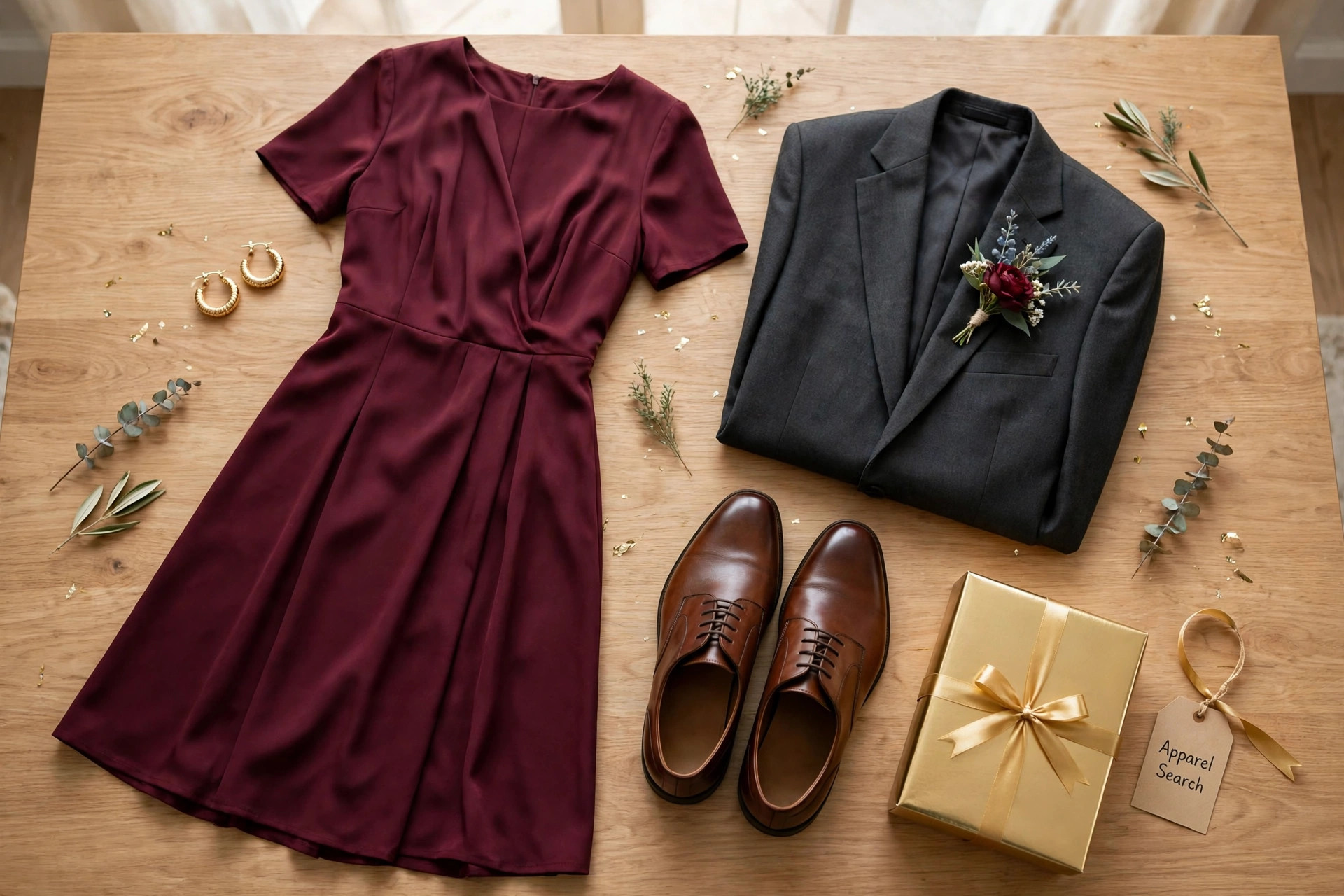
 Retirement Party OutfitsFor the retiree, a career finale: polished and celebratory, not a job interview. For guests, one step below the guest of honour. Office parties, restaurant dinners and evening celebrations, for women and men.
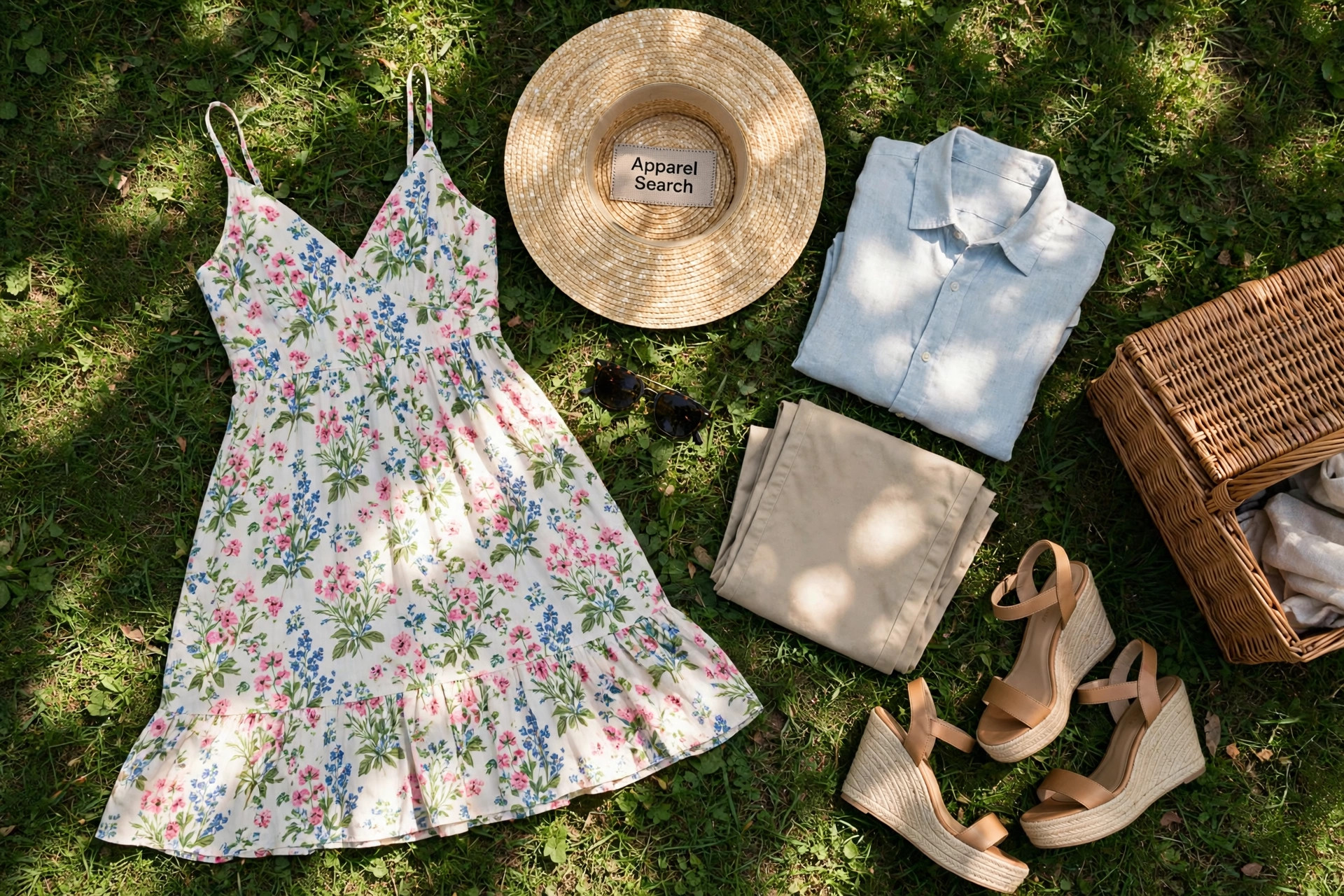 Garden Party OutfitsOutdoor elegance with practical feet: the lawn footwear problem solved, sun and hat strategy, fabrics that survive heat, and evening garden parties — for women and men.
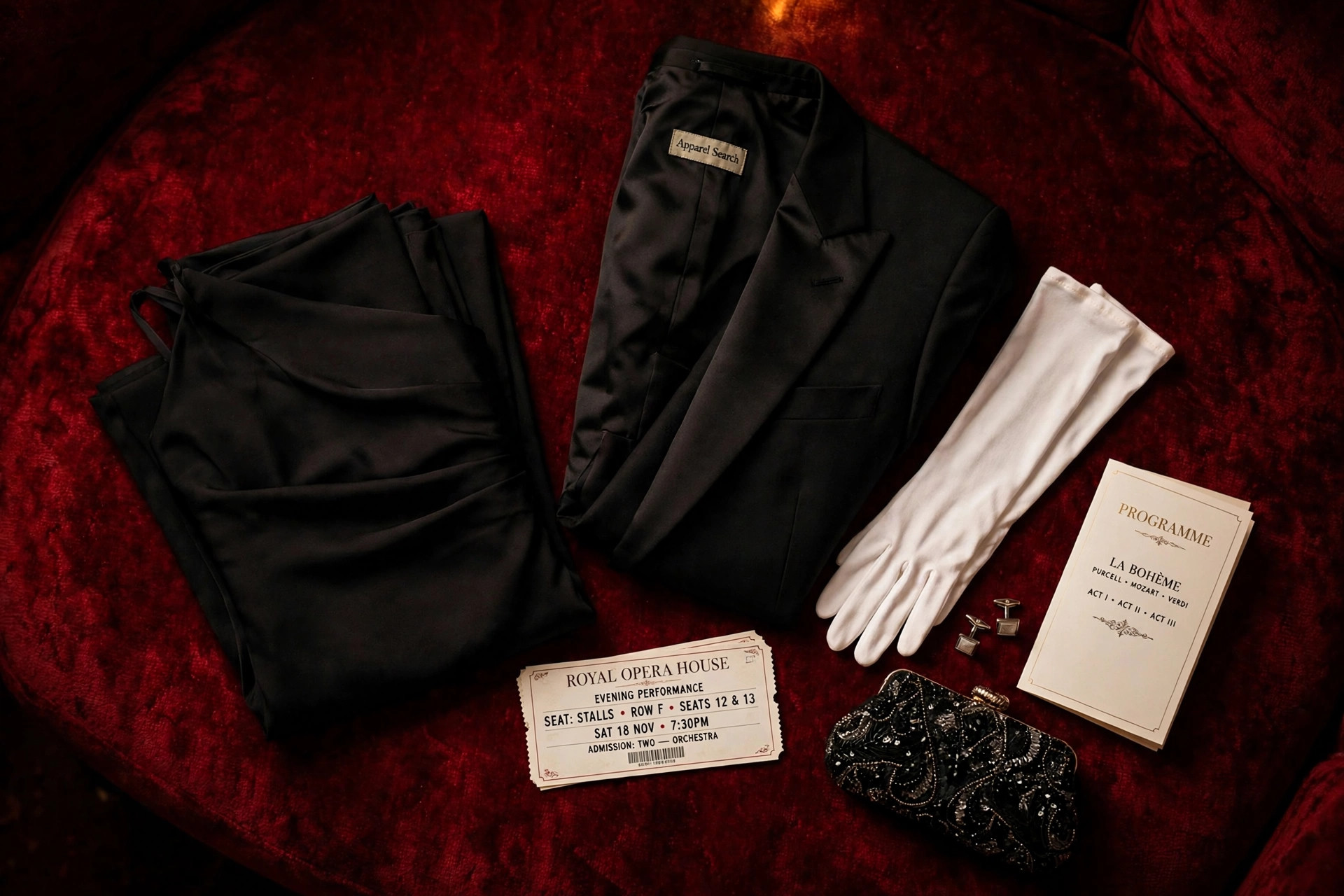 What to Wear to the Theatre & OperaModern theatre dressing is custom, not code. Opening night versus matinee, what the opera still expects, and the layer every regular carries for the air conditioning.
Reading an Invitation Like a Dresser
An invitation that prints no dress code is not an invitation with no information. It carries at least five clues, and reading them in order takes about a minute.
- Start with the venue. The venue sets the ceiling of formality. A ballroom, a formal restaurant or a concert hall pulls outfits up; a garden, a home or a pub function room pulls them down; an office keeps its own daytime rules whatever the occasion. If the venue has a known character — a grand theatre, a country house — dress for the building as much as for the event.
- Read the hour. Evening is more formal than afternoon at the same venue, and afternoon is more formal than morning. A 7 p.m. dinner and a 1 p.m. lunch at the same restaurant are two different occasions wearing one address. As a rule of thumb, each step later in the day allows — and expects — one step more polish.
- Weigh the occasion and your role in it. A milestone (a retirement, a christening, a significant birthday) carries more ceremony than a routine gathering. Your role matters too: the guest of honour dresses highest, close family and anyone being photographed dress next, and ordinary guests sit one step below. Our spoke guides work through the roles occasion by occasion.
- Check the season and the ground. Weather is a dress code of its own. Outdoor occasions add footwear that survives grass, a layer for after sunset, and fabrics that tolerate heat — the whole subject of the garden party guide. Winter evenings add coats that are part of the outfit, not an afterthought over it.
- When in doubt, ask — or aim one step up. Hosts are rarely offended by a guest who asks what to wear; they are flattered the guest cares. If asking is not possible, choose the outfit one careful step above your best guess. Overdressing adjusts downward in a moment — a tie pocketed, a jacket carried. Underdressing has no adjustment at all.
The One-Step Rule
Almost every occasion mistake is a two-step mistake: jeans where cocktail was meant, a gown where smart casual was meant. One step off in either direction is invisible — it reads as personal style. So the goal is never perfection; it is landing within one step of the room. The venue-hour-occasion reading above does that reliably, and it is why experienced guests rarely look wrong even at occasions they have never attended before.
Where the Printed Codes Still Rule
Some invitations do print a code, and then the code — not the clues — is the instruction. Black tie, cocktail, festive, dressy casual: each is decoded on its own page in our dress codes series, starting from dress codes explained and including cocktail attire, festive attire and dressy casual. The occasions in this hub are the ones the printed codes do not cover; when both exist, follow the code and borrow this hub's practical advice about shoes, layers and weather.
Common Questions
How do I work out how formal an occasion is when the invitation gives no dress code?
Read the three clues every invitation carries even when it prints no code. The venue sets the ceiling: a hotel ballroom, a restaurant dining room, a garden and an office all expect different clothes. The hour sets the floor: the same venue expects more after dark than at noon. And the occasion itself — a retirement, a christening, an opening night — tells you how much ceremony is in the air. Combine the three and you will land within one step of the room every time; when the clues conflict, dress for the middle of them.
Is it better to be overdressed or underdressed at a party?
Slightly overdressed, in almost every case. A guest one step too formal looks careful and can usually adjust on arrival — a tie comes off, a jacket goes over a chair. A guest one step too casual looks careless and has no way up. The exception is a deliberately casual gathering among close friends, where formality can read as distance; everywhere else, aim one careful step up.
What is the most useful all-purpose occasion outfit to own?
For women, a well-cut knee-length or midi dress in a solid, forgiving fabric — dressed up with heels and jewellery it covers cocktail territory, dressed down with flats and a cardigan it covers daytime parties. For men, a navy or charcoal suit worn as separates: the full suit handles evening occasions, the blazer with odd trousers handles daytime ones, and the trousers with a good shirt handle everything below that. Between the two formulas, nearly every non-wedding occasion on a normal calendar is covered.
How does the time of day change what I should wear?
Daylight lowers formality and raises practicality: lighter colours, matte fabrics, covered shoulders at religious venues, and shoes that can handle the ground. Evening raises formality and shine: darker colours, some lustre in the fabric, jewellery that catches light. The same dress can be right at both hours with a change of shoes and accessories — which is why experienced dressers think in outfits that adjust, not outfits that only work at one hour.
The Rest of the Occasion Calendar
This hub's three occasions sit inside a much larger family of Apparel Search occasion guides. The ceremony circuit is covered by the baby shower guest, christening guest, graduation and rehearsal dinner guides; the evening circuit by the concert and date night guides; and the party season by the holiday fashion shopping guide, New Year's Eve outfits and the office holiday party page. School and festival dressing have their own hubs: homecoming dresses, the quinceañera dresses guide, festival outfits and the cultural and festival outfit guide.
One entry on the calendar is not an occasion at all, and it dresses the most conservatively of the lot: a court appearance. Whether you attend as a party, a witness, a juror or a supporter, the room enforces a standard no invitation ever prints — our what to wear to court guide covers it by role.