Apparel Search Consumer Guides
College Wardrobe Essentials
A wardrobe that handles class, a part-time job, real weather and a social life - fitted into one small dorm closet and planned around a two-week laundry cycle.
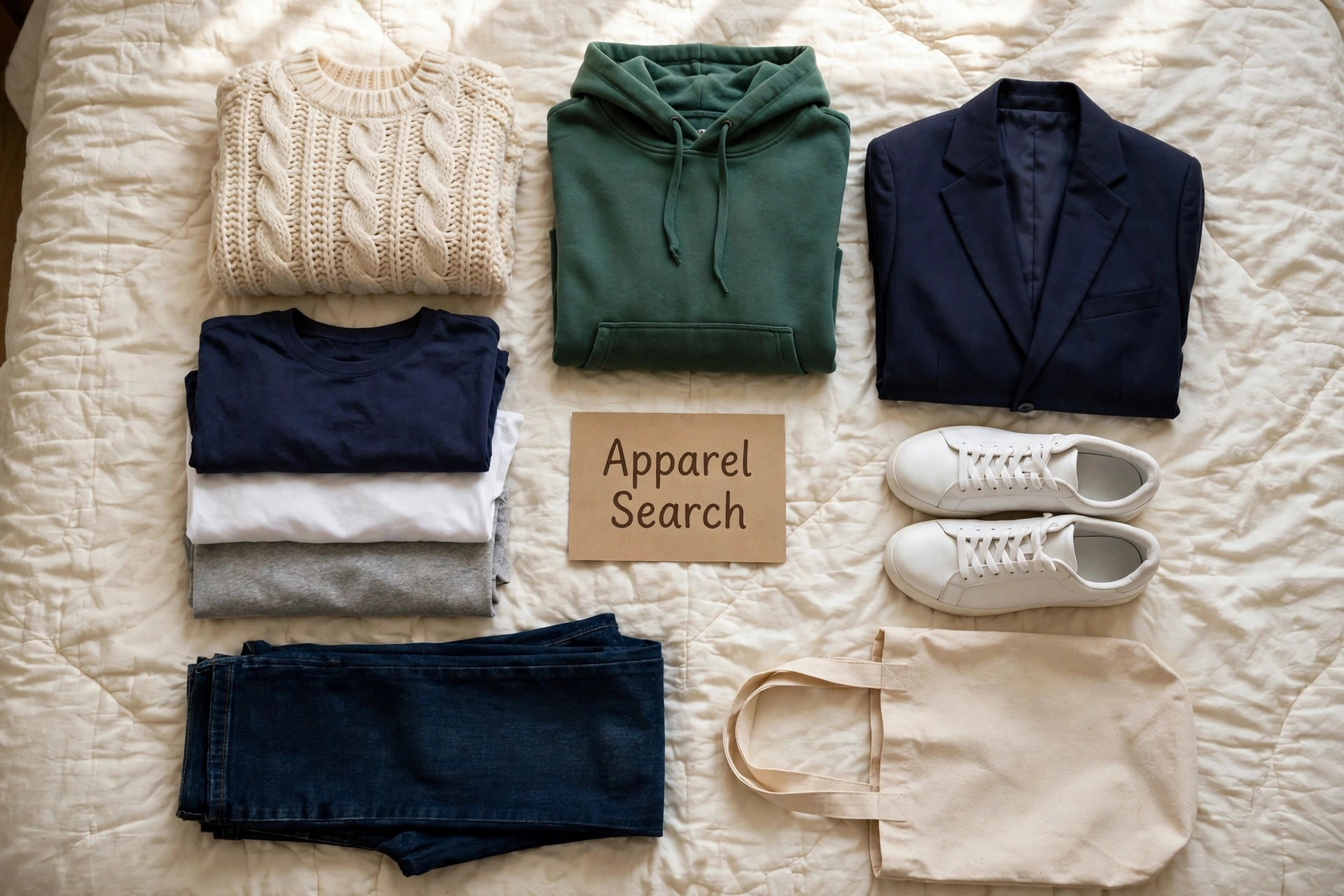
A college wardrobe is the first wardrobe most people build entirely for the life they actually live, and it is built under three honest constraints: a closet measured in inches, a laundry room measured in flights of stairs, and a budget measured in textbook money. The students who get it right are rarely the ones who brought the most clothing. They are the ones who brought a system - a small set of clothes in which everything works with everything else, in quantities set by the laundry cycle rather than by hope, with a short list of deliberate gaps filled once the campus climate and calendar revealed themselves. This guide builds that system, piece by piece.
Search Apparel Search
The Capsule Logic
A dorm closet runs roughly three to six feet of hanging space, shared with everything else you own. That is not a hardship to decorate around; it is a design brief. The capsule method - a limited set of pieces chosen so that nearly every top works with nearly every bottom - was made for exactly this brief. Our capsule wardrobe guide sets out the method in full; the college version simply runs it at dorm scale.
At dorm scale, a working capsule is about 35 to 45 pieces of clothing, not counting underwear, socks and sleepwear: five or six bottoms, ten to twelve tops, three or four layers, two pairs of everyday shoes and a small formal reserve. Held to a palette of two neutrals and one or two accent colors, those pieces combine into weeks of distinct outfits - more variety, worn more often, than a stuffed closet of unrelated clothes ever produces.
The Laundry-Cycle Math
The single most useful number in a college wardrobe is fourteen. Dorm laundry rooms are busy, machines cost money or at least time, and the realistic rhythm for most students is one laundry run every two weeks. Every quantity in the wardrobe should be sized to survive fourteen days - because the week you run out of socks is always the week of the exam, the storm and the broken elevator at once.
- Underwear: 14 to 16 changes - the one category where more is genuinely better, and the cheapest insurance in the wardrobe.
- Socks: 14 pairs, mostly one style - a single lost sock orphans nothing when every pair matches.
- Tops for class: 10 to 12 in rotation - tees, shirts, blouses and polos that all work with the bottoms below.
- Bottoms: 5 to 6 - jeans and trousers are rewearable by design; five bottoms cover fourteen days without strain.
- Sleepwear: 2 sets - so one is always clean while the other is in the wash.
- Workout clothes: 2 to 3 sets, if you train - they run on their own, faster laundry clock.
The math runs the other way too: a category with less than fourteen days of supply is a weekly laundry obligation, and anything above the line is storage you are paying for in closet space. Our laundry guide covers the wash itself - sorting, temperatures, and what never goes in the dryer - which matters more, not less, when every piece has to last four years.
The Working Core
The essentials themselves are deliberately ordinary. A college wardrobe fails on exotic pieces and succeeds on reliable ones: clothes that wash without ceremony, layer without argument, and survive four years of communal machines.
- Bottoms - two pairs of jeans (one dark, one medium wash), chinos or trousers, shorts or a skirt for the warm months, and one black bottom that dresses up.
- Tops - plain tees in your neutrals, two button-down shirts or blouses, one sweater, one sweatshirt or hoodie.
- Layers - one real coat suited to the campus climate, one rain jacket, one mid-layer such as a fleece or cardigan.
- Shoes - everyday sneakers, one weatherproof boot or shoe, one dressier pair.
- The formal reserve - one outfit that can attend a formal, a recital, a religious service and a dinner with somebody's parents.
- Sleep, swim and sport - two sleep sets, one swimsuit, and gym clothes if you will use them.
Class to Job to Social
One wardrobe has to cover a morning lecture, a lab, a shift at the campus job, a club meeting and a Friday night - often in the same day, with no trip back to the room in between. The trick is not more clothes; it is bridge pieces: clothes that sit one step above casual and pull an ordinary outfit toward presentable in thirty seconds. A blazer or structured cardigan over a tee. Dark jeans, the universal translator of college dressing. A white or light-blue button-down. Clean, minimal sneakers or loafers.
The social end of the range - game days, parties, formals, recruitment and the first career fair - has its own calendar and its own rules, covered in full in our college outfits guide. The essentials point is simpler: buy the bridges first, and the social wardrobe becomes a handful of additions rather than a second wardrobe.
A Climate That Isn't Home
Many students go to college in a different climate from the one they grew up in - sometimes a few degrees different, sometimes a different relationship with winter entirely. The wardrobe mistake is symmetrical: northern students arrive in the south with no real rain gear, and southern students arrive in the north having genuinely never owned a winter coat, and meet November in a hoodie.
Dress for the campus, not the hometown: one serious coat, waterproof footwear, and layers that stack - bought after you have seen the place, if the budget allows. Our dressing for the climate guide works through climate dressing systematically - heat, cold, rain and the shoulder seasons - and it is worth reading before the first break home, while the seasonal swap can still fix the gaps.
Budget Honesty
The honest budget fact is that most students already own most of a college wardrobe. The spending that matters is gap spending: the coat the climate demands, shoes that survive a walking campus, one interview-capable outfit, and replacements for the pieces that wear out - shoes and jeans first. Price those gaps before the semester starts, and the wardrobe stops being a source of surprise expenses.
For the gaps, buy in this order: fit first (it costs nothing to try everything on), then durability in the daily-wear categories, then thrift and secondhand for the rest. Campus towns run excellent thrift stores stocked by graduating seniors, and cost per wear favors a twenty-dollar sweater worn forty times over a sixty-dollar one worn twice. Spend on what touches the ground and what faces the weather; save on what washes.
What Not to Bring
- Dry-clean-only anything - it will not be dry-cleaned. It will be worn dirty, or not worn.
- The high-school archive - the drawer of souvenir tees and team shirts. Bring two favorites, not twenty.
- Duplicates of someday clothes - the third pair of dress trousers, the backup formal dress, the spare of the spare.
- Fragile knits and hand-wash delicates - dorm machines are communal, and they are not gentle.
- Shoes for a life you don't live - stilettos for a campus of hills and brick paths, snow boots for a desert school.
- Anything bought for a planned new personality - bring the wardrobe of the student you are; the campus will revise it soon enough on its own.
Setting Up the Small Closet
The wardrobe above still has to physically fit, and fit is a storage problem before it is a clothing problem: slim hangers that double the rail, a hanging shelf for the folded half, under-bed bins for the off-season third, and a laundry system that keeps the dirty two weeks off the floor. Our dorm room clothing storage guide covers the physical setup in full - the measurements to take on move-in day, the near-universal storage kit, and the seasonal swap that keeps the system the size it was designed to be.
Build the Dorm Wardrobe on Amazon
Slim hangers, the basics in multipacks, a real rain jacket and the rest of the working core - gathered in the Apparel Search Amazon shopping guide.
Shop College Wardrobe Basics on AmazonThis link opens the Apparel Search shopping guide for Amazon, where the product links are kept in one place.
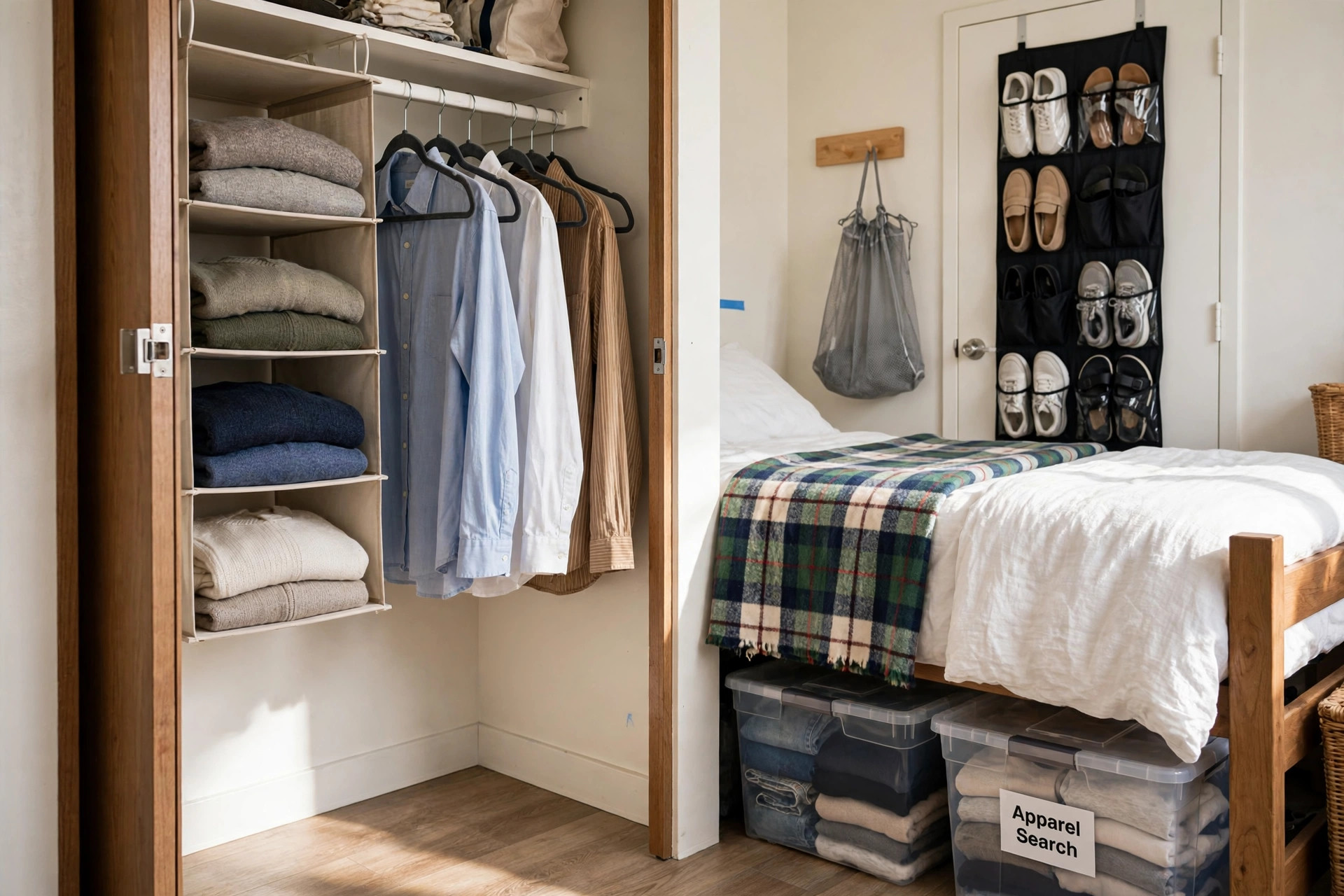 Dorm Room Clothing StorageShelves, bins and hangers: making a full wardrobe physically fit a few feet of closet, with a laundry system that works.
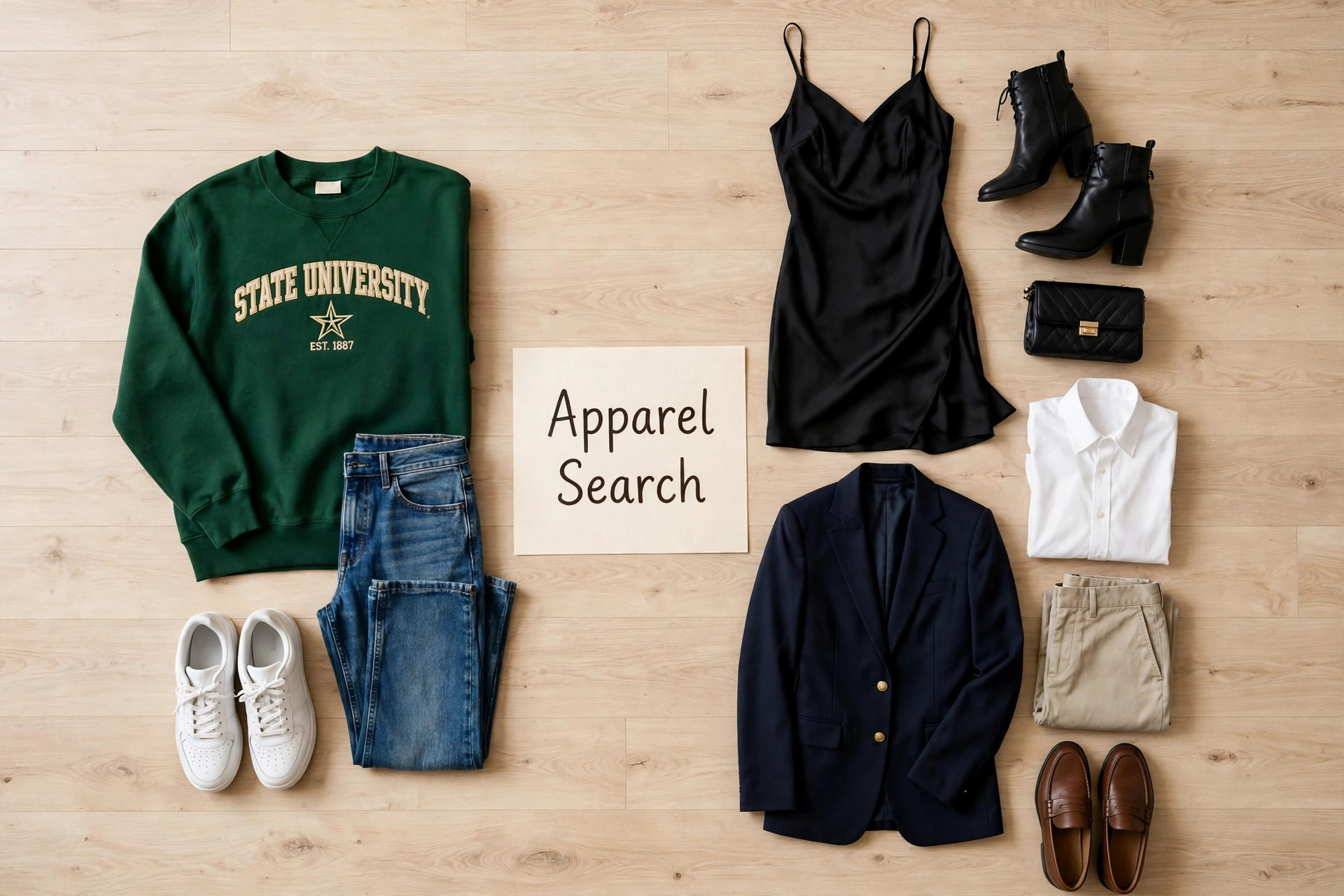 College Outfits GuideGame days, parties, formals and recruitment - plus career fairs and first internships. The social calendar, dressed.
Common Questions
How many clothes should a college student bring to college?
About 35 to 45 pieces of regular clothing, plus underwear, socks and sleepwear: five or six bottoms, ten to twelve tops, three or four layers, two pairs of everyday shoes and one formal-reserve outfit. The test is not the count but the coverage - everything should combine with several other pieces, and every category should survive a two-week laundry cycle.
What is the two-week laundry rule for dorm clothes?
Size every everyday category to fourteen days: fourteen or more changes of underwear, fourteen pairs of socks, ten to twelve tops in rotation and two sets of sleepwear. Dorm laundry usually happens every two weeks at best, and a category with less than a fortnight's supply forces a mid-cycle wash in exactly the weeks you have no time for one.
How much should a college student spend on a wardrobe?
Less than most move-in checklists imply. Most students already own the core; the real spending is gap spending - a coat suited to the campus climate, shoes that survive a walking campus, and one interview-capable outfit. Price the gaps first, use campus-town thrift stores for the rest, and judge each piece by cost per wear rather than its ticket price.
What clothes should you not bring to college?
Anything dry-clean-only, hand-wash delicate or impossible to replace; duplicates kept 'just in case'; the full archive of high-school souvenir shirts; and shoes chosen for a climate or social life you do not have there. Dorm machines are communal, storage is measured in inches, and every fragile or single-use piece is a small recurring problem.