Apparel Search Consumer Guides
Business Travel Wardrobe
One suit and a system of separates, packed carry-on only — and the arrival routine that makes it walk into a meeting looking pressed.
Business travel makes one demand leisure travel does not: you must walk out of a bag and into a room where people are judging the result — usually within hours of landing, sometimes within the hour. This page is the system that makes a carry-on meet that demand: one suit and a cast of separates that multiply into a week of meetings, fabrics chosen for how they recover rather than how they photograph, and the personal item treated as a second wardrobe rather than an accessory. It builds on our travel packing guide, and the two work together — this page decides the business wardrobe, the hub packs it.
The One-Suit System
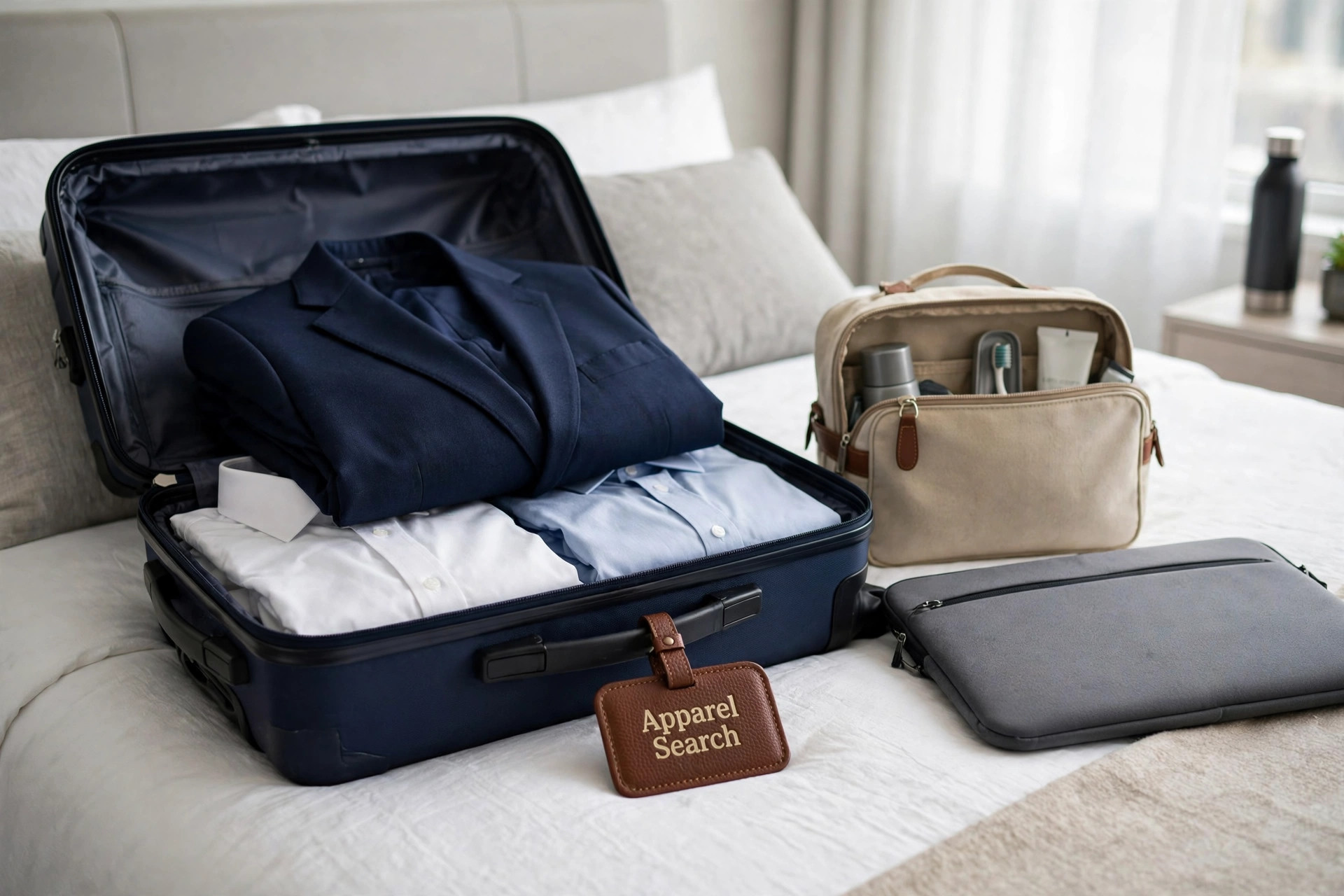
The unit of business packing is not the outfit but the suit-and-separates set. One suit in a sober color — navy or charcoal — anchors the trip. Add a second pair of trousers that works with the jacket (a mid-grey with a navy jacket is the classic), and the suit becomes three lower halves and two upper ones. Shirts are counted by days, plus one spare against spills and delays. A knit top or fine sweater covers the informal end — the flight, the working dinner, the morning the dress code relaxes. Counted out:
- Three-day trip: 1 suit (worn or packed), 1 spare trousers, 3 shirts + 1 spare, 2 ties or equivalents, shoes x2 total, underwear and sleepwear per night.
- Five-day trip: the same frame with 5 shirts + 1 spare and a second knit or casual layer — the system stretches by shirts and underthings, not by suits.
- The tie-and-pocket-square effect: small textiles change the read of a repeated suit more cheaply, in weight and space, than any second jacket. Two or three ties, a scarf, different jewelry — this is where variety is bought.
The frame is deliberately the capsule idea at work size — our men's capsule wardrobe page runs the same math for the home wardrobe, and the work capsule wardrobe for the office week — because a trip wardrobe is a capsule with a deadline and a dress code.
Color Discipline
One base color runs the whole bag. Navy or charcoal tailoring, shirts in white and pale blue (with one stripe or check for variety), trousers that all take the same shoe and belt color. Every piece must work with every other piece it could meet; a pair of trousers that only suits one shirt is dead weight with a waistband. This is not drabness — it is arithmetic. A five-day trip has perhaps fifteen outfit slots; a disciplined palette fills them from a dozen pieces, and an undisciplined one needs twenty and still produces a morning of mismatches in front of a hotel mirror.
Fabrics That Survive the Bag
- High-twist wool is the suit fabric that earns its fare: yarn twisted hard before weaving springs back from creases, breathes across climates, and hangs its wrinkles out overnight. Most garments sold as travel suits are exactly this, in plain weave.
- Wool blends — wool with polyester, or a trace of elastane — trade a little of the pure cloth's hand for durability and easier recovery, and in mid-price suits the trade is usually worth it.
- Shirting: cotton-polyester blends and modern wrinkle-resistant cottons emerge from a case noticeably calmer than untreated pure cotton; knit dress shirts and polo-collared knits cheat the category entirely and suit business-casual trips. Where a real iron waits at the hotel, pure cotton presses back to the crispest finish of all — fabric choice follows the destination's equipment.
- Half-lined and unlined jackets pack smaller, weigh less and crease less at the lining's bunching points than fully lined tailoring — one reason the suit on most business trips is a lighter structure than the suit that stays home.
Fit matters to recovery, too: a jacket that pulls and strains at home creases harder in a bag. Our guide to how a suit should fit covers the checks — a suit that fits has less fabric under tension, and fabric under tension is what folds into set creases.
The Personal Item Is the Second Wardrobe
Airlines allow the small bag under the seat, and business travelers either waste it on magazines or build the trip's resilience into it. The rule: the personal item carries everything the first commitment needs if the cabin bag is gate-checked, delayed or — on a small aircraft — simply taken at the door. Laptop and charger, the documents (physical copies of anything you truly cannot reprint), medication, glasses, and a presentable change of clothes: a fresh shirt, underwear, socks. Folded in a slim pouch, the change costs little space and converts a lost-bag disaster into a mildly annoying morning. Add the in-flight layer — the knit or jacket you will want in a cold cabin — worn or carried here rather than buried in the case.
Arrive Presentable: The First Ten Minutes
Recovery is a routine, performed before the bag is even fully unpacked. Hang the suit and shirts immediately — gravity starts work the moment the garment does. The jacket goes on a proper hanger (the hotel's, or the one you travel with), trousers by their cuffs or folded waistband over the bar. A steamy bathroom — door closed, shower running hot — relaxes most of what the journey set; the full method is in our garment steamers guide, and a travel steamer or the hotel iron handles the stubborn remainder. Then the honest check: if the suit was folded by the method on our suit packing page, most trips end here, with clothes that read as if they had been carried by hand.
Two decisions made the night before decide how much of this routine you need. Wearing the jacket on the plane — on your back or laid across the top of the bin — removes the single most crease-prone item from the case entirely, and is the right call when a meeting waits at the other end. And packing the suit last, on top, means it is the first thing out: last in, first out is the whole of the law.
Multi-City and Back-to-Back Days
Longer and multi-city trips stretch the system at two seams. The first is repetition: the same suit reads differently across cities because the audience changes with the venue — a five-day, three-city trip can run the one-suit system with shirt and tie rotation further than a five-day single conference, where the same room sees you daily and the spare jacket earns its place. The second is laundry: hotel pressing and laundry services are the business traveler's pressure valve — priced per piece and worth it for the shirt before the big presentation — while a wash-and-fold at a multi-night stop resets the underlayer wardrobe for the second week. Plan the laundry stop when you book the hotels, not when you run out of shirts.
The Gate-Check Rule
On full flights, cabin bags are taken at the gate with no notice and no appeal. Business travelers pack for that moment in advance: nothing in the case that the day cannot lose. Valuables, medication, the laptop, the meeting itself, and one presentable change live in the personal item — so a gate-checked bag is an inconvenience at baggage claim, not a crisis in front of a client.
Common Questions
Can a business trip really fit in a carry-on?
For most trips up to about five days, yes — with a system rather than a shrug. One suit worn or packed, a spare pair of trousers, a shirt per day plus one spare, and shoes capped at two pairs including the pair on your feet covers a working week of meetings, because the separates all combine. What breaks carry-on-only is usually not the clothes but the extras: a second suit for a long formal run, presentation gear, or a week that mixes a conference with a site visit and a formal dinner.
What fabrics travel best for business clothes?
High-twist wool is the classic suit answer — the tightly twisted yarn springs back, so creases fall out overnight on a hanger. Wool blends with a little synthetic can add durability and easier care. For shirts, cotton-polyester blends and knit dress shirts crease less than pure cotton, though pure cotton presses crisper where an iron is available. No fabric is wrinkle-proof; the honest label is wrinkle-resistant, and the revival routine on arrival matters as much as the cloth.
One pair of shoes or two, for work trips?
Two in total, counting the pair you travel in, for most trips. Wear the heavier pair and pack the second; one pair in the case is the realistic ceiling, because shoes are the bulkiest and heaviest thing you carry. Rotate them — leather shoes rest a day between wearings and last longer for it — and make both pairs work with every trouser in the bag, which is a color decision: one belt, matched to both.
What belongs in the personal item on a work trip?
Everything the first meeting needs if the main bag vanishes: laptop and charger, the meeting documents, medication, and a presentable change — a fresh shirt and underwear at minimum — so a gate-checked or delayed carry-on costs you nothing but a story. Add the phone charger, something to eat, and anything fragile or valuable. Packed this way, the personal item is not a handbag with aspirations; it is the trip's insurance policy.
Back to the Travel Packing Guide
The full packing system — the bag math, the toolkit, the packing order, and frameworks for every trip length.