Apparel Search Consumer Guides
Incontinence Clothing & Travel Tips
The wardrobe around the underwear: colors and patterns that camouflage, layers that buy time, and a spare kit packed for workdays and trips.
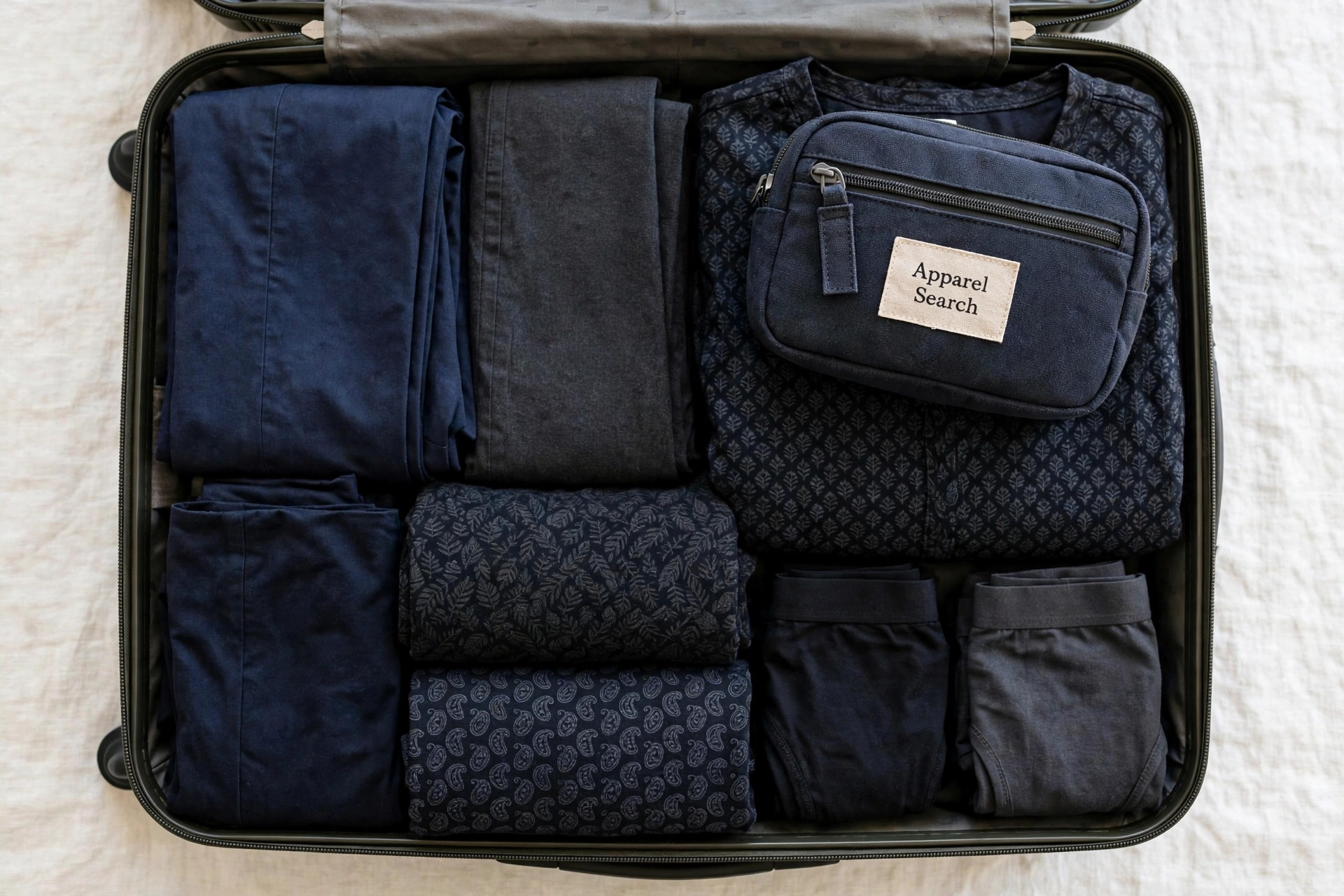
The underwear decision — washable or disposable, and which absorbency level — is covered in our incontinence underwear buying guide. This page is about everything worn and carried around that decision: the colors and patterns that keep a damp spot from showing, the layers that give you time, the spare kit that turns an accident into a two-minute change, and the packing habits that make workdays and travel days routine. It is garment and logistics advice only, written the way our travel packing guide is written — about clothes, bags and systems.
Colors and Patterns That Camouflage
A damp patch shows as a change in color and sheen, and fabric choices decide how visible that change is. The reliable rules are visual ones. Dark fabrics — black, charcoal, navy, deep burgundy — change shade the least when damp, which is why the absorbent-underwear category itself sells mostly in those colors. Small, busy patterns (a fine print, a heathered or marled knit, a subtle texture) break up outlines, so a patch has no clean edge to catch the eye. Matte fabrics hide sheen differences that shiny ones advertise. The risky end of the wardrobe is the opposite set: pale solid colors, smooth light-grey jersey above all, and anything clingy enough to print the outline of the garment beneath. Bottoms carry most of the risk, so the dark-and-patterned rule applies there first; tops are freer.
Layers and Lengths
Layers are time, worn. A longer top — a tunic length, an untucked shirt, a cardigan that closes — covers the waistband and hip line where a change would show first, and gives a private margin between noticing a leak and reaching a bathroom. An open overshirt or light jacket carried on the arm doubles as an emergency wrap. Fabrics that dry quickly (the synthetic knits and merino of the travel wardrobe) matter when a small splash reaches an outer layer: a quick-dry trouser worn on a travel day can be rinsed, hung and worn again the next morning, which is the same wardrobe logic our travel capsule wardrobe guide builds whole trips on. The dressing principle throughout is ordinary clothes, chosen with one extra criterion — nothing here needs to look like anything but a normal outfit.
The Spare Kit
The kit is the system’s core: a small pouch, kept where the day happens, that holds a complete change. Its contents are short and standardized — a fresh pair of absorbent underwear (or disposables), a spare pair of bottoms in the dark rotation, a sealable wet bag for the worn set, and a couple of tissues or wipes for hands. One kit lives at work, one in the car, one in the everyday bag; restocking is part of the laundry fold, not a separate chore. A printable version of the packing habit lives in our packing list worksheet. Sized right, the pouch is unremarkable — it looks like a wash bag, because that is what it is — and it converts the worst case from an emergency into a short, private errand.
Workday Planning
A work wardrobe built on a dark rotation — two or three trouser or skirt colors that all combine with the same tops — makes the spare-bottoms half of the kit automatic: whatever is in the pouch goes with whatever you are wearing. The business travel wardrobe guide makes the same argument for suitcases: a disciplined color palette is what makes a small wardrobe flexible. At a desk, the kit lives in a drawer or locker; for jobs spent standing or driving, it lives in the bag that travels with you. Planning the change location is part of the logistics, and it is a clothing question too — a stall with a hook and shelf is a changing room; trousers with a button-and-zip front are slower than an elastic waist on a day when speed matters.
Travel Days
Travel concentrates every variable: long stretches between bathrooms, unfamiliar facilities, luggage that can go astray. The garment answers are the ones this site gives every traveler, sharpened. The spare kit rides in the carry-on, never in checked luggage — the business travel guide’s rule that the personal item carries the first day’s essentials applies with double force. The suitcase wardrobe leans dark and patterned for the reasons above, built on wash-and-wear fabrics so a sink wash in a hotel room resets the rotation; our travel packing guide covers that laundry-on-the-road routine in full. For the washable-underwear traveler, the count is days times changes plus one, packed in a packing cube of its own; for the disposable user, the count plus a margin, with a resupply point identified at the destination for longer trips. None of this shows from the outside. A well-planned travel wardrobe for this purpose is simply a well-planned travel wardrobe, in darker colors.
A Garment Guide, Not Medical Advice
This page covers clothing: how the garments are designed, organized, fitted and worn. It describes what products are made of and how they are put together — nothing here is a claim about what any garment does for a medical condition, and questions about your own situation belong to your own doctor or care team, whose guidance outranks any product description — including the ones described here.
Common Questions
What colors and fabrics hide a damp spot best?
Dark, matte and patterned ones. Black, charcoal and navy change shade least when damp; small busy prints and heathered knits break up the outline of a patch; matte fabrics hide the sheen difference that shiny fabrics show. Pale solids — light-grey jersey most of all — are the highest-risk choice, and the rule matters most for bottoms.
What should a spare kit contain?
A complete change in a small pouch: a fresh pair of absorbent underwear or disposables, spare bottoms that match your usual rotation, a sealable wet bag for the worn set, and tissues or wipes. Keep one kit where each kind of day happens — desk, car, everyday bag — and restock it as part of the laundry routine.
Should spare supplies go in checked luggage?
No. The spare kit and at least a day’s supply belong in the carry-on or personal item, where they stay with you if a checked bag is delayed. Checked luggage can carry the bulk supply for a long trip, but the first day’s needs should never depend on it.
How do you handle washing absorbent underwear on a trip?
The same routine as at home, in miniature: a cold rinse, a hand wash with a little detergent in the sink, a roll in a towel to press out water, and hanging to dry overnight — quick-dry styles are dry by morning. Travelers on longer trips plan a laundromat or wash-and-fold stop mid-trip, exactly as the travel packing guide recommends for any small wardrobe.
More to Explore
Search Apparel Search
Please note: Apparel Search is a fashion and clothing guide, not a medical authority. Pages in this section describe clothing features and dressing ideas only. We make no claim that any garment or special product will improve, treat, or help with any medical condition, and descriptions of product features reflect how those products are designed and marketed, not a medical endorsement. Please check with your own doctor or care team about what is right for you.