Adaptive Clothing for Seniors
Easy dressing for older adults, explained practically: fasteners that do not demand strong fingers, garments a caregiver can help with, and fabrics and care routines that keep laundry simple.
Shop Adaptive Clothing Now
Shop Adaptive Clothing on Amazon Shop Adaptive Clothing on eBayThe Amazon and eBay links on this page are affiliate links. If you make a purchase through them, Apparel Search may earn a commission.
Fasteners That Are Kinder to Hands
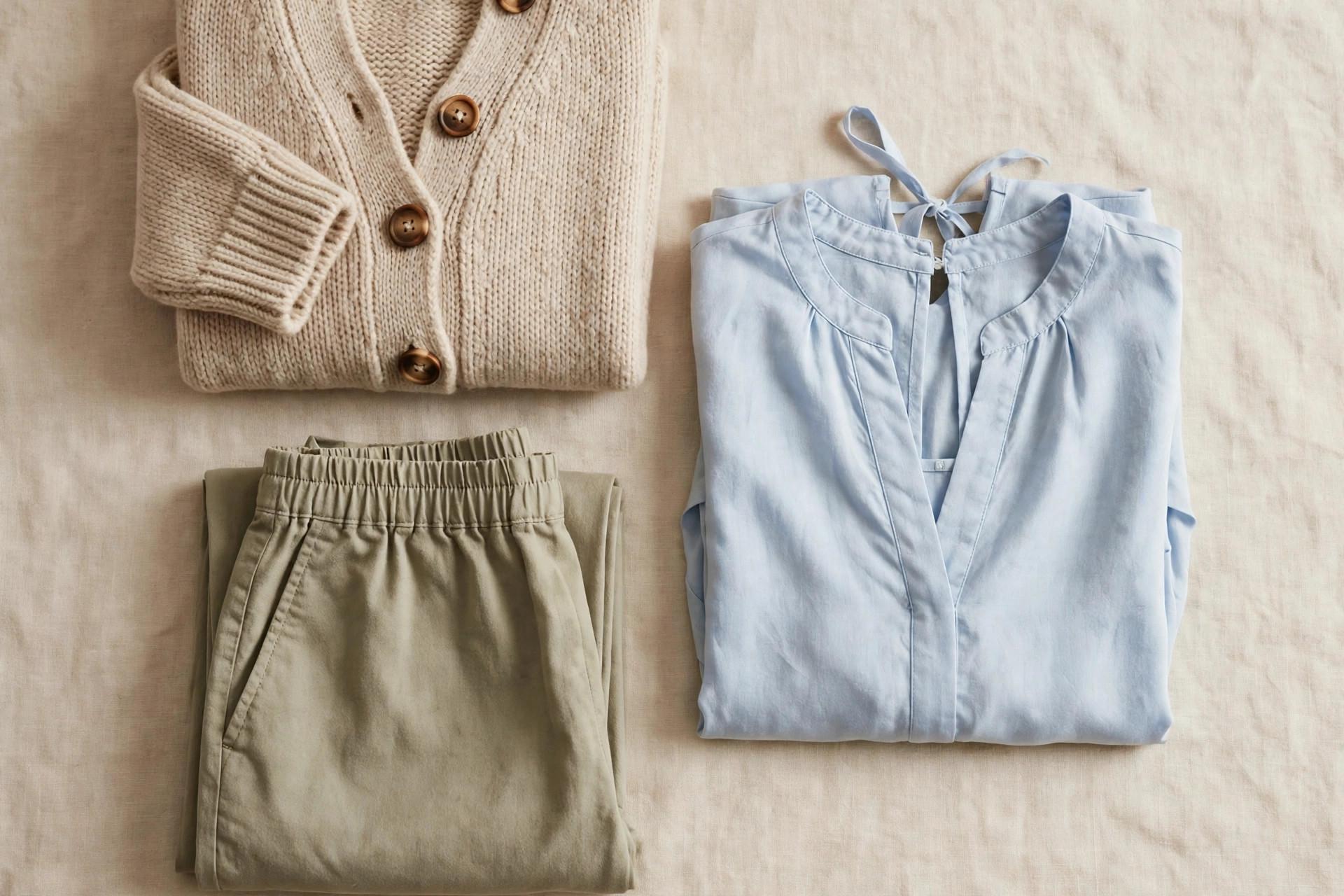
Small buttons, narrow zips, and hooks behind the neck are the first things to retire. Look instead for large buttons that can be pushed through generous buttonholes, magnetic fronts hidden behind ordinary buttons, hook-and-loop tabs, and zips with a ring or fabric pull that a whole hand can grasp. Front-opening garments are easier than overhead styles for most people, and a cardigan or shirt that opens fully can be put on one arm at a time without rushing.
Describe this as comfort and convenience, because that is what it is: clothing that respects stiff, sore, or less steady hands in the morning. Elasticated waists without a button or fly, pull-on trousers with a flat front, and wrap styles that tie or fasten at the side all remove fiddly steps while still looking like the clothes the wearer has always chosen. The full feature list is in our adaptive clothing features guide.
Dressing Seated, Standing and With Help
Many older adults dress sitting on the edge of the bed or in a chair, and clothing should suit that position. Trousers with side openings or a higher back rise go on more easily seated, long tops should be checked for length while sitting, and non-slip, easy-strap footwear finishes the routine safely. Keep the dressing order consistent: garments laid out in sequence, closures checked before standing, and pockets emptied of tissues before washing day.
For caregiver-assisted dressing, open-back tops, dresses, and nightwear let a helper dress someone without lifting arms overhead or asking them to lean forward for a back zip. Choose deep overlaps, shoulder snaps, and soft fabrics, and keep the front of the garment looking completely normal. Dignity is a design feature: the wearer should look dressed, not managed. More seated-fit detail is in the wheelchair clothing guide.
Fabrics, Warmth and Simple Care
Choose fabrics that are soft, breathable, and easy to launder at home. Cotton blends, brushed knits, and fleece that washes without special handling suit most routines. Avoid garments that need hand washing, separate ironing, or delicate cycles if a family or care laundry handles everything together. Printed labels or tagless designs and flat seams add everyday comfort, as covered on our sensory-friendly clothing page.
Buy duplicates of a proven garment rather than five different experiments. When a style works, having the same shirt or trousers in two or three colours simplifies dressing, packing, and replacing a worn item. Check closures after washing, keep a spare set of everyday clothes ready, and retire anything whose fasteners have become a daily struggle.
Where to Shop and What to Read Next
Start with the overview in the adaptive clothing guide, then browse the adaptive clothing retail directory, which lists specialist senior and adaptive retailers alongside mainstream ranges. The adaptive clothing definition explains the terminology used in listings. For younger family members, the children’s adaptive clothes guide and children’s adaptive directory cover the same ideas in children’s sizes.
One situation deserves a page of its own: readers dressing for regular dialysis sessions — access openings at the arm, waistbands that adjust, and comfort for hours in the chair — will find it covered in our dialysis-friendly clothing guide.
Dressing with a named condition has its own pages in this family: dressing with Parkinson’s, for closures that cope with tremor; dementia-friendly dressing, written for the family members and caregivers who help with dressing; dressing with arthritis, for fastenings that ask for no grip; and the dressing aids and tools guide, which explains the button hooks, sock aids and shoe horns that support all of them.
Two more situations are common in later life and now have guides of their own. Eyesight changes make dressing partly a task for the fingers, and dressing when blind or low vision covers the tactile labels, fixed closet order and confirmable closures that answer it. And where a compression sleeve or stocking is part of the daily routine, lymphedema-friendly clothing covers the clothes worn over it: wide soft cuffs, non-binding waistbands and shoes with room to spare.
One more everyday category is designed for discretion. Washable absorbent underwear (briefs and boxer briefs with an absorbent panel built in) reads as ordinary underwear in the drawer and under clothes, and our incontinence underwear buying guide explains the categories, absorbency labels and quantities. The clothing worn around it (dark colors, layers, a spare kit for days out) is covered in incontinence clothing and travel tips.
Common Questions
What clothing features help older adults dress more easily?
Large or magnetic fasteners, front openings, elasticated waists, zips with ring pulls, and pull-on styles help most. The goal is fewer small, fiddly steps, using garments that still look like the wearer’s normal clothes and can be managed seated or standing.
What is open-back clothing for seniors?
Open-back clothing overlaps at the back and fastens at the shoulders, so a caregiver can help someone dress without lifting their arms overhead or reaching behind them. The front looks completely ordinary, and a deep overlap keeps the garment secure and modest.
How can laundry be kept simple with adaptive clothing?
Choose machine-washable fabrics, close hook-and-loop fasteners before washing so they do not catch, follow magnetic-closure care guidance, and favour duplicates of a proven style. Avoid hand-wash-only garments if clothing is washed together in a family or care laundry.
Adaptive Clothing Guides and Resources
- Adaptive Clothing Guide
- Adaptive Clothing Features
- Wheelchair Clothing Guide
- Dialysis-Friendly Clothing
- Dressing with Parkinson’s
- Dementia-Friendly Dressing
- Dressing with Arthritis
- Dressing Aids & Tools
- Dressing After Amputation
- Adaptive Clothing Retail Directory
- Adaptive Clothing Definition
- Sensory-Friendly Clothing
- Children’s Adaptive Clothes Guide
- Children’s Adaptive Clothing Directory
Please note: Apparel Search is a fashion and clothing guide, not a medical authority. Pages in this section describe clothing features and dressing ideas only. We make no claim that any garment or special product will improve, treat, or help with any medical condition, and descriptions of product features reflect how those products are designed and marketed, not a medical endorsement. Please check with your own doctor or care team about what is right for you.