Apparel Search Consumer Guides
Dementia-Friendly Dressing
A caregiver’s guide to the clothing side of dressing — familiar styles, short choices and garments that go on easily, so getting dressed stays a calm, ordinary part of the day.
This page is written for the person who helps someone else get dressed. When dementia is part of the household, dressing can become the day’s first argument — not because anyone is being difficult, but because the wardrobe asks questions that have become hard to answer: too many choices, unfamiliar clothes, fastenings that no longer make sense, garments that pull over the head or reach behind the back. Clothing cannot answer for the condition, but it can stop asking so much. The guides in this section exist to make dressing smaller; this one applies them to the caregiver’s side of the wardrobe. It sits within our post-surgery and medical dressing guide and alongside the adaptive clothing guide, whose feature vocabulary — front openings, easy fasteners, seated dressing — does much of the work here too.
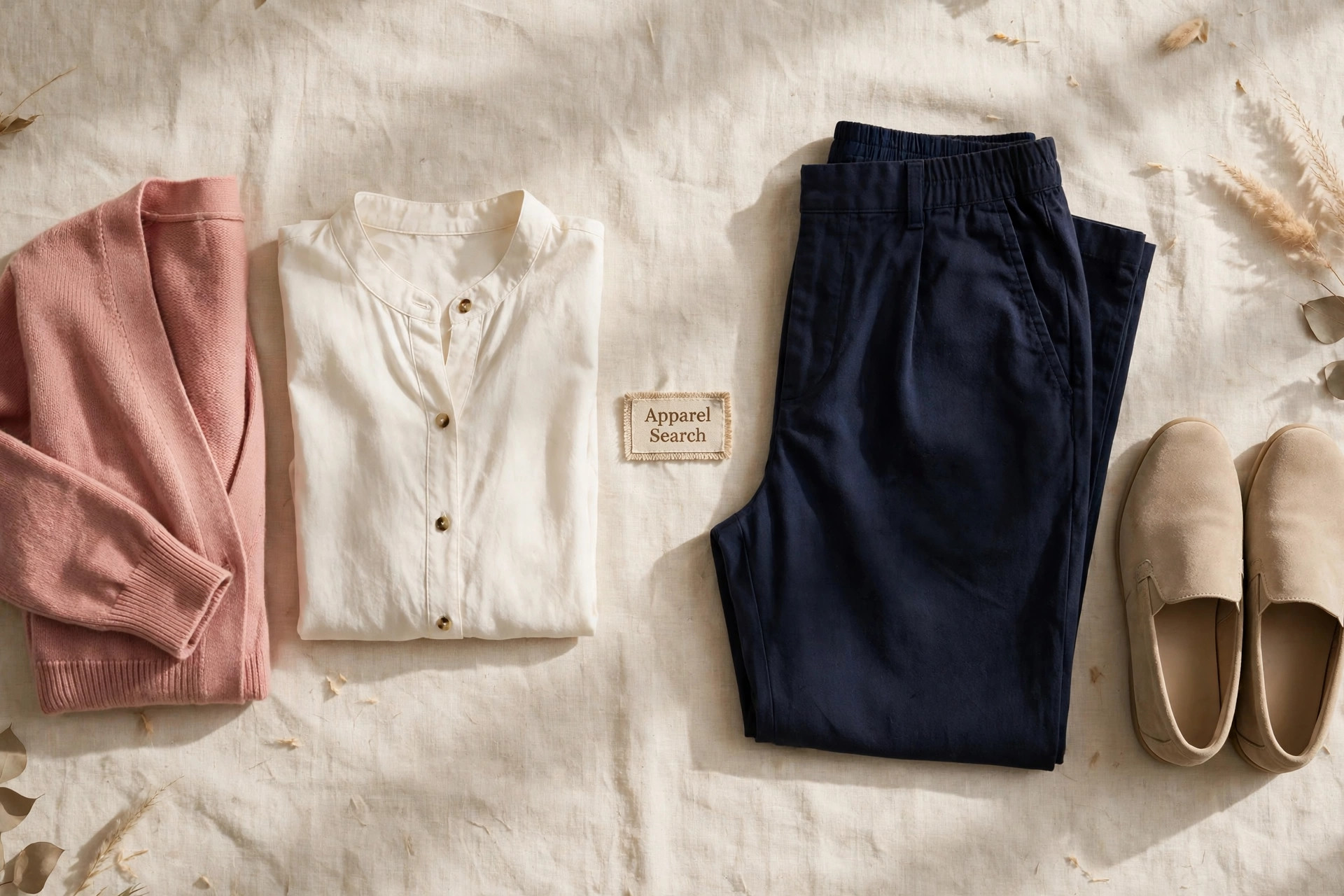
Familiar Is the Feature
The most dementia-friendly garment is usually the one that looks like what the person has always worn. A man who has worn button shirts and trousers for fifty years reads a button shirt instantly; the same shirt with its buttons replaced by a hidden magnetic closure still reads as his shirt — and fastens with a press. Replace like with like where you can: same colours, same shapes, same fabrics, upgraded underneath with easier fastenings. Sudden changes of style, however practical, add a question — whose clothes are these? — to a routine that works better without one. Our adaptive clothing for seniors page is written for this same household and covers familiar styling in more depth.
Simplify the Wardrobe, Not the Person
A full wardrobe rail is a long list of decisions. Most caregivers find dressing goes more calmly when the live wardrobe is short and the choice offered is shorter still:
- Keep a small working wardrobe. A week of proven outfits in rotation, with out-of-season and rarely worn clothes stored elsewhere, shortens every morning decision.
- Offer two choices, not twenty. Two complete outfits laid out — this cardigan or that one — preserves the person’s say in their own appearance while keeping the decision small enough to enjoy.
- Buy duplicates of favourites. The cardigan that is always chosen, in twos and threes, ends the laundry standoff and keeps the favourite available every day.
- Keep outfits assembled. Tops and bottoms that are known to go together, stored together, remove the matching question entirely.
Garments That Go On Easily
The practical shortlist overlaps the rest of this section. Front-opening tops — cardigans, shirts, wrap styles — go on at waist height without anything passing over the head. Pull-on trousers with wide elastic or drawstring waists skip the button-and-zip negotiation. Slip-on shoes and elastic laces end the bending-and-tying stage. Where dressing is fully assisted, open-back tops and trousers are designed to be put on a seated person from the front, without arms being lifted through sleeves — our adaptive clothing features guide explains how open-back and side-opening designs work. Soft, tagless, flat-seamed garments also earn their place: clothing that itches or digs in can be a source of distress that has nothing to do with the dressing itself, and our sensory-friendly clothing page covers fabric feel, seams and labels in depth.
A Calm Dressing Routine
- Same time, same order. A routine that repeats daily becomes familiar in itself: wash, dress, breakfast — with dressing broken into the same small steps in the same sequence.
- Lay the clothes out in the order they go on. One garment visible at a time where that helps, each step finished before the next appears.
- Dress seated, unhurried. A chair with a back, everything within reach, and no clock pressing on the process.
- Let them do the steps they can. A button they can still manage, a cardigan they can pull on themselves — hold the garment, offer the sleeve, and leave the achievable steps to their hands.
- Keep aids where dressing happens. A long shoe horn and a dressing stick by the chair, not in a cupboard — the dressing aids and tools guide explains what each one does.
Dignity Is a Clothing Feature Too
Nothing in this page should read as dressing someone down. The aim is the opposite: clothes that keep a person looking like themselves — clean, coordinated, season-appropriate, and recognisably their style — while the work of fastening and choosing gets quietly smaller. If a garment solves a dressing problem but makes its wearer look like a patient, it is the wrong garment; the adaptive market is now large enough that easy and ordinary-looking are the same clothes. The adaptive clothing retail directory is the place to compare them.
A Garment Guide, Not Medical Advice
This page covers clothing: features, fit, fastenings and dressing technique. Questions about your condition, your medication or your care belong to your own doctor and care team, and their guidance outranks anything in a product description — including the ones described here.
Shop Adaptive Clothing on Amazon
Ready to shop? Product links are kept in one place on the Apparel Search shopping guide:
Shop Clothing on AmazonThis link opens the Apparel Search shopping guide for Amazon, where the product links are kept in one place.
Common Questions
What clothing features help when I dress someone with dementia?
Familiar-looking styles with easier mechanics: front-opening cardigans and shirts instead of pullovers, pull-on waistbands instead of button-and-zip trousers, slip-on shoes instead of laces, and magnetic or hook-and-loop fastenings hidden inside ordinary-looking garments. For fully assisted dressing, open-back designs go on a seated person without arms being lifted through sleeves.
How many outfit choices should I offer?
Two complete outfits, laid out, is the level most caregivers settle on. It keeps the person choosing their own clothes — which matters — while shrinking a wardrobe-sized decision into a manageable one. A whole rail of clothes asks a long question first thing in the morning.
Should I buy multiples of the same garment?
Yes — duplicates of proven favourites are one of the simplest upgrades available. The cardigan that is always chosen, owned in twos or threes, is always clean, always familiar, and ends the standoff when the original is in the wash.
What if they want to wear the same outfit every day?
Then the wardrobe answer is duplicates plus a wash rotation: the same look, freshly laundered, presented as their clothes — because they are. Keeping the outfit familiar and consistent is a feature, not a problem to correct.
Back to the Post-Surgery & Medical Dressing Guide
Front closures, soft seams and step-in styles — plus the mastectomy, ostomy and compression guides.
More to Explore
Search Apparel Search
Please note: Apparel Search is a fashion and clothing guide, not a medical authority. Pages in this section describe clothing features and dressing ideas only. We make no claim that any garment or special product will improve, treat, or help with any medical condition, and descriptions of product features reflect how those products are designed and marketed, not a medical endorsement. Please check with your own doctor or care team about what is right for you.