Wheelchair Clothing Guide
Clothing chosen for life seated: trousers cut for sitting, lengths judged in a chair, closures you can reach, and jackets and fabrics that stay comfortable through a full day.
Shop Adaptive Clothing Now
Shop Adaptive Clothing on Amazon Shop Adaptive Clothing on eBayThe Amazon and eBay links on this page are affiliate links. If you make a purchase through them, Apparel Search may earn a commission.
Trousers Cut for Sitting
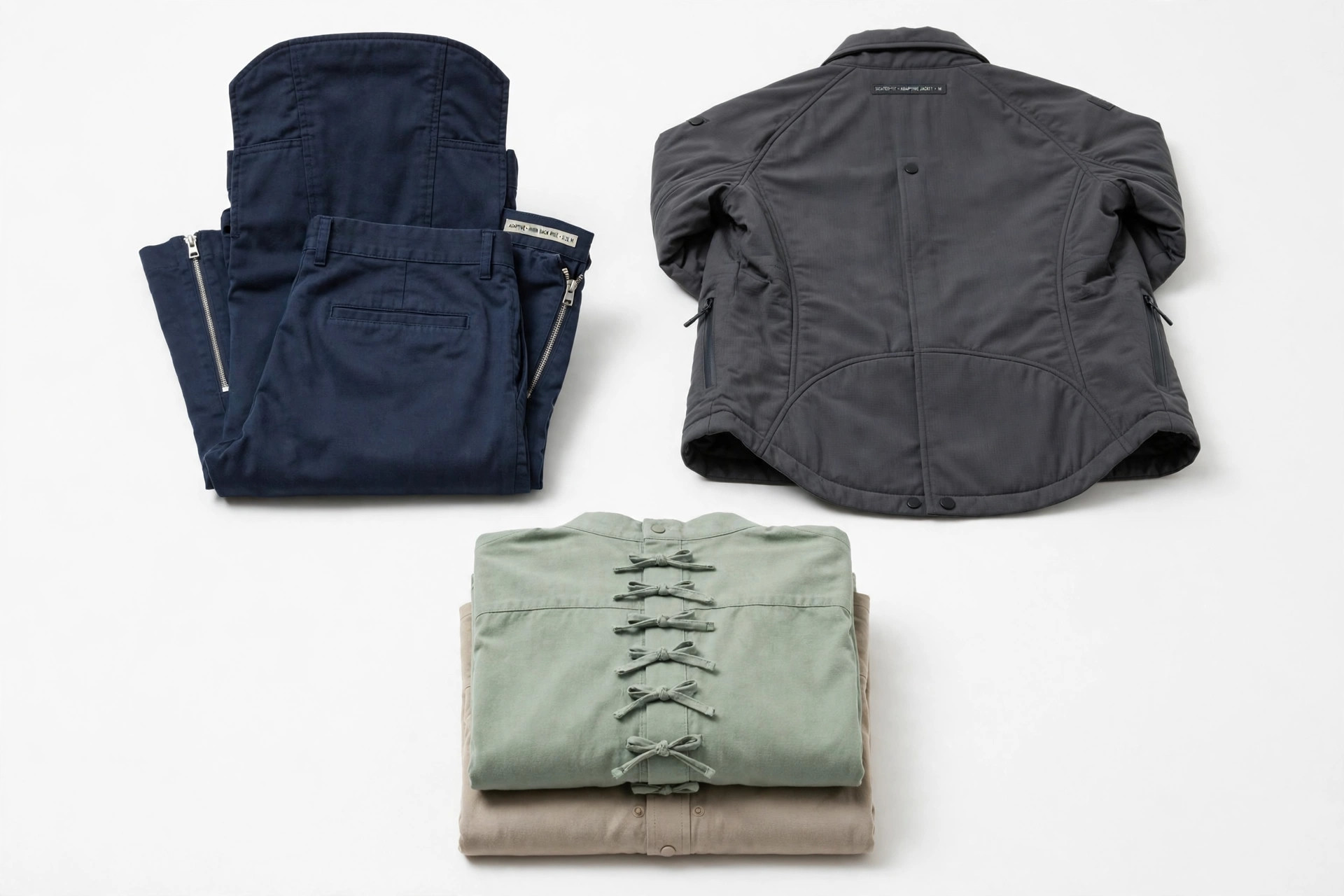
Standard trousers are patterned for standing, which is why they pull down at the back, bunch at the front, and ride up at the ankle when the wearer sits. Seated trousers solve this with a higher rise at the back, a lower, shaped front, and extra length in the leg. Judge trouser length while seated, with shoes on: the hem should still reach the shoe when legs are in their usual resting position, not when standing at a changing-room mirror.
Side zips, full side openings, and elasticated or drawstring waists make seated dressing and personal care routines easier, because the garment can be opened wide rather than pulled up in stages. Look for smooth waistbands without thick back pockets, belt loops that do not sit under the body, and front pockets positioned to be reached while seated. Our adaptive clothing features guide explains each of these features in detail.
Tops, Back Closures and Jackets While Seated
Tops for seated wear should be checked for length in the chair: a shirt that is right standing may bunch at the front and pull short at the back when seated. Slightly shorter fronts, longer backs, and fabrics with some stretch are practical choices. Back closures and open-back styles help when dressing is assisted, while magnetic fronts and hook-and-loop shoulder openings help anyone dressing independently without reaching behind.
Jackets and coats need the same seated test. A coat that is comfortable standing can bunch under the body, strain across the shoulders, and trail its hem near wheels when seated. Look for shorter or shaped fronts, two-way zips that open from the bottom, room across the back for pushing or reaching, and cuffs that close neatly. Try the coat seated, fasten it, and move your arms through a normal day’s range before deciding.
Fabrics and Everyday Comfort
Choose smooth, soft fabrics with flat seams in areas that stay in contact with a seat for long periods, and avoid thick seams, rivets, and bulky back pockets where they add unnecessary bulk under the body. This is a comfort choice about how clothing feels through a day, and breathable fabrics that manage warmth help as well. Tagless labels and soft waistbands add to that comfort, as described on our sensory-friendly clothing page.
Build a dressing routine around the garments: clothes laid out in order, trousers opened fully before dressing, closures and hems checked once seated, and a small mirror check for bunching at the back. Keep everyday outfits repeatable, with the same proven styles in several colours, so mornings do not depend on experimenting with an unfamiliar cut.
Shopping and Related Guides
Use the adaptive clothing guide for the overall buying approach, then the adaptive clothing retail directory for specialist seated and wheelchair clothing retailers. The adaptive clothing definition explains listing terms, and adaptive clothing for seniors covers assisted dressing at home. Families may also use the children’s adaptive clothes guide and the children’s adaptive clothing directory.
Common Questions
What makes trousers suitable for wheelchair users?
Seated trousers are cut higher at the back, lower and smoother at the front, and longer in the leg than standard trousers, with no bulky back pockets. Judge the fit and hem length while seated with shoes on, because a standing fit check gives the wrong answer.
How should a jacket or coat be chosen for seated wear?
Try it seated and fastened. Look for a shorter or shaped front that does not bunch, a two-way zip, room across the back for reaching and pushing, and a hem that stays clear in use. A coat that only works standing will be uncomfortable all day.
Are back closures only for assisted dressing?
No. Back and shoulder openings are often used with help, but many seated dressers choose magnetic fronts, side openings, and hook-and-loop shoulders precisely because they can be managed independently without reaching behind. Choose the opening that matches how you actually dress.