Apparel Search Consumer Guides
Dressing with a Cast or Injury
The short-term wardrobe problem — sleeves that pass over a cast, trousers that clear a leg cast or walking boot, and one-arm dressing basics for the weeks an injury is part of the outfit.
A cast, a sling or a walking boot is a temporary change of body shape, and clothing notices immediately: the sleeve that will not pass over plaster, the trouser leg narrower than the boot, the pullover that needs the arm you are not supposed to be swinging around. Unlike most subjects in this section, this one has a deadline — the wardrobe problem lasts weeks, not years — so the answers lean on adapting what you own, borrowing roomier clothes, and buying very little, very deliberately. This guide covers the garment side: measuring the cast, choosing openings, and dressing one-handed in the meantime. It belongs to our post-surgery and medical dressing guide, and its one-handed techniques are shared with dressing after stroke and dressing after amputation, where they are permanent crafts rather than temporary ones.
Measure the Cast First
Every decision on this page starts with two numbers: the widest circumference of the cast or boot, and its length. A sleeve or trouser leg needs an opening — and a tube — a little wider than that widest point, with ease to spare for the padding at the edges. Measure over the cast with a tape, note the figure against your ordinary sleeve or leg measurements, and shop by the difference. It is a five-minute job that avoids the two classic mistakes: the garment that nearly fits, bought hopefully, and the shapeless oversize bought in panic when a size or two up in a wide style would have done.
Arm in a Cast or Sling: Tops
- Front-opening everything. Shirts, cardigans and jackets fasten down the front and go on one arm at a time — the supported arm guided in first, gently, then the free arm, then fasten up. Nothing passes over the head and nothing reaches behind the back.
- Wide and raglan sleeves. Raglan and dolman sleeves open from the neckline and pass over a cast far more readily than a fitted set-in sleeve; short sleeves and three-quarter sleeves sidestep the widest part of a forearm cast entirely.
- Room where the cast is. A size up, a relaxed fit, or a man’s or unisex cut borrowed for the duration buys sleeve room where it is needed without replacing a wardrobe.
- Dressing around a sling. A fully opening top can be put on without taking the supported arm out of its sling for long: sling loosened or worn under the top layer where your care team’s instructions allow, affected side dressed first, layer by layer. Loose cardigans and poncho-style layers drape over a sling for going out.
- Soft against the edges. Smooth, soft fabrics slide over plaster and fibreglass without catching; keep scratchy trims and rigid cuffs away from the cast’s edges, where skin is doing the adjusting.
Leg Cast or Walking Boot: Bottoms
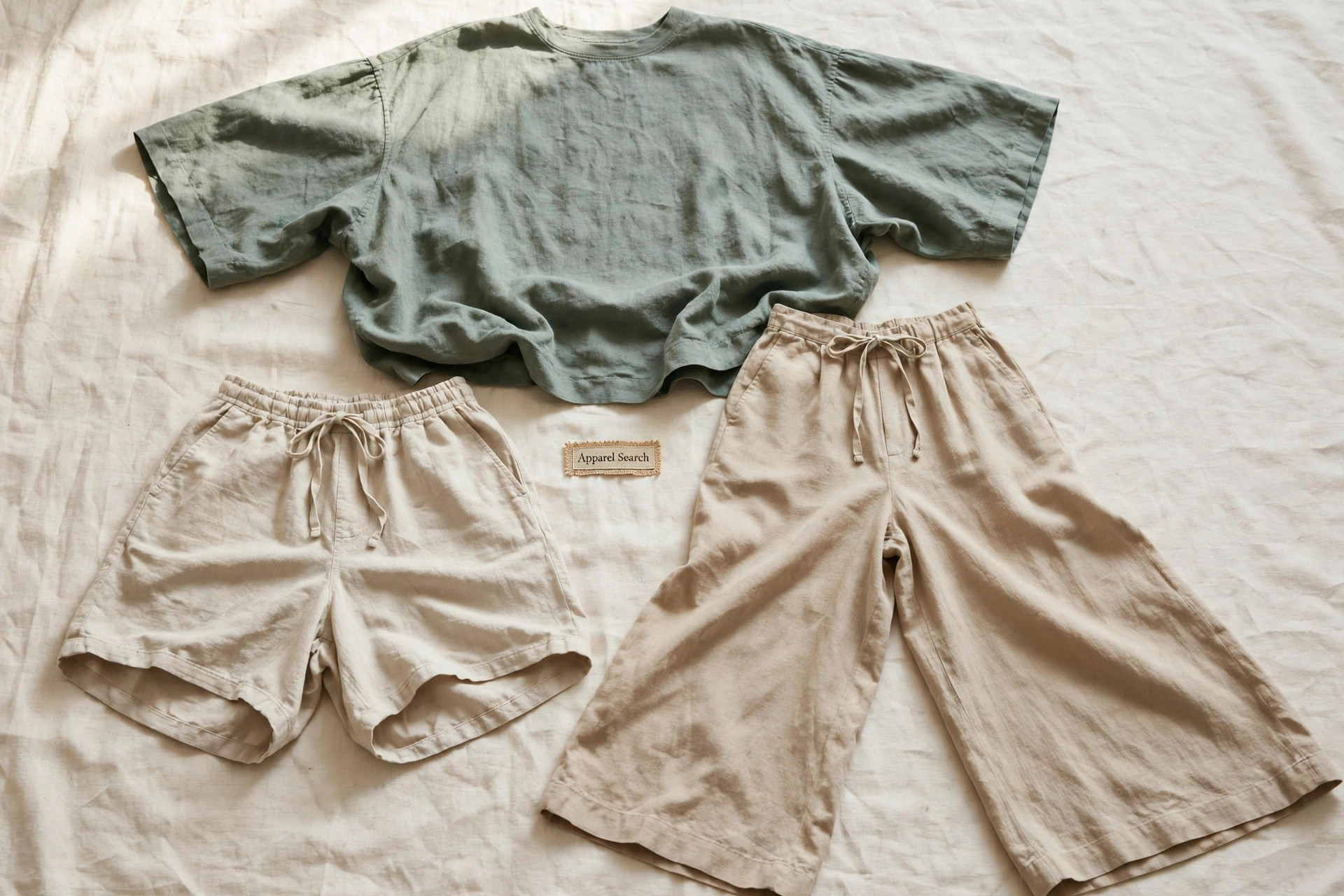
- Wide legs and shorts. Wide-leg trousers, culottes and — in warm weather or at home — shorts simply route around the problem; a boot usually passes through a genuinely wide leg, and a cast passes where a tapered leg will not.
- Side-opening trousers. The adaptive ranges’ full side zips and snaps were designed for exactly this geometry: the trouser opens flat, the leg is laid in, and the side closes around cast and all. Our wheelchair clothing guide covers the seated dressing pattern these trousers are built for.
- Skirts, dresses and kilts. Anything that drops over the hips rather than stepping up a leg tube skips the negotiation entirely for those who wear them.
- One shoe, and the other foot. The uninjured foot keeps its ordinary shoe; over the cast itself, a thick sock or a made-for-purpose cast cover keeps toes covered and the cast cleaner — sold as simple garments alongside ordinary hosiery.
One-Arm Dressing Basics
While an arm is out of service, the fastening rules of one-handed dressing apply in full: magnetic and hook-and-loop closures over small buttons, ring pulls on zips, elastic laces in shoes, and a button hook for the buttons that remain. The routine is the same seated sequence — lay out in order, affected side first, fasten in view — set out step by step in dressing after stroke, and the tools are catalogued in our dressing aids and tools guide. A few weeks of borrowed technique is a fair trade for not fighting a shirt every morning.
Buying for a Few Weeks
Work in this order: your own wardrobe first (the loose, the wide, the front-opening), borrowed room second (a partner’s or family member’s oversize shirts are a classic), and buying last — a couple of inexpensive wide-sleeved tops or a pair of side-opening trousers if the cast will be on for a long stretch. Anything bought should earn a place in ordinary life afterwards, or be cheap enough not to mind retiring. Save the receipt-level thinking for the garments in the rest of this section, which are bought for keeps.
A Garment Guide, Not Medical Advice
This page covers clothing: features, fit, fastenings and dressing technique. Questions about your condition, your medication or your care belong to your own doctor and care team, and their guidance outranks anything in a product description — including the ones described here.
Shop Adaptive Clothing on Amazon
Ready to shop? Product links are kept in one place on the Apparel Search shopping guide:
Shop Clothing on AmazonThis link opens the Apparel Search shopping guide for Amazon, where the product links are kept in one place.
Common Questions
How do I get a sleeve over an arm cast?
Measure the cast at its widest point first, then choose sleeves whose opening and tube are wider than that measurement with ease to spare. Raglan and dolman sleeves pass over a cast most readily, short and three-quarter sleeves avoid the widest part of a forearm cast, and front-opening tops let you guide the arm in gently instead of pulling a sleeve up it.
What trousers fit over a leg cast or walking boot?
Wide-leg trousers and culottes route around most casts and boots; shorts end the question in warm weather; and side-opening trousers from the adaptive ranges open flat so the leg — cast included — is laid in and the side closed around it. Skirts and dresses skip the leg tube altogether.
Can I dress one-handed while my arm is in a sling?
Yes — the technique is the one-handed routine used after a stroke: dress seated, lay clothes out in order, put the supported arm in first, and use closures one hand can work — magnetic fronts, hook-and-loop tabs, ring zipper pulls and elastic laces. A fully opening top also means the sling is disturbed as little as possible while you dress.
Should I buy special clothes for a short-term cast?
Usually not many. Start with the loose and front-opening clothes you own, borrow oversize shirts where you can, and buy only the gaps — perhaps wide-sleeved tops or side-opening trousers for a long stretch in plaster. Measure the cast first, and favour purchases that will earn a place in ordinary life afterwards.
Back to the Post-Surgery & Medical Dressing Guide
Front closures, soft seams and step-in styles — plus the mastectomy, ostomy and compression guides.
More to Explore
Search Apparel Search
Please note: Apparel Search is a fashion and clothing guide, not a medical authority. Pages in this section describe clothing features and dressing ideas only. We make no claim that any garment or special product will improve, treat, or help with any medical condition, and descriptions of product features reflect how those products are designed and marketed, not a medical endorsement. Please check with your own doctor or care team about what is right for you.