Apparel Search Consumer Guides
Dressing with Arthritis
Clothing chosen for hands that find gripping and pinching hard — closures that need no squeeze, fastenings that work with a press or a pull, and small tools that do the pinching for you.
Arthritis announces itself at dressing time, in the small print of clothing: the shirt button that needs a pinch and a twist, the zip tab too small to hold, the bra hook behind your back, the lace that wants tying in a bow. None of these is a large task — that is exactly the problem. Dressing is dozens of small grips stacked into one routine, and a wardrobe designed for painless fingers makes each of them a negotiation. The good news is that clothing offers substitutes for nearly every grip: fastenings that close with a press, pulls that fit a whole finger, and tools that do the pinching on your behalf. This guide works through them garment by garment. It is part of our post-surgery and medical dressing guide and builds on the adaptive clothing guide, where the full feature vocabulary lives.
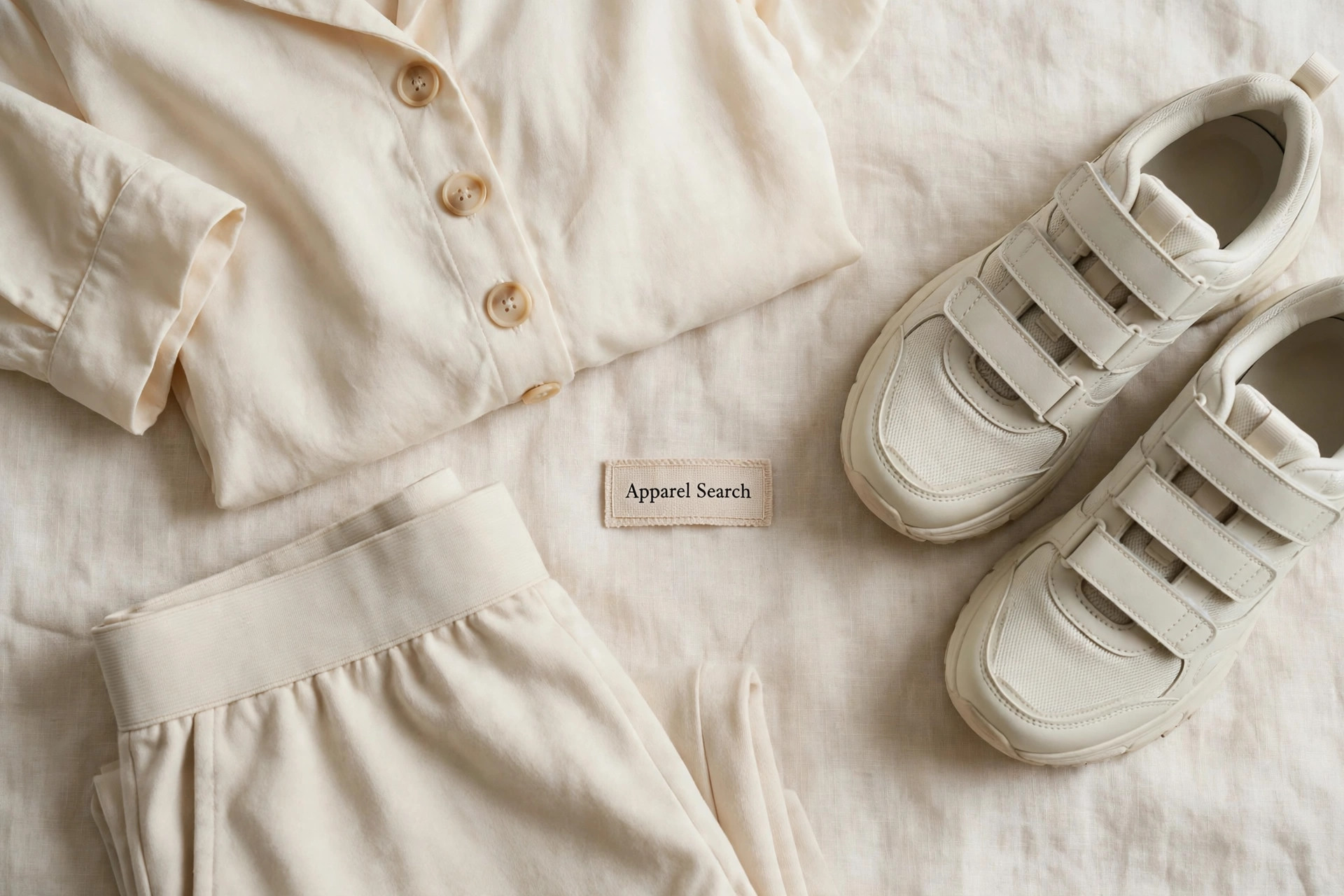
The Fastenings That Ask Least of Your Hands
Rank closures by the hand action they demand. Pinching and twisting — small buttons, hooks and eyes, tiny zip tabs — sit at the hard end. Pressing and pulling sit at the easy end, and the easy end is well stocked. Our adaptive clothing features guide explains each closure’s construction; in short:
- Hook-and-loop. Closes with a flat press of the palm, opens with a straight pull. No grip strength, no pinch. Available on shirts, trousers, bras and shoes.
- Magnetic closures. Hidden behind a standard button front; the magnets meet with a light touch and hold. As with all magnetic garments, read the maker’s label — a caution about implanted medical devices is commonly printed, and your care team is the right check if that applies to you.
- Large snaps and poppers. Sized to locate by feel and close under palm pressure.
- Ring and tab zipper pulls. A zip is only as hard as its pull; a ring or fabric tab turns it into a one-finger draw.
- Pull-on designs. The closure that asks nothing at all: elastic and drawstring waists, slip-on shoes, front-free tops that go on like coats.
No-Grip Dressing, Garment by Garment
Tops. Front-opening shirts, blouses and cardigans fasten where you can see them, at waist height. If buttons remain, choose the largest and sew them on elastic thread so they sit proud of the fabric, or hand the job to a button hook. Raglan sleeves — cut in one piece from collar to cuff — go on with a simpler arm movement than set-in sleeves, and smooth linings let a layer slide instead of drag.
Bottoms. Pull-on trousers and skirts with wide, soft elastic or drawstring waists remove the button-zip-belt sequence entirely. Side zips with ring pulls are the halfway option. Avoid tight elasticated cuffs and narrow ankle openings that have to be pulled over the heel with force.
Bras and underpinnings. Front-closing bras fasten in view and in reach; some designs close with a front zip or hook-and-loop panel. Step-in styles remove the fastening altogether.
Shoes and socks. Slip-ons, elastic laces that convert lace-ups permanently, and wide hook-and-loop straps all end the lace problem. A sock aid draws socks on without the bent-double grip on a heel, and a long-handled shoe horn finishes from the chair.
Tools That Do the Gripping
A small kit of dressing aids covers the fastenings clothing cannot change. A button hook catches a button through its hole and draws it home with a single whole-hand grip. Zipper pulls clip onto existing tabs. A dressing stick pushes straps into place and pulls hems down. Elastic laces are fitted once and never tied again. Each tool is explained properly — what it does, how it is used, and which task it suits — in our dressing aids and tools guide.
Sequence and Setup
- Set the dressing chair up once. A firm chair, the aid kit beside it, and the day’s clothes laid out in order — the setup does the remembering, so your hands only do the dressing.
- Open every fastening before you start. Undone garments go on in sequence without mid-routine struggles.
- Dress seated, bottoms first. Pull-on waists and a reacher for the far side keep the whole lower half a seated job.
- Fasten in view. Front closures, done up down a visible line, checked once in the mirror.
- Shoes last, from the chair. Sock aid, slip-on or strap shoes, long shoe horn.
The same closures and routine serve neighbouring situations — tremor and reduced dexterity are covered in our guide to dressing with Parkinson’s, and one-handed dressing after a stroke in dressing after stroke. For older wearers, the adaptive clothing for seniors page gathers the same features with assisted dressing in mind, and the adaptive clothing retail directory lists where to buy them.
A Garment Guide, Not Medical Advice
This page covers clothing: features, fit, fastenings and dressing technique. Questions about your condition, your medication or your care belong to your own doctor and care team, and their guidance outranks anything in a product description — including the ones described here.
Shop Adaptive Clothing on Amazon
Ready to shop? Product links are kept in one place on the Apparel Search shopping guide:
Shop Clothing on AmazonThis link opens the Apparel Search shopping guide for Amazon, where the product links are kept in one place.
Common Questions
What is the easiest closure for stiff, sore fingers?
Hook-and-loop and magnetic closures ask the least: both fasten with a press rather than a pinch or a twist. Hook-and-loop opens with a straight pull; magnetic closures hide behind an ordinary button front and meet with a light touch. Large snaps, closed under the palm, are the next step down in effort.
How can I do up buttons without pinching them?
Use a button hook: its wire loop passes through the buttonhole, catches the button, and draws it back through with one whole-hand grip — no pinch needed. Buttons sewn on elastic thread also sit proud of the fabric and are easier to grasp, and front-closing garments keep every button where you can see it.
What shoes are easiest with arthritic hands and feet?
Slip-on shoes, lace-ups converted with elastic laces, and shoes with wide hook-and-loop straps. All three go on seated, without tying or bending, especially with a long-handled shoe horn. Avoid narrow lace holes and stiff heel counters that have to be pulled open by hand.
Are front-closing bras and easy-fastening shirts widely available?
Yes. Front-closing bras are a standard category, and easy fastenings — magnetic fronts, hook-and-loop panels, large snaps — appear both in specialist adaptive ranges and in mainstream clothing lines. Our adaptive clothing retail directory lists the specialist retailers alongside the mainstream brands that carry adaptive ranges.
Back to the Post-Surgery & Medical Dressing Guide
Front closures, soft seams and step-in styles — plus the mastectomy, ostomy and compression guides.
More to Explore
Search Apparel Search
Please note: Apparel Search is a fashion and clothing guide, not a medical authority. Pages in this section describe clothing features and dressing ideas only. We make no claim that any garment or special product will improve, treat, or help with any medical condition, and descriptions of product features reflect how those products are designed and marketed, not a medical endorsement. Please check with your own doctor or care team about what is right for you.