Apparel Search · Destination Dressing
What to Wear in Paris
Neat, muted and made for walking: how visitors actually dress well in Paris, without the costume version of French style.
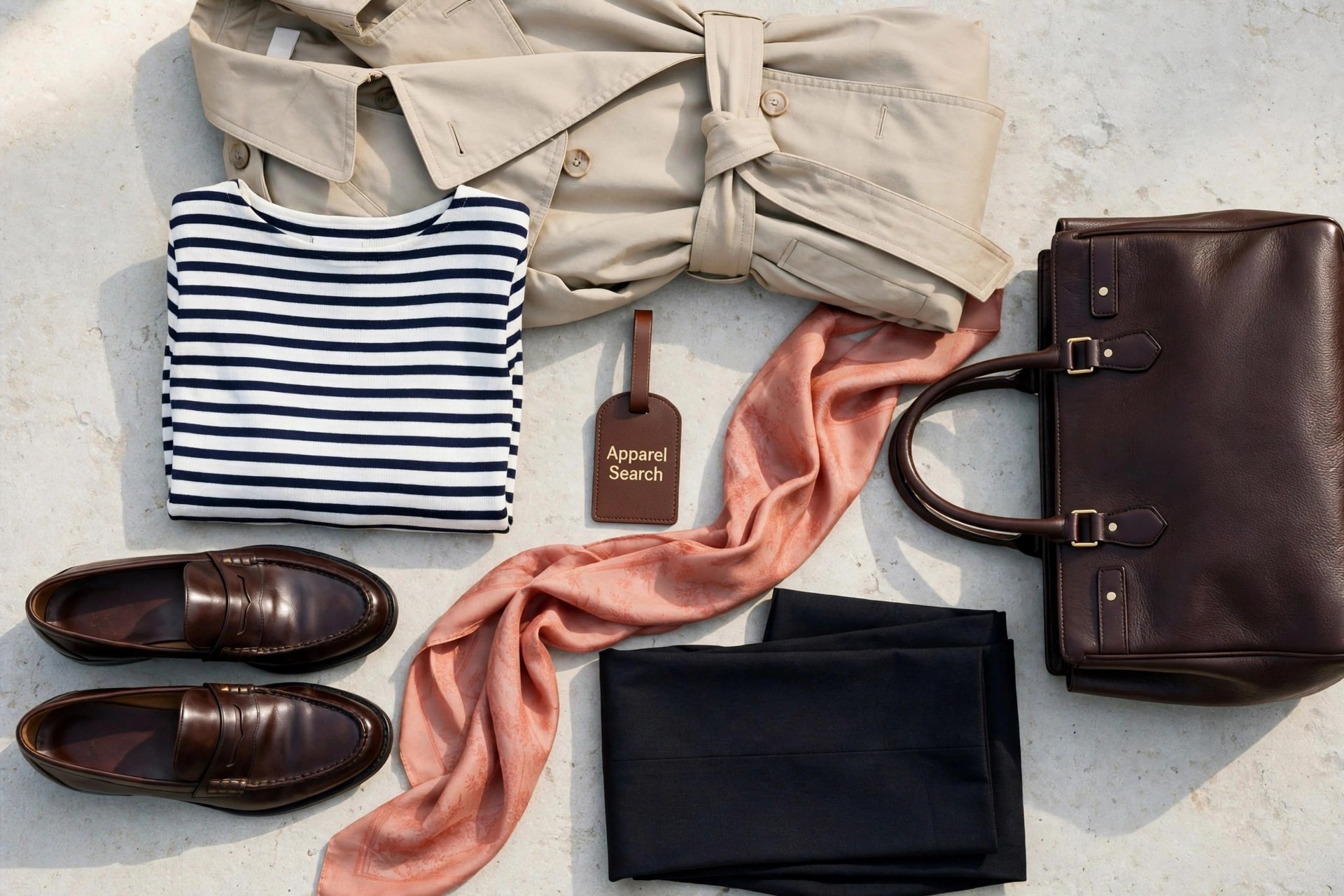
Paris is the destination where visitors worry most about being judged, and the worry is mostly wasted. Parisians are not scoring your outfit; they are simply dressed, as a matter of daily habit, in a way that makes careless dressing noticeable. The convention you will observe is tidiness: clothes that fit, shoes in good repair, colors that do not shout. Meet that standard — which your own wardrobe almost certainly contains — and the city stops being a fashion examination and becomes what it should be: a very walkable museum with excellent cafés. This guide is one of four city guides in our destination dressing series.
01 / The Look, Honestly
The “Parisian Look,” Without the Clichés
The souvenir version of Parisian style — beret, Breton stripes, baguette under one arm — is a costume, and wearing it marks you as a visitor faster than any accent. The real convention, visible on any weekday morning, is quieter: a restrained palette built on navy, black, gray, beige and white; clothes cut close and kept in good condition; one considered piece — a good scarf, a proper coat, well-kept leather shoes — doing the work that logos do elsewhere. Nothing about it requires being French, thin, or newly shopped. It requires fit and upkeep, which travel well. Build your Paris wardrobe from the neatest third of your own closet and you are most of the way there before you land.
02 / Footwear
Walking Is the Transport
Paris rewards walkers and punishes the wrong shoes with unusual efficiency. The historic quarters — the Marais, the Latin Quarter, Montmartre's slopes — are cobbled; museum days at the Louvre or Orsay run to miles on stone floors; and the Métro, for all its density, involves stairs at every turn. The footwear that serves is the footwear residents choose: polished loafers, clean plain sneakers, flat boots, anything broken-in with a real sole. Narrow heels on cobbles are the classic visitor error, slow and occasionally ankle-ending. Pack one walking pair you trust completely and one smarter pair for evenings, and let both be shoes you have already worn for a full day at home.
03 / Cafés, Museums, Evenings
Cafés, Museums and Evenings
Paris has almost no formal dress codes for visitors, and one broad baseline instead: smart-casual, everywhere, all day. Cafés and bistros expect nothing specific, but the room is full of neatly dressed people and you will feel the difference if you arrive in beach clothes. Museums ask only for stamina and a layer — galleries run cool. Evenings step up half a notch: the same trousers with the smarter top, the scarf deployed, the good shoes. Churches, including Notre-Dame and Sacré-Cœur, are working places of worship: there is no turnstile enforcement of the Italian kind, but covered shoulders and a respectful hemline are the expected courtesy, and mass times are for worshippers first. Our guide to what to wear to the theatre and opera covers Paris's evening venues in the same spirit.
The Short Version
The Three Pieces That Do the Work
A proper coat or trench — Paris weather turns, and a real outer layer is the difference between dressing for the day and surrendering to it.
One good scarf — warmth on the train, polish at dinner, shoulders covered at a church door: the hardest-working square of fabric in the case.
Walking shoes you would wear to lunch — because in Paris, the walk and the lunch are the same outing.
04 / Weather
Weather That Changes Its Mind
Paris is a four-season city with a habit of previewing two of them in one afternoon. The local answer is layering with intent: a base that looks finished on its own, a knit or jacket over it, and a waterproof outer layer that you will genuinely carry — a compact umbrella earns its space here more than in most cities. Spring and autumn are the swing seasons, when the scarf-and-trench combination does its famous work; winter is damp-cold rather than arctic, and summer, increasingly, has hot spells where the city's stone holds the heat into the evening. Our dressing for the climate guide builds the layering system; Paris simply asks that you use all of it, sometimes before lunch.
Questions
Common Questions
Do I need to dress up in Paris?
Not formally. What Paris expects is neatness: clean, well-fitting clothes in good condition. Your own smart-casual wardrobe, chosen carefully, is enough for everything except a genuinely formal event.
Are sneakers acceptable in Paris?
Yes — plain, clean sneakers are everyday footwear for Parisians of all ages. They stop working only where any casual shoe would: a very formal restaurant or event.
What do people wear to dinner in Paris?
Smart-casual with intent: trousers or a skirt rather than shorts, a proper top or shirt, good shoes. A jacket is welcome but rarely required outside the most formal rooms.
What should I avoid wearing in Paris?
Nothing is forbidden. The combinations that read as careless rather than casual are beachwear in the city, very loud logo clothing, and shoes that cannot handle cobbles. The beret-and-stripes costume is best left to the souvenir shops.
Keep Going
More Destination Guides
Paris is one stop in the series. The hub gathers the principles; the other city guides apply them elsewhere.