Apparel Search · Destination Dressing
What to Wear in London
A city dressed by its forecast: rain-first outer layers, a real layering system, and a neat baseline that opens every door from pub to theatre.
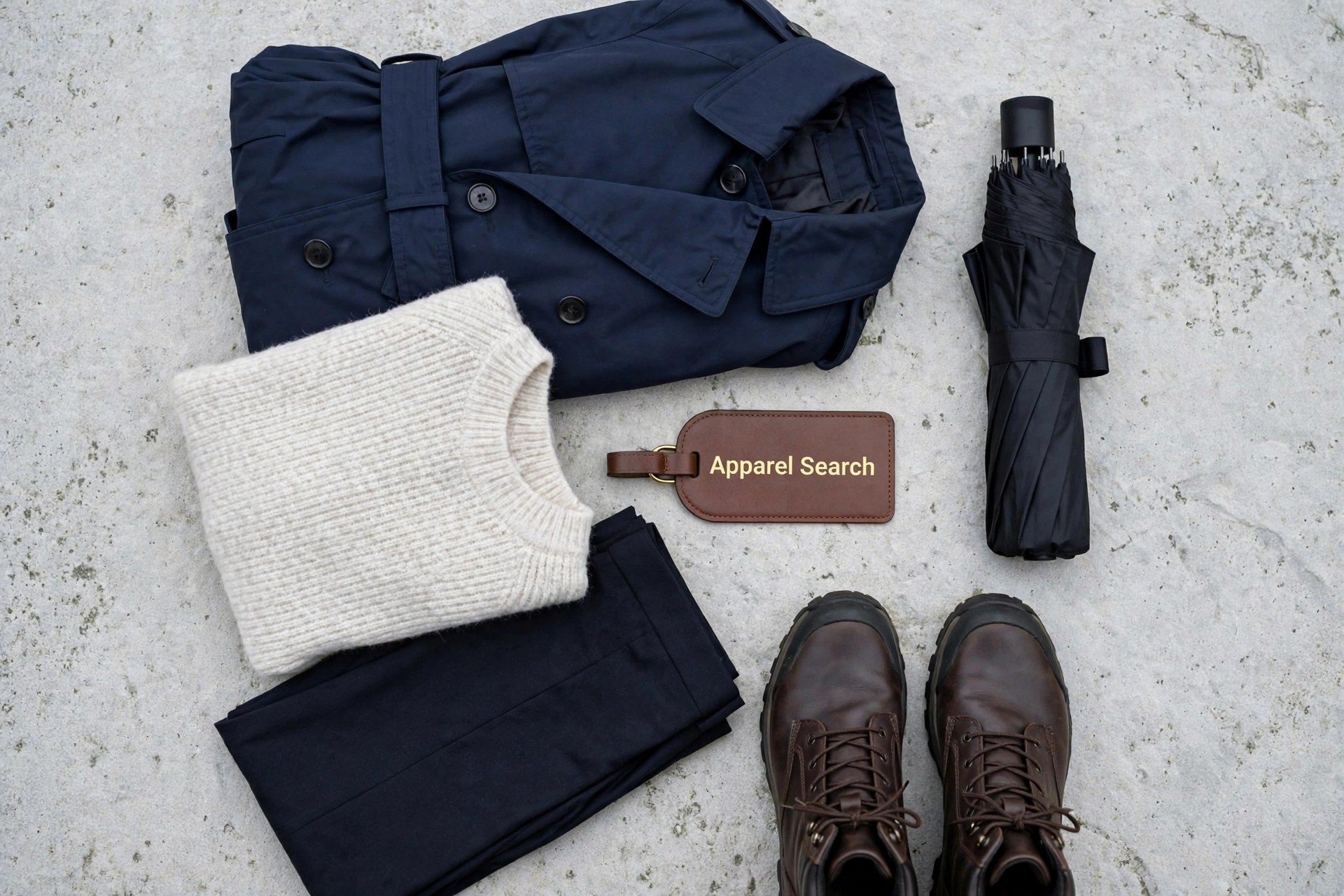
London dressing begins with a fact visitors underestimate: the weather is not a condition of the day, it is a schedule of several. Rain is a standing possibility in every month, sun and gray can trade places hourly, and the city's own residents dress for the range rather than the forecast. Master that — waterproof outer layer, honest layers, shoes that shrug off wet pavement — and London's other conventions are gentle ones: a generally neat baseline, pubs that welcome nearly anything tidy, and a theatre district where dressing up a little is a pleasure rather than a rule. This guide is one of four city guides in our destination dressing series.
01 / Rain First
Dress for Rain First
Pack the waterproof layer as a certainty, not a contingency: a proper raincoat or trench with real water resistance, worn or carried daily. The companion decision is footwear. Wet London pavement is a specific surface — slick stone, puddled curbs, station floors — and it defeats suede, canvas and thin leather soles within one shower. Waterproof leather boots or shoes with grip turn a rainy day into a normal day, which in London is the entire game. An umbrella completes the kit, with a British caveat: city wind inverts the flimsy kind, so a sturdy compact umbrella is worth its slightly greater weight. Dressed this way, you will notice what residents know — London rain is usually light and intermittent, and it only ruins the days of people dressed as if it were impossible.
02 / The System
The Layering System
The classic London day asks for a base that can stand alone indoors, a warm knit over it, and the waterproof shell over that — because the Tube and the museums run warm while the streets run cold, sometimes within the same hour. Build outfits as that three-part system rather than as single garments: a shirt or fine top, a sweater or cardigan, the coat. It is the same architecture as our dressing for the climate guide, tuned to a city where the swing is daily rather than seasonal. In winter add the scarf-and-gloves layer and treat the coat as a real winter coat; in summer the system compresses but does not disappear — a light knit and a packable waterproof still earn their space in a city where a July evening can feel like October.
03 / Pubs, Theatre, Evenings
Pubs, Theatre and Evenings
London's social dress codes are permissive and unwritten. The pub asks for nothing beyond the tidy side of casual. Restaurants span the whole range, with the smarter rooms expecting the smart-casual standard described below. The West End deserves its own note because visitors consistently over- and under-guess it: there is no formal dress code at London theatres, full evening dress is now rare in the audience, and the working convention is smart-casual with a little intent — the outfit you would wear to a good dinner. Our dedicated guide to what to wear to the theatre and opera works through the detail. One practical theatre note that is pure London: auditoriums are warm and the walk from the station is not, so the layering system, not a single heavy outfit, is the correct answer.
The Short Version
The London Layer Stack
Base — a top or shirt that looks finished on its own, for warm interiors.
Middle — a knit you can carry or tie when the sun wins an hour.
Shell — the waterproof coat, every day, whatever the morning looks like.
Feet — waterproof, grippy, broken-in. London is walked, in all weathers, by design.
04 / The Baseline & The Walking
The Business-Casual Baseline, and the Walking
London is a working city with a neat streak: the weekday baseline in the center is business-casual shading into formal, and a visitor in tidy, well-fitting clothes is correctly dressed for nearly every daytime setting in the city. That makes London the easiest of this series' cities to pack for on business — the visitor wardrobe and the local convention are nearly the same wardrobe, as our business travel wardrobe guide describes. What remains is mileage. London is bigger than it looks on the Tube map, and the pleasant way to cross it is on foot: build each day around shoes that can do five miles without comment, and the city, rain system and all, becomes straightforward. Crossbody bags, zipped and worn in front on crowded tubes and in markets, complete the practical kit described in the hub's dressing discreetly section.
Questions
Common Questions
Do I need a raincoat, or will an umbrella do?
Take both if you can. London rain is often light but persistent, and wind makes umbrellas unreliable exactly when they are most needed. A waterproof coat with a hood is the dependable half of the system; the umbrella is the bonus.
How dressed up is the West End theatre?
There is no formal code. Smart-casual is the working convention — what you would wear to a good restaurant. A handful of gala and opening nights run dressier, and jeans-and-trainers, while seen, sit at the casual edge.
Are trainers acceptable in London?
Yes, everywhere casual, which in London is most places. For smarter restaurants and evenings, switch to the leather pair; for sightseeing, clean trainers are unremarkable local footwear.
What does smart casual mean in London?
Trousers or a skirt instead of shorts or jeans at the smarter end, a collared shirt, blouse or fine knit, and proper shoes. It is a neatness standard more than a formality standard.
Keep Going
More Destination Guides
London is one stop in the series. The hub gathers the principles; the other city guides apply them elsewhere.