Apparel Search · Destination Dressing
What to Wear in Italy
The country where travel dress codes are both beautiful and enforced: church doors, cobblestones, heat, and a national habit of dressing with care.
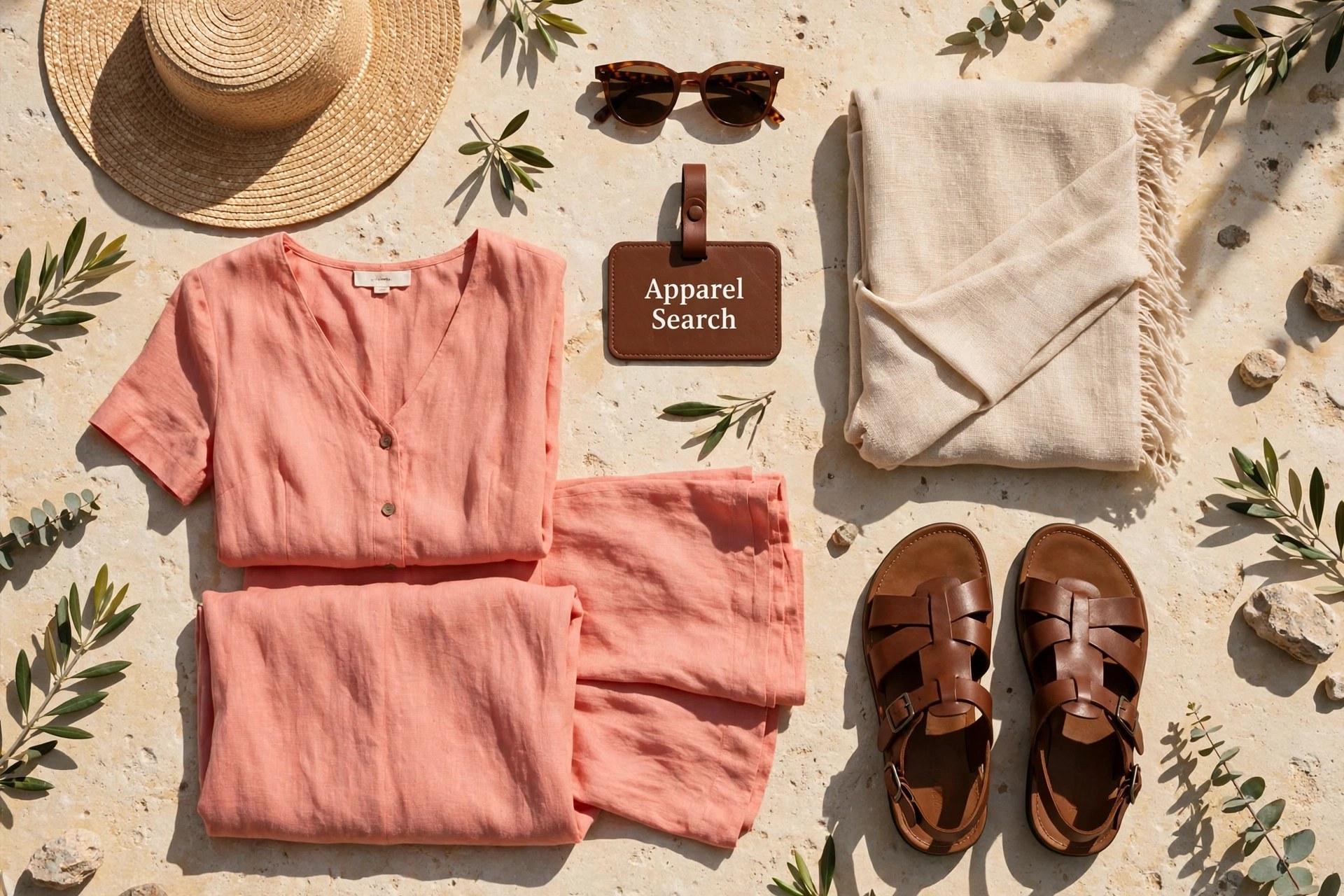
Italy is where this series' two themes — custom and rule — meet head-on. The custom is the famous one: a general standard of neat, considered dressing that makes Italy a pleasure to dress for. The rule is literal, posted at the doors of the country's greatest churches and enforced by staff who turn visitors away daily: no bare shoulders, no knees showing, no entry. Pack for both and Italy is easy. This guide is one of four city guides in our destination dressing series; for the coverage layer in depth, see the modest fashion guide.
01 / The Enforced Rule
Church Dress Codes Are Real Rules
St Peter's Basilica and the Vatican Museums, Florence's Duomo, St Mark's in Venice, Milan Cathedral and most major Italian churches apply the same code to every visitor, whatever their faith: shoulders covered, knees covered, and clothing that is not beachwear. Enforcement is not theoretical — staff at the door refuse entry, and the disappointed queue of visitors in shorts and vest tops, buying emergency wraps from the stalls outside, is a fixture of the Roman summer. The rule is simple to satisfy and impossible to argue with, so plan on satisfying it: one outfit per trip that reaches the knee with sleeves or a carried shawl over it, worn on church days. The wrap is the professional solution — it lives in the day bag, covers shoulders in seconds, and doubles as a layer in the cool interior, which will feel colder than the street after an hour in the sun.
02 / Streets & Surfaces
Cobblestones Decide Your Shoes
Italy's historic centers are paved for another century's traffic: Rome's sanpietrini cobbles, Florence's stone slabs, Venice's bridges and worn marble, all of them uneven, and treacherously smooth when wet or polished by a million shoes. Stilettos catch between stones and turn an evening stroll into a negotiation; thin soles transmit every cobble by mid-afternoon. The shoes that work are the ones Italian women have always worn in these streets: sturdy flats, loafers, low block heels, sandals with real soles and straps that hold the foot. Save the elegant narrow heel for the taxi-to-door dinner, and even then, check the route. On a practical note, church and museum days combine the strictest dress code with the longest walking — schedule your best shoes and your covered outfit for the same day; they usually want to be.
03 / The Baseline
The Smart-Casual Baseline
Beyond the church door, Italy's convention is the well-known one, and it is a convention of care rather than expense: clothes clean, fitted and in good repair; outfits that look chosen rather than grabbed. Visitors meet it halfway by dressing one notch above their home casual, and by observing two local boundaries. The first is the beach boundary: swimwear belongs at the beach and the pool — several coastal towns formally fine walking the streets in swimwear or bare-chested away from the shore, and everywhere it reads as careless. The second is the evening step: dinner, even at a simple trattoria, is an occasion Italians dress for a little, and joining in costs nothing but the smarter shirt. None of this requires Italian labels; it requires the tidiness described in our Paris guide, worn a degree warmer.
The Short Version
The Italy Door Test
Before leaving the hotel on a sightseeing day, three questions answer almost everything this guide covers:
Shoulders? Covered, or a wrap in the bag. Knees? Covered, for any day with a church in it. Shoes? Honest soles, for stone that has outlasted empires.
Pass all three and Italy's strictest door and roughest street are both already handled.
04 / Heat & Seasons
Heat, Sun and the Shape of the Day
Italian summers, especially Rome and the south, are seriously hot, and the traditional day bends around it: sights early, a long lunch, shade at midday, life again in the evening. Dress for that rhythm in breathable natural fibers — linen earns its reputation here — and take sun protection seriously: a hat, and clothing with real coverage double as both comfort and church-readiness. Our sun protective clothing buying guide covers UPF-rated options, and what to wear in humid weather handles the sticky coastal days. Seasons split by geography: the north (Milan, Venice, Turin) has proper winters and wet springs that call for the climate guide's layering system, while the south stays mild; shoulder seasons everywhere are layering seasons. In Venice, keep an eye on the acqua alta forecasts in the wet months — temporary walkways go up, and waterproof footwear turns a flood day back into a sightseeing day.
Questions
Common Questions
What exactly do Italian churches require?
Covered shoulders and covered knees, for all visitors, with no swimwear or beach clothing. The rule is posted and enforced at St Peter's, the Vatican Museums and most major churches and cathedrals. A carried shawl over a sleeveless top satisfies the shoulder rule.
Can I wear shorts in Italy?
Yes — shorts are ordinary summer wear in Italian towns and resorts. The exception is inside churches and some religious sites, where knees must be covered; wear your longer option, or time church visits for a day you are wearing it.
What shoes are best for Italian old towns?
Sturdy, broken-in flats with real soles: loafers, walking sandals that strap on, or low block heels. Cobbles and polished stone defeat stilettos and punish thin soles.
Is the Vatican dress code different from other churches?
It is the same code — shoulders and knees covered — applied most strictly, with the added rule that visitors in violation are refused at security. Treat Vatican day as the day to wear your fully covered outfit rather than relying on a wrap.
Keep Going
More Destination Guides
Italy is one stop in the series. The hub gathers the principles; the other city guides apply them elsewhere.