Apparel Search Consumer Guides
Sun-Protective Clothing Buying Guide
Buying by the numbers: what UPF 15, 30 and 50+ labels measure, the construction factors that move them, and the coverage designs that put rated fabric where you want it.
Sun-protective clothing is the one corner of the wardrobe sold on a laboratory number. UPF — ultraviolet protection factor — is a rating measured on fabric: it states what fraction of ultraviolet radiation passes through the cloth. Our sun protective clothing definition gives the term its dictionary treatment; this guide is the buying companion. It explains how to read the labels, which construction details raise or lower a rating, and how coverage design — brims, neck flaps, sleeve length — decides how much of you the rated fabric actually covers. Two companion pages go deeper: how a rating holds up through washing and wear, and buying sun clothing for kids.
Search Apparel Search
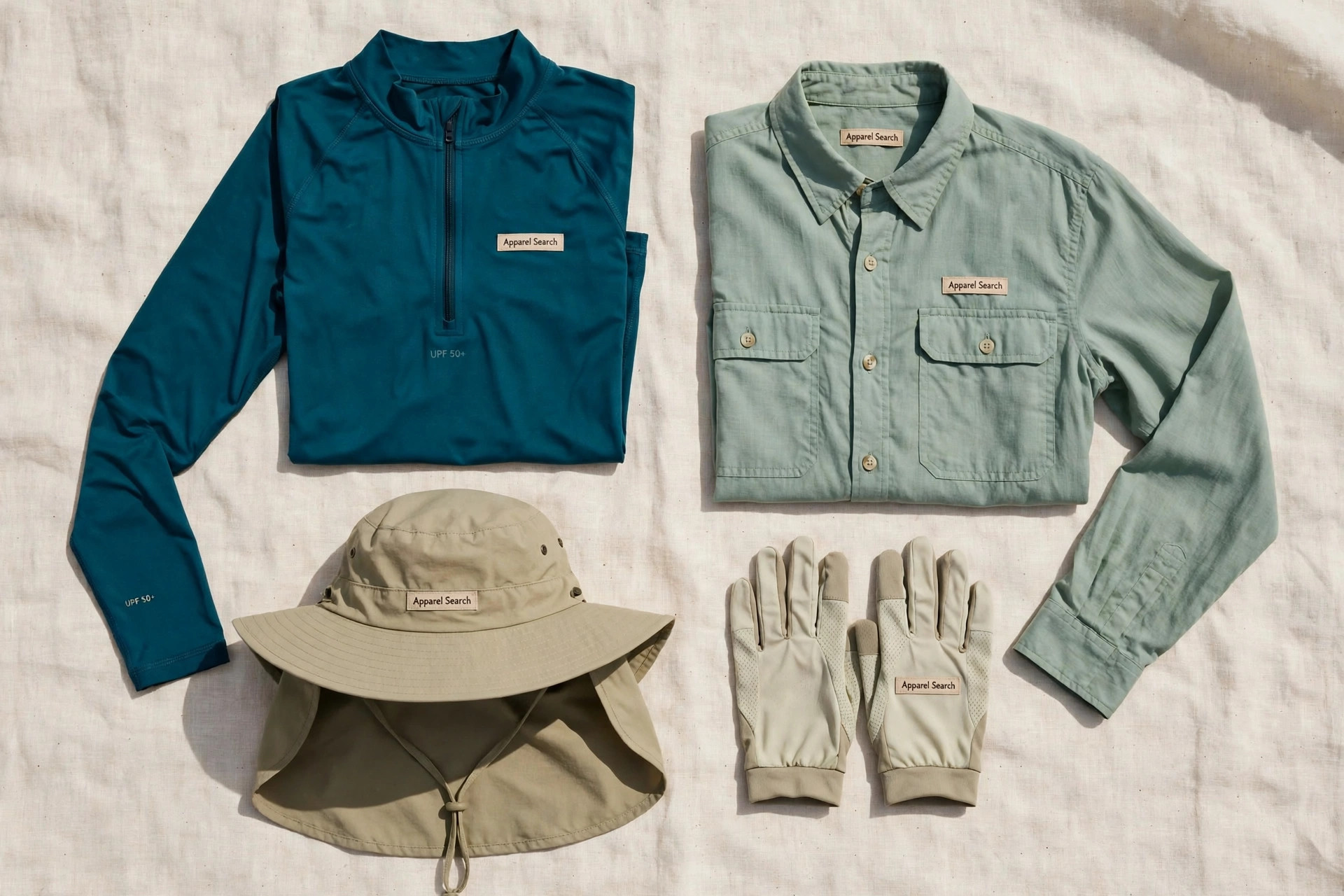
The Guides in This Section
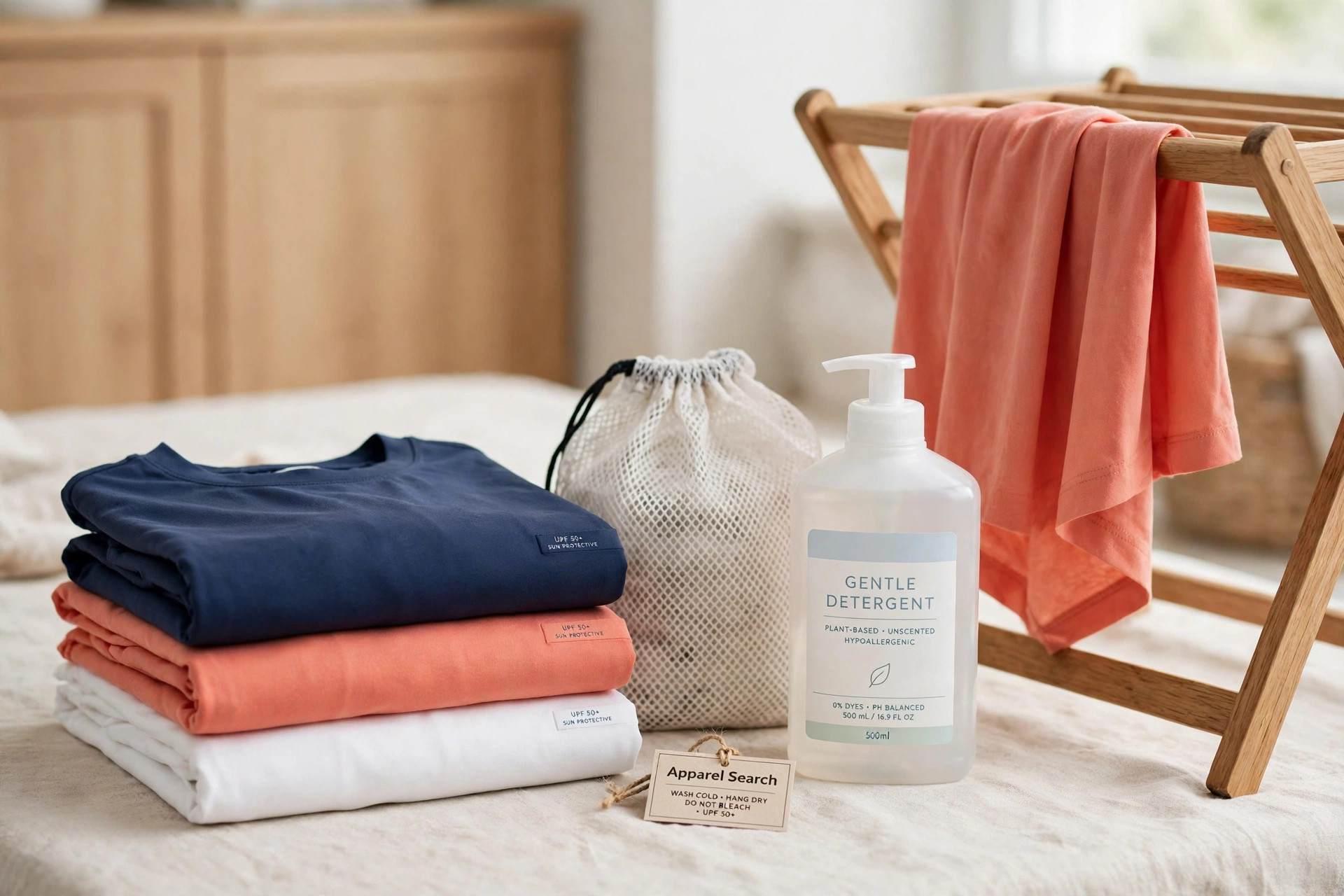 UPF Clothing Care and DurabilityInherent ratings vs applied finishes, what washing, stretching, chlorine and thinning do to the number, and when a garment has honestly worn out its rating.
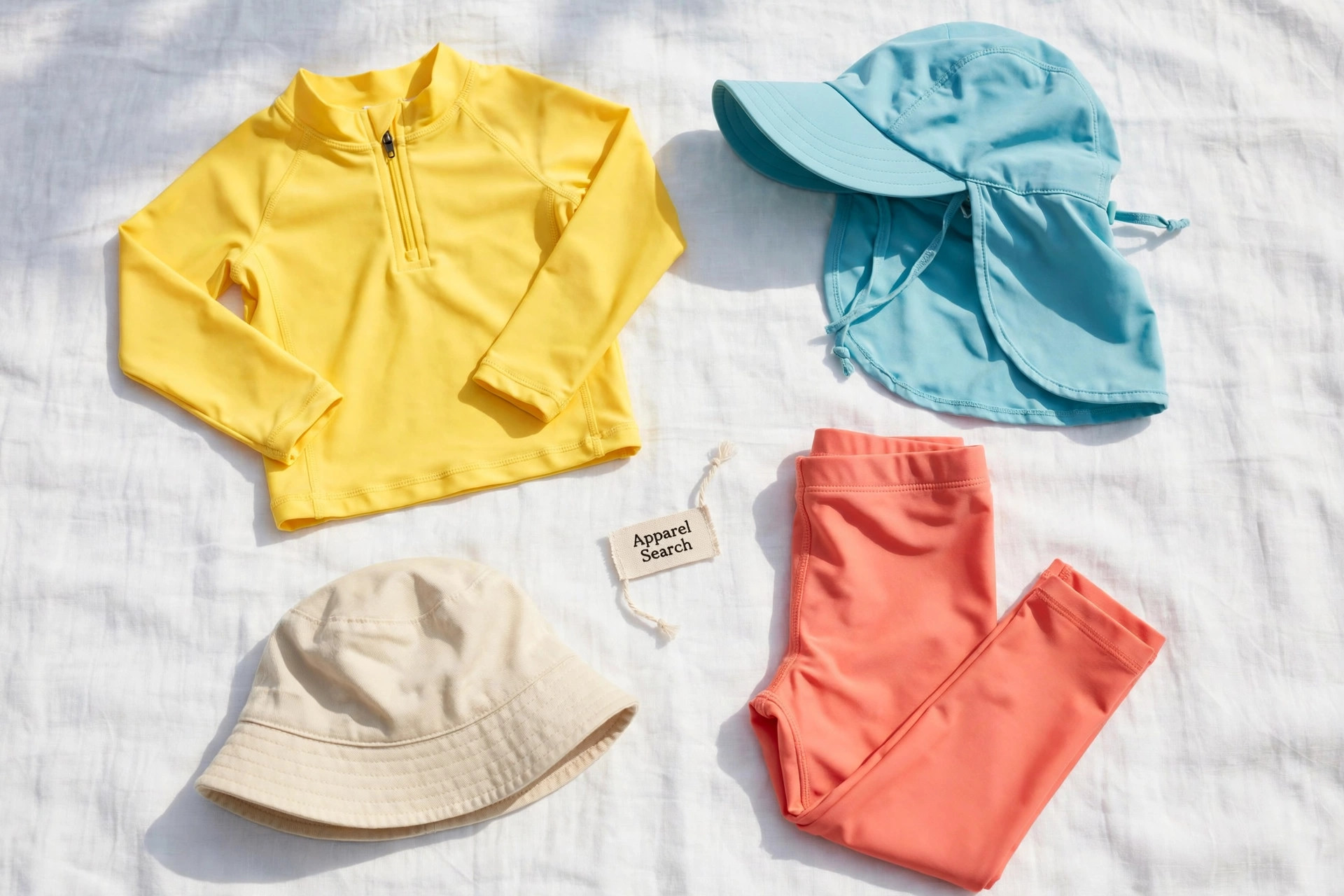 Sun-Protective Clothing for KidsCoverage suits, legionnaire hats and swim leggings for children — buying by rating and coverage, sized for growth, and made practical for school and camp.
What the Numbers Measure
A UPF rating is a fraction wearing a friendlier name. UPF 15 transmits about 1/15th of the UV that reaches the fabric — roughly 6.7 percent gets through. UPF 30 transmits about 1/30th, roughly 3.3 percent. UPF 50 transmits about 1/50th, roughly 2 percent, and labels stop there: UPF 50+ is the top category, used when a fabric tests at or above 50. The test shines a measured spectrum of ultraviolet — both UVA and UVB — through a fabric sample and compares what arrives on the other side. That is the whole claim: a statement about cloth, measured on cloth.
Labeling categories group the numbers into bands. Under the commonly used AATCC and ASTM labeling practice, UPF 15–24 is classed “Good,” 25–39 “Very Good,” and 40–50+ “Excellent.” Australia and New Zealand, where the rating system began, use their own standard (AS/NZS 4399) with the same three bands. When a garment carries a rating, it is this kind of tested number — not a marketing adjective.
Construction: What Raises the Number
Weave density first. Ultraviolet passes most easily through the gaps between yarns, so a tight, dense weave or knit transmits less than a loose one. Hold two fabrics to a lamp: the one that shows less light through its structure is, in general, the tighter barrier — which is why rated swim and outdoor fabrics feel compact rather than gauzy.
Fiber matters. Synthetic fibers such as polyester and nylon absorb more UV in the fiber itself than bleached cotton does, and many rated fabrics add UV-absorbing compounds to the fiber or finish. Unbleached cotton, linen and shiny-surfaced fabrics each behave differently again — one more reason the printed rating outranks guesswork from the fiber content alone.
Color helps, as a tiebreaker. Deep, saturated dyes absorb more ultraviolet than pale ones, other things equal. It is a real effect and a secondary one: construction decides the league, color decides within it.
Stretch and wetness lower it. A fabric pulled tight spreads its yarns and opens the gaps, so a garment stretched hard over shoulders or knees transmits more than the same fabric relaxed. Many fabrics also transmit more when wet — some markedly so — which is why serious swim ratings are tested wet as well as dry, and why a rated rash guard is a different purchase from an ordinary wet T-shirt. Our women’s swimwear guide and men’s swimwear guide cover where rated pieces sit inside the swim wardrobe.
Coverage: The Design Half of the Rating
A rating describes fabric; a garment only performs where the fabric is. Coverage design is the other half of the purchase. Look for long sleeves that stay long when arms reach, high necklines and stand collars at the back of the neck, and shirt tails that stay tucked through bending. In headwear, brim width is the specification: a brim of roughly three inches or more shades in every direction, and a legionnaire flap adds the neck and ears. The sun hats product guide walks the hat styles; our dressing for the climate guide puts coverage into the wider hot-weather wardrobe, and the humid weather guide covers the comfort side of wearing more cloth in heavy air — ventilation panels, loose cuts and air gaps are how rated garments stay wearable.
How Ratings Are Tested — and What to Check on a Label
Ratings come from instrumented fabric tests (AATCC 183 is the common American test method) run on new fabric, often after laundering cycles specified by the labeling standard, and increasingly reported for wet and stretched states in swim categories. When you shop, the label checks are short: a specific number (not just “sun protection”), the 50+ cap understood, a rating that applies to the garment’s main fabric, and — for swim — a brand willing to say the rating was measured wet. Then the durability question, which has its own page: UPF care and durability.
UPF Is Not SPF
SPF is measured on sunscreen, on skin, and its headline number is driven mostly by UVB. UPF is measured on fabric, by instrument, across UVA and UVB together. Treat the two numbers as different instruments reading different things — and a fabric rating as the more repeatable of the two, because cloth does not need reapplying or spreading evenly.
Shop Sun-Protective Clothing on Amazon
Ready to shop? Product links are kept in one place on the Apparel Search shopping guide:
Shop Clothing on AmazonThis link opens the Apparel Search shopping guide for Amazon, where the product links are kept in one place.
Common Questions
What does UPF 50 actually mean?
It is a transmission fraction. A fabric rated UPF 50 lets about 1/50th of the ultraviolet radiation that falls on it pass through — roughly 2 percent. UPF 30 transmits about 1/30th (about 3.3 percent) and UPF 15 about 1/15th (about 6.7 percent). The number describes the fabric in a laboratory test, measured across both UVA and UVB wavelengths.
Is UPF the same as SPF?
No — they are cousins, not twins. SPF is measured on sunscreen applied to skin, and its headline number is driven mainly by UVB. UPF is measured on fabric with an instrument, covers UVA and UVB together, and does not depend on how thickly anyone applied anything. A UPF rating is a property of a piece of cloth; an SPF number is a property of a product in use.
Why do some labels say UPF 50+ instead of an exact number?
Because rating systems cap the label. In the widely used AATCC/ASTM labeling practice, 50 is the highest category reported: a fabric that tests above 50 is labeled 50+. Two shirts both marked 50+ may test differently in the laboratory — the plus sign means “at least this much,” not an exact score.
Does a darker color always rate higher?
Other things equal, deep and saturated colors absorb more ultraviolet than pale ones, and test results usually reflect that. But construction outranks color: a dense dark weave and a loose pale weave are not close, and a tight white fabric can out-rate a flimsy dark one. Treat color as a tiebreaker between similar fabrics, never as a substitute for a printed rating.
Can ordinary clothing have a UPF rating?
Any fabric can be measured, and everyday garments transmit widely varying amounts depending on weave, fiber and stretch. The difference with rated clothing is that the number was tested and printed on the label, so the buyer is choosing a measured fabric rather than guessing from how thick a shirt feels held up to the light.