Men's Swimwear Guide
Men's swimwear is the clothing made for the water: swim trunks, board shorts, swim briefs and jammers, and the rash guards and swim shirts that complete the kit. This guide treats the category strictly as product - the cuts, the quick-dry fabrics, the liners and the sun-protection ratings - because swimwear is technical clothing whose specifications (inseam, liner construction, fabric weight, UPF) decide comfort in the water and out of it.
Shop Men's Swimwear Now
Shop Men's Swimwear on Amazon Shop Men's Swimwear on eBayThe Amazon and eBay links on this page are affiliate links. If you make a purchase through them, Apparel Search may earn a commission.
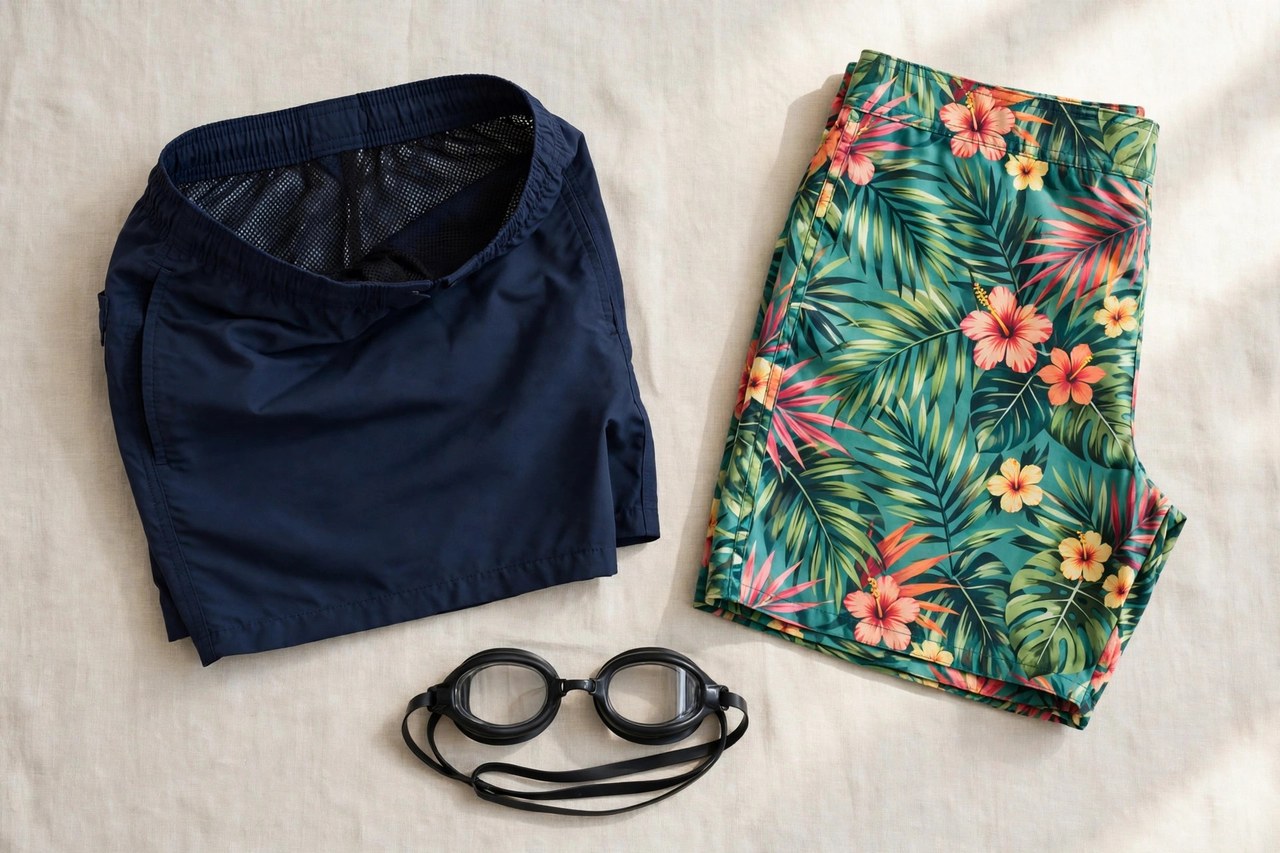
Men's swimwear is the clothing made for the water: swim trunks, board shorts, swim briefs and jammers, and the rash guards and swim shirts that complete the kit. This guide treats the category strictly as product - the cuts, the quick-dry fabrics, the liners and the sun-protection ratings - because swimwear is technical clothing whose specifications (inseam, liner construction, fabric weight, UPF) decide comfort in the water and out of it. This guide is built around the questions buyers actually ask: which style, which size, which fabric, and what will it look like after a year of real use - answered in order, with the trade-offs stated plainly.
Cuts, Quick-Dry Fabrics and UPF
The cuts divide by venue and sport. Swim trunks - a mid-thigh short with an elastic or drawstring waist and a mesh brief liner - are the universal default for pool and beach. Board shorts run longer, with a fixed waistband, fly and no liner, built for surfing's movement and board contact. Briefs and jammers are the competitive and lap-swimming forms, in chlorine-resistant knits that hold their fit against the pool's chemistry. Fabrics are quick-dry nylon or polyester, increasingly with four-way stretch that ends the old board-short stiffness; chlorine resistance is a printed specification worth reading if the suit will live in a pool. Rash guards and swim shirts add UPF-rated sun coverage, the one swim specification with a medical dimension.
The durable buying order is job, specification, budget - in that sequence. Decide what the garment must do, translate that into fiber, weight, construction and size numbers, and only then shop price. Read labels as specifications, inspect the garment inside out where finishing is unposed, and prefer the maker who publishes measurements to the one who publishes adjectives. A garment that matches your measurements, climate and laundry will be worn; one that misses any of the three becomes expensive storage.
UPF is the specification with a test behind it: our sun-protective clothing buying guide explains the ratings as transmission measurements and the construction factors — weave density, fiber, color, stretch and wetness — that move them.
Fit and Sizing
Swimwear fit is decided wet, not dry: fabrics that feel right in the shop go slack in the water, so trunks should sit snug at the waist (the drawstring is the real closure; elastic alone creeps), and lengths should be chosen by leg and activity - shorter inseams (five to seven inches) for swimming's freedom and the modern line, longer for boarding and for men who prefer the coverage. Jammers and briefs fit like the compression garments they are, sized exactly. A suit that needs constant adjustment on land will be a negotiation in the surf.
Measure yourself once a year and keep the numbers - chest, waist, inseam, foot, head - because bodies drift gradually while size habits never do. Shop from measurements, try garments under real conditions (over layers, in your own shoes, late in the day for footwear), and be honest about alterations: lengths and small waist changes tailor beautifully; shoulders, rises and patterns are the garment you bought forever.
Wearing and Care
Rinse swimwear in fresh water after every use - chlorine and salt are both eating the elastic and the color on a schedule - and dry it out of direct sun, which fades and tires the same fibers. Never leave a suit wadded in the bag; mildew is faster than any holiday. Machine wash rarely and gently, skip the dryer, and retire a suit when the liner sags or the fabric thins at the seat: swimwear's failures are public, and its replacement cost is the cheapest dignity in the wardrobe.
Five minutes when a garment comes off - shake it out, hang or fold it correctly, note the stain and the loose button - prevents most of the damage later blamed on quality. Keep a small kit where the clothes live: brush, lint roller, conditioner suited to your leathers, black, navy and grey thread. Clothing rarely dies at once; it fades by small neglects, and small attentions reverse the process at the same pace.
Common Questions
Swim trunks or board shorts?
Trunks are the all-rounders: mesh liner, elastic-and-drawstring waist, mid-thigh lengths, at home in pools, beaches and resort lunches. Board shorts are the surf specialist: longer, linerless, with a fixed waist and fly that stays shut in waves, worn with a rash guard or bare. If your water is a pool and a beach chair, trunks; if it is a surf break, board shorts; many men own both because the venues genuinely differ.
What inseam is right for men's swim trunks?
Five to seven inches is the modern swimming range - enough coverage, full leg freedom, and a hem that ends mid-thigh. Shorter (three to five) is the athletic and European cut; longer (nine and up) crosses into board-short territory and drags in the water. Fit the waist for the wet reality - snug with a working drawstring - because a suit sized for the changing room migrates in the pool.
How do I make swimwear last?
Rinse, shade and rotation. Fresh water after every swim removes the chlorine and salt that degrade elastic and dyes; drying out of direct sun protects the same fibers; a second suit in rotation lets each fully dry and recover. Skip hot tubs in your good suit (heat plus concentrated chlorine is the fastest legal way to kill one), and keep sunscreen application off the fabric where you can - the chemistry stains and weakens knits.
That rinse-shade-rotate discipline is also what a UPF rating depends on over time: our UPF clothing care and durability guide covers chlorine, salt, stretching and thinning, and the wear signs that retire a rated garment.
More in Men's Clothes Guide S
Trunks, Jams and Boardshorts
Swimwear is clothing designed to be worn by people engaging in water-based activities or water sports - swimming, diving and surfing - or sun-oriented activities such as sunbathing; a swimsuit can be worn as an undergarment in sports requiring a wetsuit, such as water skiing, scuba diving, surfing and wakeboarding. Typical men’s styles are swim briefs, trunks and boardshorts, and boardshorts were originally known as Surf Trunks, later as Jams, and occasionally in British English as swim shorts.
More to Explore on Apparel Search
Looking for Men's Clothing Stores?
This guide explains men's swimwear. To browse where to buy, visit our men's clothing store directory, where you can find retailers that carry them.