Women's Swimwear Guide
Swimwear is the umbrella category — swimsuits, swim separates, rash guards, cover-ups and the fabrics and care systems they all share.
Shop Women's Swimwear Now
Shop Women's Swimwear on Amazon Shop Women's Swimwear on eBayThe Amazon and eBay links on this page are affiliate links. If you make a purchase through them, Apparel Search may earn a commission.
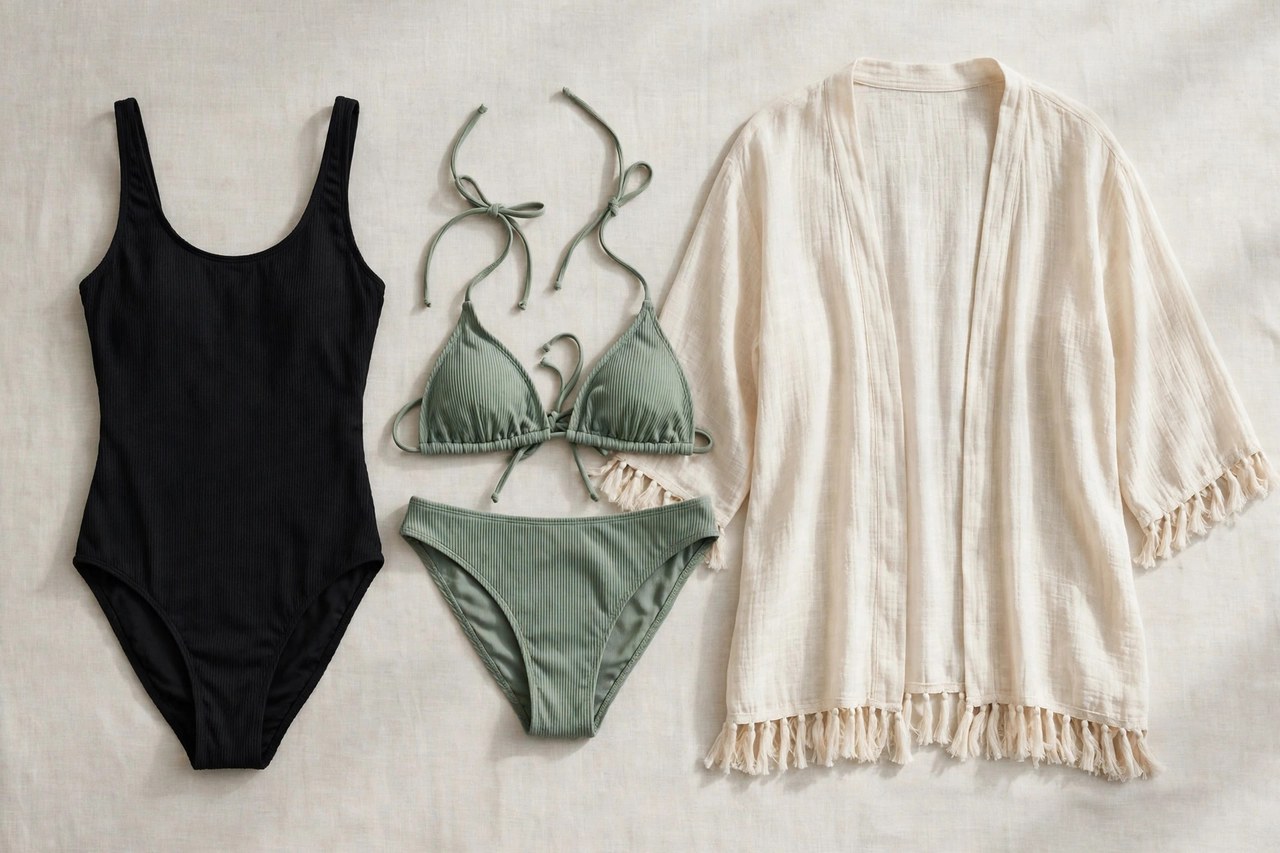
Swimwear is the category, and the swimsuit is only its best-known member. Women's swimwear is clothing designed to be worn for water-based activities and sun-bathing — swimming, diving, water skiing, surfing and the rest — and the category includes a wide variety of style options: bikinis, one-piece swimsuits, bandeau styles, tankinis, boardshorts and more, along with the rash guards, swim skirts and cover-ups that complete a working swim wardrobe. This page maps the whole category.
Specialist pages go deeper on single garments. Here the questions are category questions: which pieces exist, which activity each serves, what fabric language they share, and how to assemble a small swim wardrobe without duplication.
The Category Map: Suits, Separates and Layers
The core of the category is the swimsuit itself, in one-piece and two-piece constructions: maillots and athletic one-pieces, bikini sets and separates, tankinis that pair a tank-length top with a brief, and bandeau tops that fasten or tie without shoulder straps. Around the core sit the alternative bottoms and dress forms — boardshorts and swim shorts, swim skirts and skirted bottoms, and the swimdress — each a complete swim garment in its own right, covered on its own page of this guide.
The outer ring is everything worn over or alongside. Rash guards and swim shirts add a fitted, quick-dry layer with ultraviolet protection ratings. Cover-ups — sarongs, kaftans, tunics and shirt dresses — handle the walk between water and everywhere else. Most people need a strong core, one alternative form they genuinely use, and one cover-up, rather than a drawer of near-identical suits.
Choosing by Activity: Laps, Surf, Resort and Family
Activity sorts the category faster than fashion does. Lap swimming and training call for streamlined one-pieces in chlorine-resistant polyester, with secure backs and no loose fabric; suits bought for this purpose should be treated as sports equipment and sized snugly. Surfing and board sports prioritize security under impact: fixed waistbands, lace-up boardshorts, rash guards that stay put, and constructions tested by movement rather than by mirror. A suit that survives a fitting-room jump test is a starting point, not a guarantee, but it eliminates the obvious failures.
Resort and leisure swimming is where the category's variety earns its place — swimdresses, skirted styles, prints and coordinated sets serve days that alternate between water, walking and sitting, and where a cover-up is half the outfit. Family and active beach days reward the practical middle: secure two-pieces or one-pieces that tolerate chasing, carrying and repeated sunscreen, in fabrics that rinse clean of sand. One color note belongs to every activity: swimwear is researched and bought by color as much as by style — black, blue, brown, green, orange, pink, purple, red, tan, white and yellow all anchor searches — so choose the color family that suits your rotation first, then the construction inside it.
Fabrics Across the Category
One fabric language serves the whole category: nylon or polyester knits blended with elastane, engineered to stretch, recover, shed water and dry quickly. Polyester leads for chlorine and colorfastness, nylon for softness, and elastane — 15 to 25 percent in most swim knits — supplies fit. Beyond the suits themselves, the same fibers build rash guards, where tightly knitted polyester also carries UPF ratings for sun protection, and swim shorts, where quick-dry woven versions of the same synthetics replace knits. Suits themselves range in fit from close athletic compression to loose-fitting styles; both extremes are legitimate, for different activities.
Reading a swimwear label is a short exercise with long consequences: check the base fiber, the elastane percentage, and the lining — light colors deserve full lining against wet transparency. Cover-ups leave the system entirely, in cotton, rayon or terry, and are the one part of a swim wardrobe where natural fibers are welcome.
Care for the Whole Swim Wardrobe
Every garment in this category shares one care rule, and it outranks all others: rinse in clean, cool water after every use, then dry in shade. Chlorine, salt, sand and sunscreen are the four agents of swimwear aging, and the rinse removes three of them before they set. Wash suits, rash guards and swim shorts gently with mild detergent, never with softener or bleach, and keep all elastane away from hot dryers and hot tubs where possible. Cover-ups wash as ordinary clothing, though salt and chlorine rinses extend their colors too.
Rotation is the category's second rule: elastane needs a day of rest to recover between wears, so two suits in rotation outlast the same two suits worn in sequence. Store the wardrobe clean, dry and out of sunlight, and retire pieces by their working parts — elastic that no longer recovers, fabric thinned at stress points, drawstrings and clasps that fail — rather than by the calendar. Assembled by activity and kept on the rinse-and-rotate routine, a modest swim wardrobe covers every kind of water day for seasons at a time.
Related Women's Guides
Photos


Looking for Women's Clothing Stores?
This guide helps you choose women's swimwear. To browse where to buy, visit our women's clothing store directory, where you can find retailers that carry them.