Women's Black Swimwear Guide
One-piece suits, bikinis, tankinis, and swim dresses in black — fabric and construction basics, fit notes, and rinsing care that resists chlorine fade.
Shop Women's Black Swimwear Now
Shop Women's Black Swimwear on Amazon Shop Women's Black Swimwear on eBayThe Amazon and eBay links on this page are affiliate links. If you make a purchase through them, Apparel Search may earn a commission.
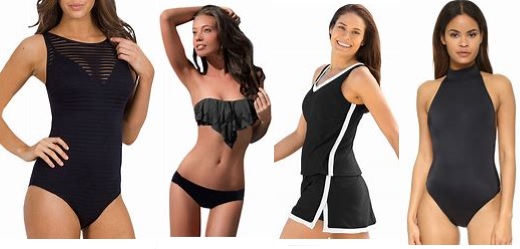
Why Black Dominates the Swim Rack
Black is the best-selling swimwear color year after year, for reasons any honest shopper recognizes. It suits every skin tone, it does not go transparent when wet the way pale colors can, and it reads as sleek and intentional at a resort pool, a lake dock, or a lane-swim session alike. A black suit from three seasons ago still looks current because black swimwear barely follows trends.
Black also travels and mixes well: a black bikini top pairs with printed bottoms, a black one-piece works under shorts as a bodysuit for beach-town lunches, and black coordinates with every cover-up color. For women who buy one good suit rather than a drawer of novelties, black is the rational and flattering choice.
Fabrics: What Black Swim Knits Are Made Of
Most black swimwear is nylon or polyester blended with elastane (Lycra or spandex). Nylon feels silkiest and takes a deep, rich black, but chlorine degrades it faster. Polyester blends hold black dye longest against chlorine and UV, which is why training and lap suits favor polyester — the blackest suit after a summer of daily pool use is usually a polyester one.
Textured blacks — ribbed, seersucker, crinkle, and jacquard knits — add interest while staying solid black, and their surfaces disguise small fit wrinkles better than flat knits. Lining matters: a quality black suit is lined in black or a skin-tone mesh so nothing light flashes at the edges, and the lining keeps the suit opaque when wet and stretched.
Styles and Support, Plainly Explained
The black one-piece ranges from athletic racerbacks for laps to surplice and ruched-front styles that smooth the midsection, to cut-out and one-shoulder designs for resort wear. Underwire and molded-cup one-pieces in black give structured support in a swimsuit format; shelf-bra styles suit smaller busts and lower-impact days.
Bikinis in black split into triangle, bandeau, halter, and sporty crop-top styles, with bottoms from tie-side to high-waist retro cuts that offer more coverage. Tankinis pair a tank-style top with brief or swim-skirt bottoms for adjustable coverage. Swim dresses and skirted one-pieces in black extend the coverage further with a polished, vintage line. Choose by activity first — diving and laps demand security that a bandeau cannot promise.
Fit Checks Before the Tags Come Off
Swim fabric relaxes in water, so a black suit should feel snug — not painful — on dry land. Straps should stay on shoulders through an arm windmill; leg openings should not ride with a few walking lunges. Sit, bend, and reach in the fitting room: a suit that behaves there will behave at the beach.
Black’s shadowing hides many fit sins, but not gaping at the bust or a translucent stretch across the seat under bright light — check both with the shop’s brightest lighting. Torso length is the most-missed measurement in one-pieces: long-torso cuts exist in black from most major brands, and a too-short suit will pull at both ends all day.
Styling Around a Black Suit
A black swimsuit is the easiest base for a beach wardrobe: white linen shirts, denim shorts, straw hats, and bright sarongs all take turns over it. Metallic sandals and gold-tone jewelry warm black up for pool-party dressing; a black cover-up over a black suit, broken by a tan belt or woven tote, gives the monochrome resort look.
Because the suit itself is neutral, rash guards and swim tees in black extend sun coverage without a costume change in style. If you mix separates, keep the blacks in the same fabric family — a matte black top with a shiny black bottom looks like a mismatch, while two mattes read as a set even from different brands.
Care: Chlorine, Salt, Sun, and Black Dye
Rinse a black suit in cool fresh water immediately after every swim — chlorine and salt left in the fibers keep working for hours, bleaching black toward a rusty gray-green at the most stretched points first. Wash occasionally by hand in cool water with a mild detergent or a swim-specific wash; never use bleach, hot water, or a dryer cycle on elastane.
Dry in the shade, flat or draped over a line by the middle — hanging by the straps stretches them, and direct sun fades black swim fabric faster than pool chemicals do. Rotate two suits if you swim daily; elastane needs a rest day to recover its snap. Sunscreen and tanning oils can stain black fabric with pale marks, so apply them and let them absorb before suiting up.
More to Explore
More Women's Black Clothing
Looking for Women's Clothing Stores?
This guide helps you choose black swimwear built for the way you actually swim and sun. To browse where to buy, visit our women's clothing store directory, where you can find retailers that carry them.