Women's Swimwear Colors Guide
Swimwear color is a fabric decision as much as a style one: sun, salt and chlorine treat every shade differently. This product-focused guide covers each family and how it lasts.
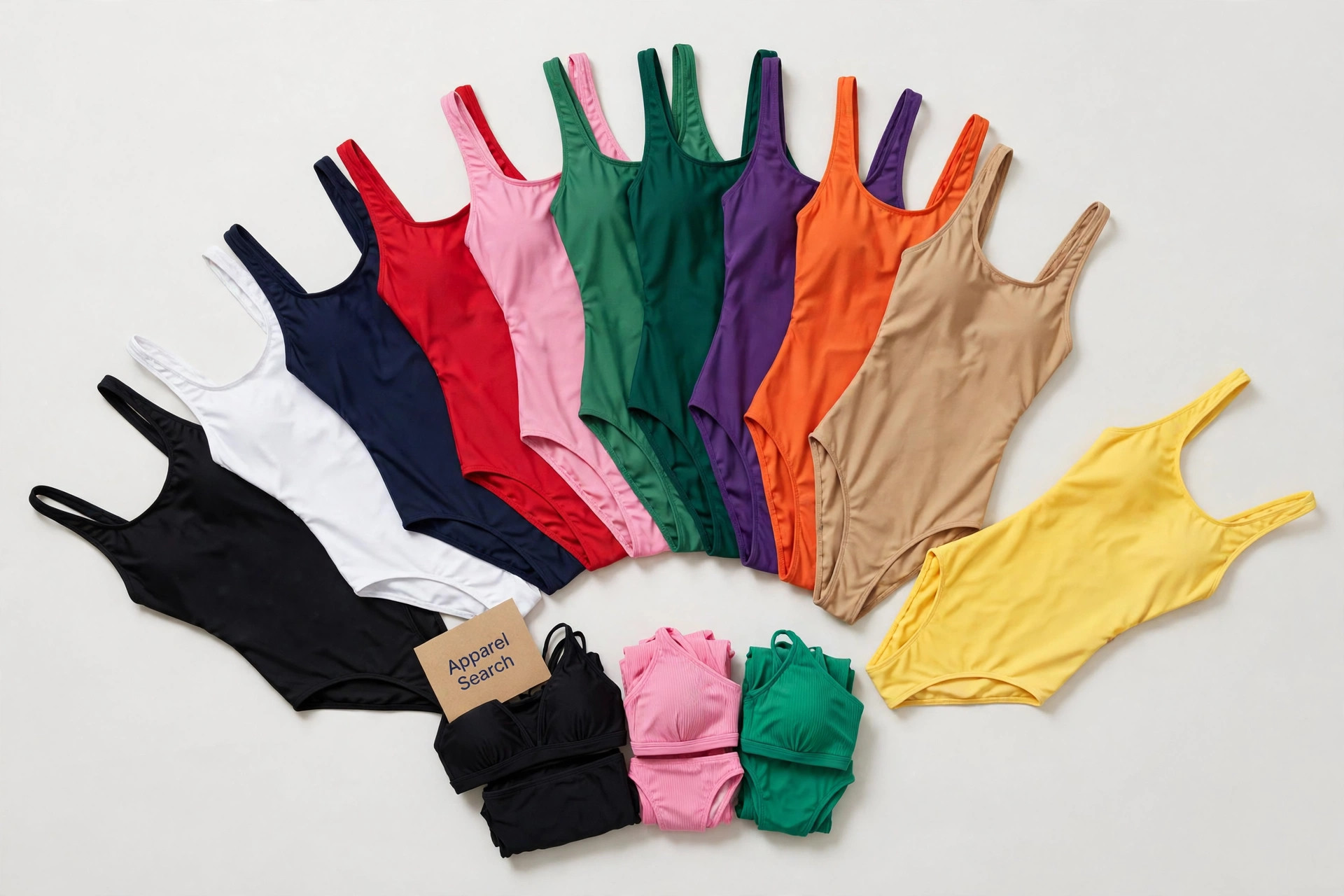
The Classics: Black and Navy Swimwear
Black is the best-selling swimwear color for practical reasons. It is the most colorfast shade in chlorine and sunlight, it does not show water marks or transparency when wet, and it pairs with every cover-up, sarong and sandal color already in a beach bag. A black swimsuit bought this year will still look black after several seasons of regular swimming, which few other colors can promise.
Navy is the classic's close relation: nearly as colorfast, equally easy to match, and softer in bright sunlight. Brown and tan swimwear occupy the warm neutral ground, coordinating with gold-toned accessories and natural-fiber cover-ups. The guides linked below treat each color family in depth, so you can compare how a shade behaves in the water before choosing.
Women's Swimwear by Color
Start with the two guides that organize this whole section: Women's Clothing Colors by Category shows every garment type in one place, and Women's Fashion Colors approaches the same wardrobe from the color side.
Brights and Pastels in the Water
Red, orange and hot pink are the high-visibility brights of swimwear — cheerful, easy to spot in a crowd or at the shoreline, and flattering against a wide range of summer accessories. Green runs from mint to emerald; the deeper greens are nearly as forgiving as navy. Purple, from lavender to plum, is a smaller but devoted family that pairs well with silver-toned accessories and white cover-ups.
Pastels and white need a product warning. Pale colors, especially white and pale yellow, can become translucent when wet unless the garment is fully lined with quality fabric, and they show sunscreen and mineral stains more readily. If you choose a light shade, look for double lining and rinse the garment promptly after each swim. Neon shades are the opposite case: intensely visible, very much a fashion statement, and the fastest of all to fade in strong sun.
Colorfastness: Sun, Salt and Chlorine
Swimwear fades by chemistry, not just time. Chlorine attacks dyes directly, ultraviolet light breaks them down, and salt water accelerates both. Black and navy resist longest; reds and neons fade fastest; prints hide fading better than solids because the eye reads the pattern, not the shade. Rotating two suits instead of wearing one daily roughly doubles the color life of both, because elastic and dye both recover between swims.
Care is simple and effective. Rinse every suit in cool fresh water immediately after swimming, wash occasionally with a mild detergent made for swimwear, never wring it hard, and dry it in shade. Hot tubs are the harshest environment of all — high chlorine plus heat — so many regular swimmers keep an older, already-faded suit for hot tub use and save their best colors for the pool and beach.
Matching Cover-Ups and Accessories by Color
A cover-up in the suit's own family, a shade deeper or lighter, gives the most coordinated result; white and tan cover-ups go with every suit color and are the practical first purchase. Sandals and bags in black, tan or metallic tones cover the whole spectrum of suit colors, while a colored accessory works best when it echoes the suit exactly or contrasts completely — near-matches look like mistakes.
Think of the purchase as a small system: one dark suit and one bright suit, one neutral cover-up and one white one, covers nearly every beach and pool situation, travels light, and means no single garment is worn and washed to exhaustion in one season.
Common Questions
What swimwear color lasts longest in chlorine?
Black, followed closely by navy. Dark, heavily saturated dyes resist chlorine and ultraviolet fading far better than pastels, whites and neons, which is why lap swimmers overwhelmingly choose black or navy suits.
Does white swimwear become see-through when wet?
Unlined or thin white swimwear can. Quality white suits are fully lined, often with a nude-toned lining, specifically to prevent this. Check for double lining before buying any white or very pale suit.
How can I slow down swimwear fading?
Rinse in cool fresh water right after every swim, dry in shade rather than sun, rotate two suits so each rests between wears, and keep your best colors out of hot tubs, where heat and chlorine combine.
Looking for Women's Clothing Stores?
This guide helps you choose women's swimwear by color with confidence. To browse where to buy, visit our women's clothing store directory, where you can find retailers that carry them.
Search Apparel Search