Women's Green Swimwear Guide
Poolside color from nature’s palette — emerald depth, sage calm and mint freshness in the water and out.
Shop Women's Green Swimwear Now
Shop Women's Green Swimwear on Amazon Shop Women's Green Swimwear on eBayThe Amazon and eBay links on this page are affiliate links. If you make a purchase through them, Apparel Search may earn a commission.
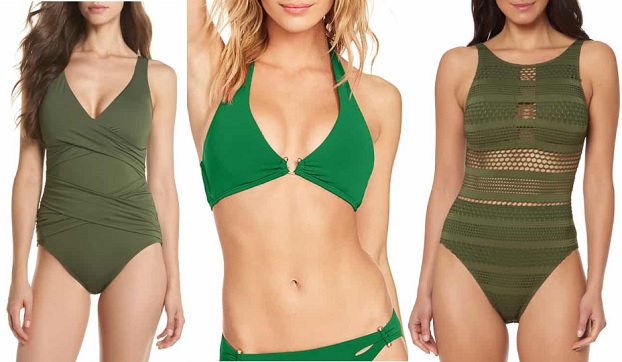
Green is a natural at the water’s edge. It echoes sea glass, lagoon shallows and palm shade, and it flatters in sunlight the way few colors do — emerald deepens beautifully when wet, sage looks soft and modern against sand, and mint is at its freshest beside blue water. Green swimwear also stands out in a sea of black and navy suits without resorting to neon, which makes it a smart choice for women who want color that still feels calm. This guide stays practical: the green shades and how they behave in water and sun, the one-piece and two-piece cuts and the support each offers, the fabrics that survive chlorine and salt, and the rinse-and-dry habits that stop a vivid emerald suit from fading to a tired shadow of itself by August.
Shades of Green for Swimwear
Emerald is the standout — saturated and jewel-like, it suits one-pieces and bikinis alike, photographs richly, and holds its depth better in water than paler dyes. Sage swimwear is the understated modern option, soft and slightly greyed, elegant in ribbed and matte fabrics on the beach rather than the party pool. Olive works in sporty and surf-leaning styles and flatters warm, tanned and golden skin tones particularly well. Mint is the lightest choice, fresh and playful in warm weather, though it can look paler when wet and shows marks more easily, so lined styles matter. Forest green offers a dark, refined alternative to black with a softer edge in sunlight. Consider wet color, not dry: most greens deepen by a shade in the water, which generally flatters rather than harms the look. Swimwear fabric has its own history: rayon was used in 1920s swimsuits but proved unreliable when wet, and the 1930s brought latex and nylon, after which suits began to fit the body far more closely — paving the way for the spandex blends used today.
Choosing the Right Green Swimwear
Fit and support come before shade. One-pieces offer the most coverage and support options — look for adjustable straps, a supportive shelf or underwire construction where needed, and enough torso length to sit and swim without the suit pulling. Two-piece tops should be chosen by the same support logic as a bra, with band and cup doing the work rather than neck ties alone. Bottoms range from fuller coverage to minimal; choose by activity, since active swimming, surfing and beach games demand secure fits that stay in place in waves. Fabric quality shows in recovery: stretch the suit and release it — good swim fabric snaps back crisply. Chlorine-resistant blends last longest for pool swimmers, and lined suits in mint and sage prevent the pale-green transparency that can appear when light fabrics get wet.
How to Wear Green Swimwear
On the beach, green swimwear pairs naturally with its surroundings, so cover-ups and accessories do the styling. A white or cream cover-up, shirt or sarong keeps emerald and forest suits looking crisp and lets the green lead. Tan and natural straw — hats, bags, sandals — warm olive and sage suits into an earthy, relaxed palette. Navy towels, wraps and rash guards sharpen brighter greens for sportier days. Gold-toned jewelry, kept minimal and water-safe, warms emerald beautifully for pool-to-evening transitions with a skirt or wide trousers over a one-piece. Sunglasses with tortoiseshell or gold frames suit the whole green family. Avoid cover-ups in clashing bright greens; tonal dressing works only when shades match closely, so choose white, cream, navy or tan as the safe frame.
Styling Combinations
For resort dressing, treat a green one-piece as a top: emerald with white linen trousers, sage with tan shorts, olive with a denim skirt — each moves from pool to lunch without a costume change. Two-piece sets in green mix well within the family: an emerald top with forest bottoms in the same fabric reads deliberate, while mint pairs with white for a fresh, clean contrast. Printed green swimwear — leaf, palm and tropical patterns on green grounds — is a category classic; keep accessories plain with prints. Rash guards and swim shirts in forest or olive add sun coverage for long water days and coordinate with plain green bottoms. A simple green suit also anchors bolder accessories: a patterned sarong, striped towel or bright beach bag can carry the pattern while the suit stays calm.
Caring for Green Swimwear
Sun, chlorine and salt all attack dye, and green shows the loss early — emerald dulls, mint yellows. Rinse every suit in cool, clean water as soon as possible after swimming, before sunscreen and salt dry into the fabric. Hand wash gently with a small amount of mild detergent, never bleach, and never wring; press water out in a towel instead. Dry in shade on a flat surface or line, since direct sun fades the exact panels it hits and heat from dryers or radiators destroys elastic. Rotate two suits if you swim often, giving each a full day to recover its shape. Store clean and dry, away from light. Pale greens need prompt rinsing most — a mint suit left in a wet bag can pick up stains that no later wash will fully lift. For more options, explore Women's Swimwear Guide and Women's Swimwear Colors.
More Green Clothing Guides
Looking for Women's Clothing Stores?
This guide helps you choose green swimwear by shade, fit and fabric. To browse where to buy, visit our women's clothing store directory, where you can find retailers that carry them.