Women's Petite Long Sleeve Shirts Guide
Petite long sleeve shirts end the sleeve at the wrist bone instead of the knuckles, shorten the body, and place cuffs, plackets and patterns for a shorter arm and torso.
Shop Women's Petite Long Sleeve Shirts Now
Shop Women's Petite Long Sleeve Shirts on Amazon Shop Women's Petite Long Sleeve Shirts on eBayThe Amazon and eBay links on this page are affiliate links. If you make a purchase through them, Apparel Search may earn a commission.
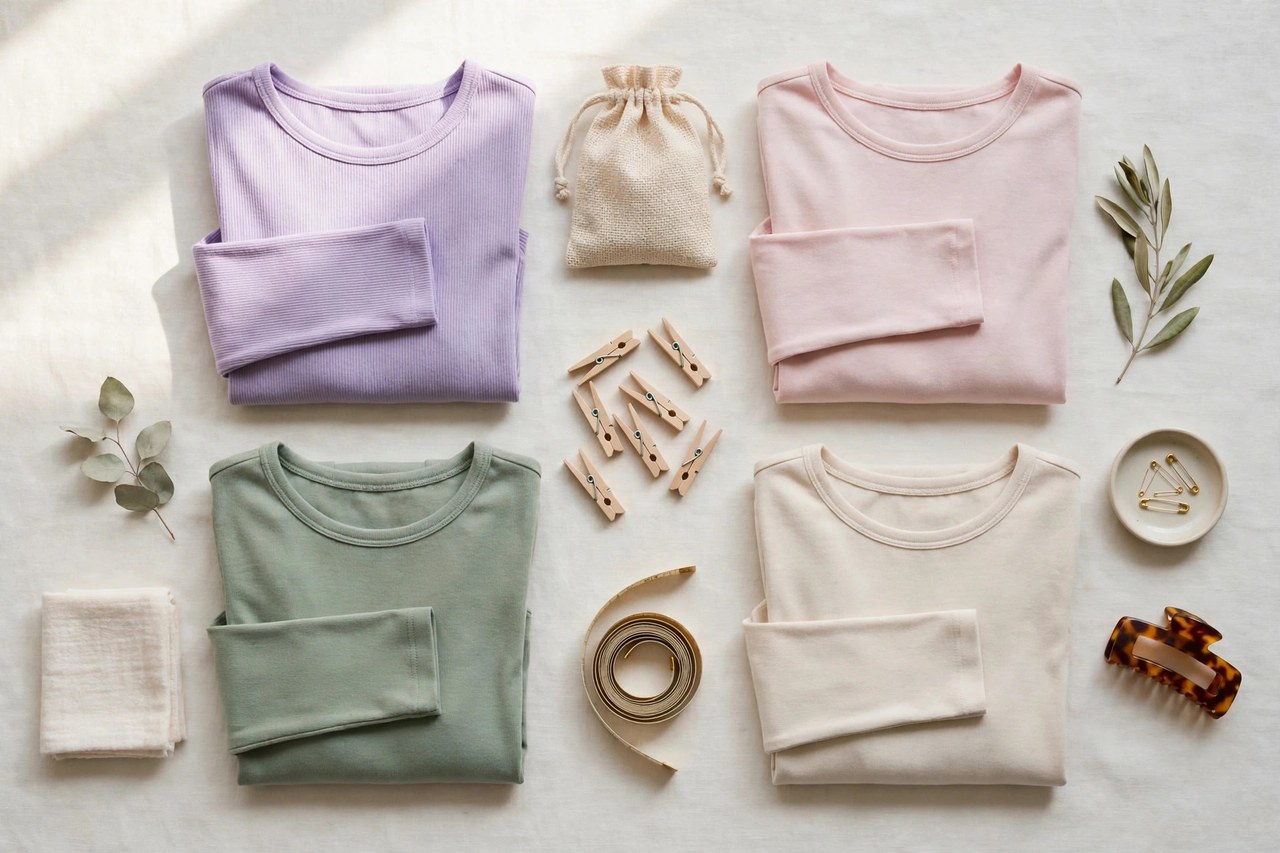
The long sleeve is the defining feature of this category, and it is precisely where regular sizing fails a petite woman most visibly. A standard sleeve is cut for a longer arm: on a woman 5'4" and under it covers the wrist, swallows the hand, bunches at the elbow, and pushes the cuff — and everything the cuff is supposed to show, like a watch or bracelet — out of sight. Rolling or pushing the sleeves up becomes a permanent habit rather than a style choice.
Petite long sleeve shirts are cut with sleeves roughly one to one and a half inches shorter, a shorter body, narrower shoulders and features placed for a shorter torso. This guide covers them across their styles — button-down shirts, knit long sleeve tees, Henleys, blouses and tunic lengths — with the fit checks that tell a genuinely re-graded sleeve from a regular shirt in a smaller size.
Anatomy of the Petite Sleeve and Body
A correct petite sleeve ends at the wrist bone with your arms relaxed, allowing about a quarter inch of ease — the classic shirt fitting rule, finally achievable off the rack. The cuff is scaled slightly narrower and shorter, so it closes around a smaller wrist without gapping or sliding over the hand. The elbow point of any shaping or darting sits at your elbow, and the sleeve's taper follows a shorter arm, which removes the ring of surplus fabric that otherwise collects in the forearm.
The body changes in step: shoulder seams sit at narrower shoulder points, which is what truly sets the sleeve's hang — a sleeve attached at a dropped shoulder will look long however it is hemmed. Body length shortens by one to two inches so the shirt can be worn untucked at hip level as styled, and tucks into a petite rise without a wad of excess at the waist. Button plackets, chest pockets and yoke seams are re-placed for the shorter torso, with pockets smaller and higher, at the chest rather than drifting toward the waist.
Styles: Button-Downs, Knit Tees, Henleys and Blouses
The button-down shirt is the precision case: collar, cuff and placket all have correct sizes and places, and petite versions deliver all three — including a collar that closes at a smaller neck without choking and gauntlet buttons that land mid-forearm. It is the style most worth buying true-petite, because tailoring a regular shirt's sleeves means remaking the cuff and placket at near the price of the shirt. Long sleeve knit tees are more forgiving but still benefit: petite versions end at the hip as intended, keep crew and V necklines at the right depth, and stop the thumb-swallowing sleeve.
Henleys place their short button placket on a shorter torso, so the lowest button sits at the chest, not the stomach. Long sleeve blouses in petite cuts scale sleeve fullness — a bishop or gathered sleeve carries less volume, gathered into a correctly sized cuff — and place any waist ties or peplum seams at the natural waist. Tunic-length long sleeve shirts are the exception that proves the rule: their extra length is the style, but in petite cutting the tunic ends at mid-thigh as designed rather than at the knee, preserving the leg line the tunic is meant to show.
Fabrics and Pattern at Sleeve Scale
Shirting fabrics follow the parent categories: cotton poplin, oxford and flannel for button-downs; cotton and modal jersey for knit tees; silk, crepe and rayon for blouses; and thermal or waffle knits for casual winter styles. Sleeve fit interacts with fabric: a fluid blouse sleeve drapes its length more forgivingly, while a crisp poplin sleeve announces every extra half inch, and a flannel sleeve adds bulk that a petite arm carries best at the correct length with a scaled cuff.
Patterns must be read at the sleeve as well as the body. Stripes on a petite shirt are finer, and their placement at the cuff and placket aligns as the maker intended. Checks and plaids are scaled down so a petite torso shows the pattern's repeat gracefully instead of wearing a single giant check. Cuff and collar contrast details, embroidery and chest prints all sit at petite positions in a properly graded shirt. If a shirt's print looks right but its chest pocket is at your waist, you are looking at a shortened regular shirt, and the sleeves will tell the same story.
Fit Checks, Alterations and Buying Tips
Fit with your arms in three positions: hanging (sleeve at the wrist bone), bent (cuff should not ride more than an inch or bind at the elbow), and reaching forward (the body should not pull the cuff halfway up the forearm). Check that the shoulder seam is at the bone before judging the sleeve at all, since seam position is the sleeve's true starting point. Button the cuff: it should close comfortably and stay at the wrist when you move, which is also what lets a sliver of cuff show correctly under a petite jacket sleeve.
Of all alterations, sleeve shortening on a shirt with a cuff and placket is the one to avoid by buying right — it is doable and disproportionately priced. Plain knit sleeves hem cheaply, so a knit tee is the safer regular-size experiment; a tailored shirt is not. Care is standard for the fabric, with one petite note: hot drying that shrinks a sleeve a half inch turns a perfect petite fit into a too-short one, so wash cool and dry low. Stock the basics in proven petite fits — a white and a blue button-down, knit tees in your core colors — and the daily sleeve-pushing habit simply disappears.
Related Women's Guides
Looking for Women's Clothing Stores?
This guide helps you choose women's petite long sleeve shirts. To browse where to buy, visit our women's clothing store directory, where you can find retailers that carry them.