Women's Petite Wool Sweaters Guide
Petite wool sweaters grade the gauge, body and sleeves for a smaller frame — merino, lambswool and cashmere-blend knits that give wool's warmth without the bulk that overwhelms women 5'4" and under.
Shop Women's Petite Wool Sweaters Now
Shop Women's Petite Wool Sweaters on Amazon Shop Women's Petite Wool Sweaters on eBayThe Amazon and eBay links on this page are affiliate links. If you make a purchase through them, Apparel Search may earn a commission.
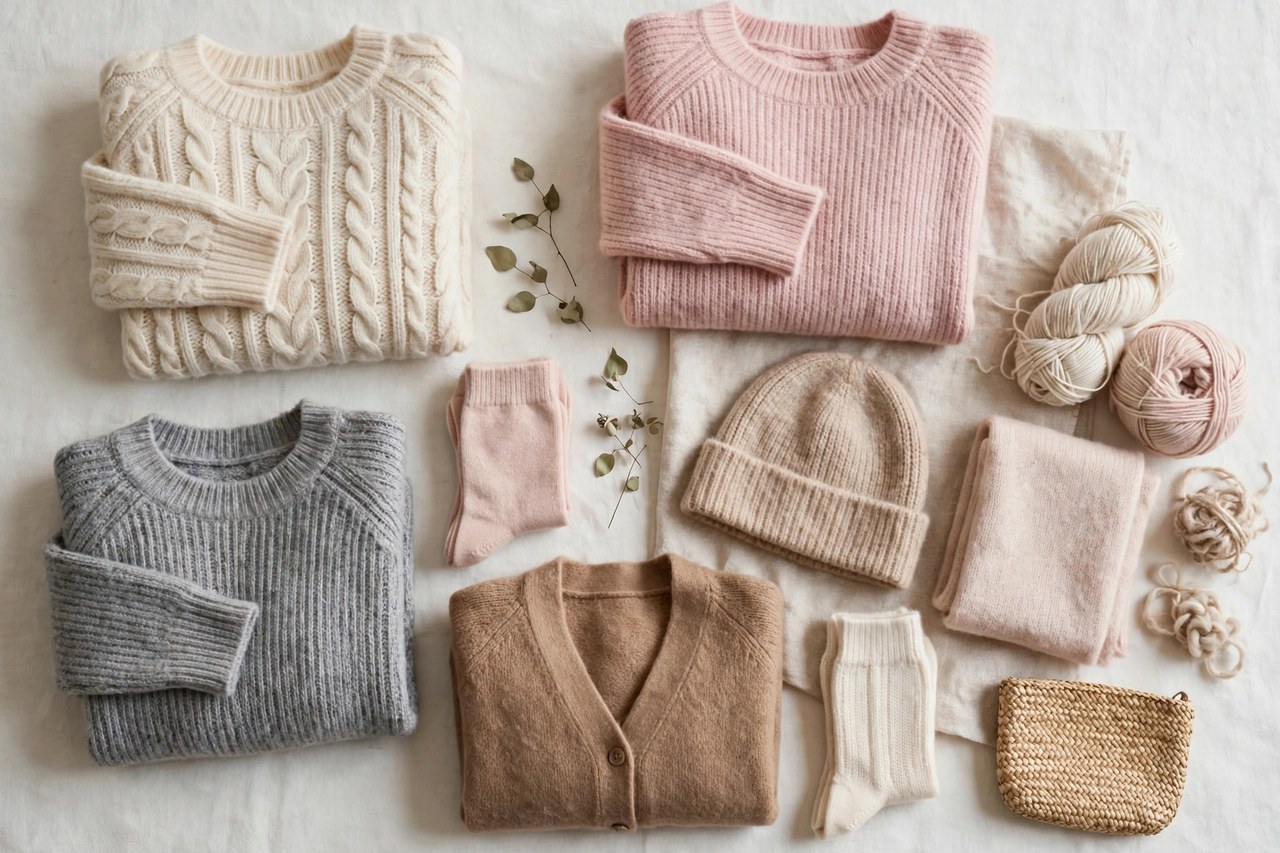
Wool is the original sweater fiber — warm, breathable, resilient and naturally odor-resistant — and a wool sweater is where petite grading quietly does some of its best work. A regular wool sweater on a woman 5'4" and under runs long in the body, finishes its sleeves over her hands, and, because wool knits are often chunky, adds width a small frame does not need. Petite wool sweaters shorten body and sleeves, raise armholes and shaping, and favor gauges proportioned to the wearer.
This guide is about wool specifically, within the broader petite sweaters category: the main wool yarns and how they feel and wear, the sweater styles offered in petite wool, fit checks unique to knitted wool, and the washing and moth-proof storage that wool, more than any other sweater fiber, requires.
The Wools: Merino, Lambswool, Shetland and Cashmere Blends
Merino is the fine, soft wool from Merino sheep: its thin fibers bend without prickling, making it the most comfortable wool against skin and the standard for petite layering sweaters in fine gauges. Lambswool, the first shearing of a young sheep, is soft, light and springy, knitting into smooth classic crewnecks and cardigans. Shetland wool is hardier and more rustic, with a heathered, slightly fuzzy surface — warm and characterful, best worn over a layer if your skin is sensitive.
Cashmere blends mix a percentage of cashmere into lambswool or merino for softness at a lower price than pure cashmere, and the blend percentage on the label tells you how much luxury you are actually buying. Alpaca blends appear in wool sweater ranges too, adding lightness and warmth with a silky surface. For petites, fiber choice and gauge travel together: fine merino for close, layerable sweaters; lambswool for the everyday classic; Shetland and heavier yarns reserved for relaxed styles where some texture is the point.
Styles in Petite Wool: Crews, V-Necks, Cardigans and Turtlenecks
The crewneck is the wool sweater standard, and in petite cuts its ribbed hem ends at the high hip so it layers over petite shirts and under petite coats without a doubled band at the waist. The V-neck is cut to a proportionate depth, showing a shirt collar or camisole without plunging. Cardigans in petite wool shorten the body and space the buttons closer, and belted versions place the belt at a petite waist; they are the most useful wool layer over dresses.
Wool turtlenecks and mock necks follow the collar rules of the turtleneck guide, in merino and ribbed lambswool. Sweater vests and sleeveless shells in fine wool are petite layering specialists, adding warmth at the core without sleeve bulk under jackets. Fair Isle and patterned yokes are scaled in true petite ranges, the yoke depth matched to a shorter chest so the pattern sits across the shoulders as designed rather than sliding toward the waist.
Fit and Gauge for a Smaller Frame
Gauge — the fineness of the knit — is the petite wool sweater's key specification. Fine-gauge knits lie smooth, tuck into petite trousers and read polished; mid-gauge is the everyday sweater; chunky and hand-knit-look gauges add real visual volume, so in petite sizes they work best in shorter, deliberately relaxed or cropped bodies that end at the waist or high hip. A long, chunky regular sweater is the single most overwhelming combination on a petite frame, and the easiest to avoid by shopping the petite range.
Check fit as knitwear: shoulder seams on the shoulder (or a raglan that begins at the right point), sleeves to the wrist without covering the hand, ribbed cuffs that stay at the wrist, and a body that skims with room for a thin layer beneath. Wool relaxes slightly with wear and recovers with washing and rest, so a sweater that is snug in the shop usually settles correctly, while one that is loose only grows. Ribbed hems should sit flat, not roll, at the petite hem position.
Washing, Moths and Buying Tips
Wool care is specific but not difficult. Wash cool, gently, with a wool or mild detergent — many merino sweaters are machine-washable on a wool cycle, but never use hot water or agitation, which felt and shrink wool irreversibly. Squeeze water out without wringing, roll in a towel, reshape and dry flat, measuring the sweater back to its petite dimensions as you lay it out. Fold for storage; hanging stretches wet or dry knit shoulders out of shape.
Moths are wool's real enemy. Store sweaters clean — moths target soiled wool — in sealed boxes or bags with cedar or lavender, especially through summer. Small holes can be rewoven invisibly if caught early. Buy wool sweaters by fiber content and gauge, not color alone: a fine merino crew and a lambswool cardigan in neutral shades will cover most of a petite winter, layered over shirts and under the wool coat. Quality wool, rested between wears and stored clean, lasts for many seasons and softens rather than wearing out.
Related Women's Guides
Looking for Women's Clothing Stores?
This guide helps you choose women's petite wool sweaters. To browse where to buy, visit our women's clothing store directory, where you can find retailers that carry them.