Women's Petite Wool Coats Guide
A petite wool coat shortens the body and sleeves, raises the waist and pockets, and reduces collar and button scale — so a warm, substantial coat fits a 5'4"-and-under frame instead of overwhelming it.
Shop Women's Petite Wool Coats Now
Shop Women's Petite Wool Coats on Amazon Shop Women's Petite Wool Coats on eBayThe Amazon and eBay links on this page are affiliate links. If you make a purchase through them, Apparel Search may earn a commission.
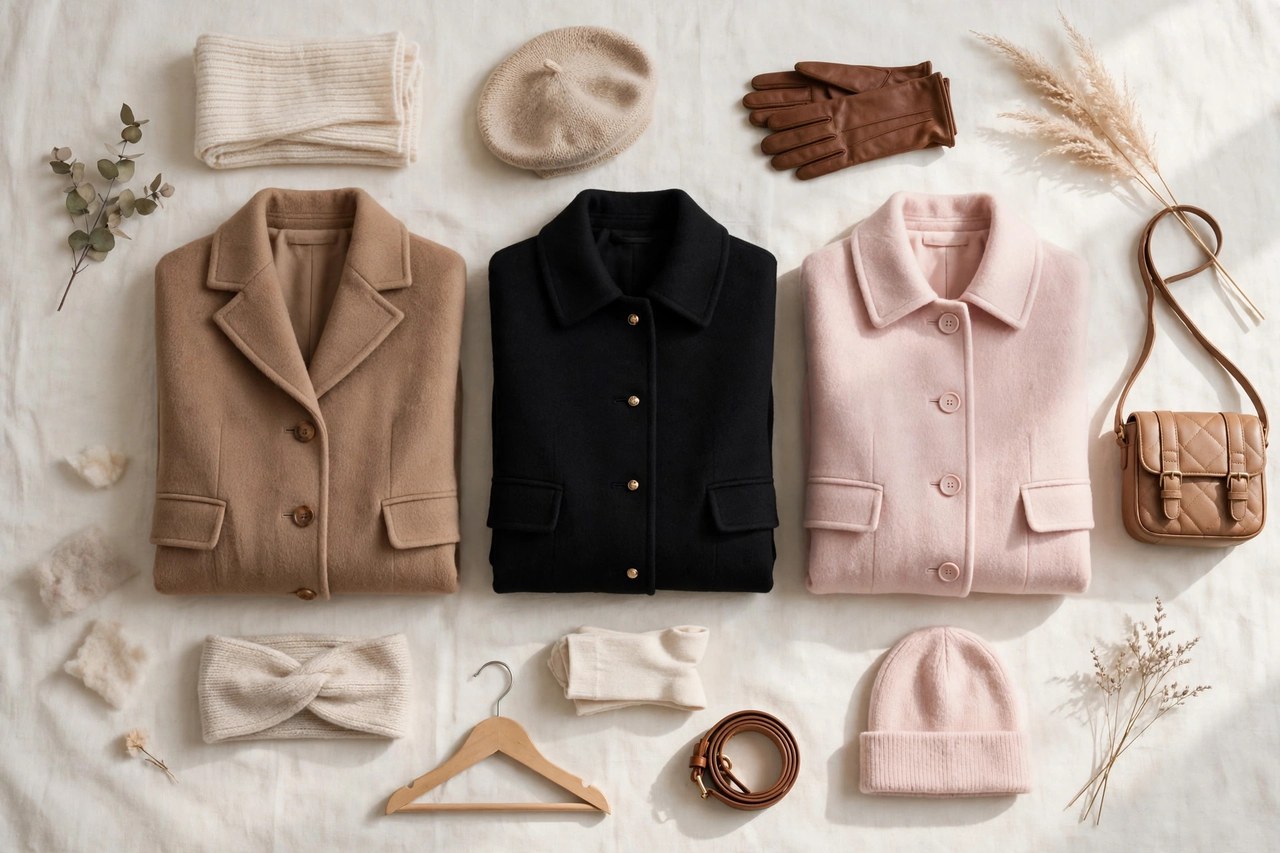
A wool coat is winter's main garment, worn over everything for months, and it is the item where regular sizing fails a petite woman most visibly: sleeves cover the hands, the waist seam and belt sit at the hip, pockets land out of reach of a natural arm swing, and a full-length style pools toward the ankle. Petite wool coats are patterned for women 5'4" and under with shorter bodies and sleeves, raised waistlines and pocket placement, and collars, lapels and buttons scaled to the frame.
This guide is specific to wool — the fabric that defines the classic coat — covering the main wool coat styles in petite cuts, wool types and blends, how to judge warmth and fit over layers, and the brushing, storage and cleaning habits that let a good wool coat last a decade. For lighter and non-wool options, see the general petite coats and outerwear guides.
Styles: Peacoat, Wrap, Chesterfield, Duffle and Long Coats
The peacoat, short and double-breasted in heavy melton, is naturally petite-friendly: its cropped body suits a short torso, and in a petite cut the wide lapels and button stance are scaled so they do not cover the whole chest. The wrap coat belts at the waist, so placement is everything — a petite wrap puts the belt at the natural waist, where it creates shape instead of cutting across the hip. The Chesterfield is the tailored single-breasted classic, its clean vertical line an excellent lengthener in a correctly shortened length.
The duffle coat closes with toggles and a hood and runs casual; petite versions shorten both body and toggle spacing. Long wool coats for petites are proportioned to end at mid-calf relative to a petite leg, rather than the near-ankle length of a regular maxi coat, preserving the elegant line without the dragging hem. Cape and swing shapes offer room over heavy sweaters but check the shoulder width carefully, since volume plus a narrow frame tips quickly into costume.
Wool Fabrics: Melton, Twill, Crepe and Blends
Coat wool is woven dense and finished smooth or brushed. Melton is the heavy, tightly felted wool of peacoats and duffles: wind-resistant, matte and very warm. Wool twill and gabardine give tailored coats their clean drape and diagonal weave. Wool crepe is lighter and fluid, used in dressier wrap and swing coats. Double-faced wool is finished on both sides so coats can be unlined and lighter — a real advantage on a petite frame, where lining and interlining bulk adds up.
Labels blend wool with other fibers for good reasons: a little nylon adds abrasion resistance, cashmere (often 5 to 10 percent) softens the hand noticeably, and polyester lowers cost but also lowers warmth and breathability if it dominates. For a true winter coat, look for wool as the clear majority fiber, a substantial weight in the hand, and a lining — satin or cupro — that lets the coat slide over sweaters. Interlinings, sometimes a light Thinsulate-type layer, add warmth without the bulk that swamps petite proportions.
Petite Fit: Length, Sleeves, Shoulders and Layering
Fit a petite wool coat over the thickest sweater you will wear beneath it. The shoulder seam should sit at your shoulder even with layers; dropped shoulders in a regular coat slide further on a narrow frame and read as borrowed clothing. Sleeves in a petite cut end at the wrist bone with a sliver of sweater or glove showing, instead of covering the hand. Buttons should close without pulling, and a belted style should belt at your waist, not where a taller woman's waist would be.
Length is a proportion choice: short coats and peacoats end at the hip, classic knee lengths should actually hit the knee, and long petite coats end mid-calf. Check pocket placement by standing naturally with hands in the pockets — if you must hunch or reach down, the pattern is regular, whatever the label says. Finally, sit and drive in the coat: a correctly scaled petite coat allows movement because its armholes are raised and smaller, not despite its shorter length.
Warmth, Care and Buying Tips
Warmth comes from wool density, wind resistance and coverage together. For deep winter, a mid-calf petite wool coat with a closed neckline, worn with a scarf filling the collar gap, rivals lighter puffers; for milder climates, an unlined double-faced or wool-crepe coat covers fall and spring. Storm cuffs, a throat latch and a button or zip underlap are small features with outsized warmth returns, and all are placed at petite positions in a true petite coat.
Care keeps wool handsome: brush after wears with a clothes brush, rest the coat a day between outings, hang it on a wide, shaped hanger that supports the narrower shoulders, and dry clean once a season or as spills require. Store clean in summer with moth protection, in a breathable bag. Buy a petite wool coat as a multi-year investment — classic colors first (camel, charcoal, navy, black), the best wool content you can afford, and timeless styling. Cost per wear on a coat worn all winter makes it the most economical garment in a petite wardrobe.
Related Women's Guides
More to Explore on Apparel Search
Looking for Women's Clothing Stores?
This guide helps you choose women's petite wool coats. To browse where to buy, visit our women's clothing store directory, where you can find retailers that carry them.