Women's Petite Overcoats Guide
An overcoat is the long, tailored topcoat worn over everything else — and in petite sizing its body, sleeves, buttons and pockets are all repositioned so a knee-length coat stays knee-length on a 5'4"-and-under frame.
Shop Women's Petite Overcoats Now
Shop Women's Petite Overcoats on Amazon Shop Women's Petite Overcoats on eBayThe Amazon and eBay links on this page are affiliate links. If you make a purchase through them, Apparel Search may earn a commission.
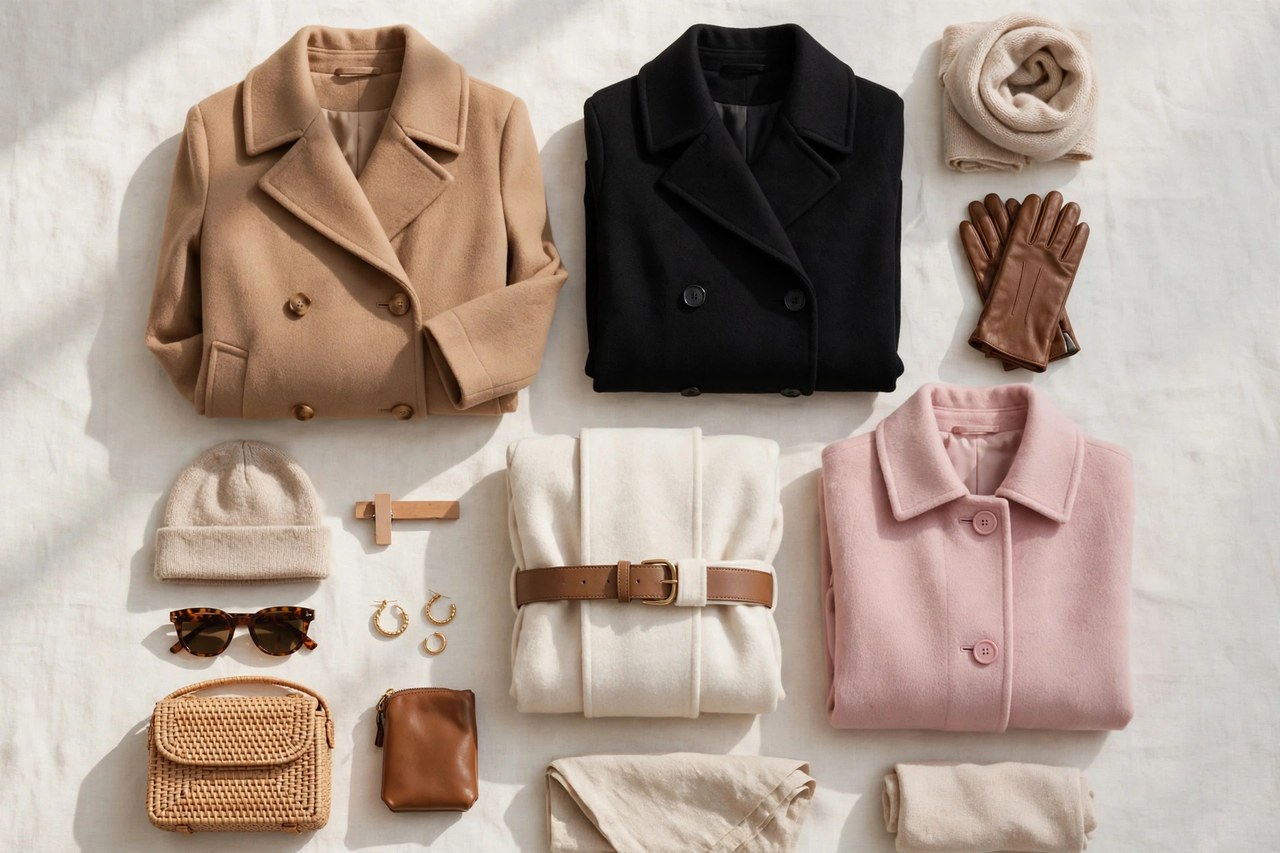
An overcoat is a long, tailored coat designed to be worn over suits, dresses and layers as the final, polished layer of cold-weather dress. It differs from the broader outerwear category by cut and intent: structured shoulders, a button or wrap closure, a length at or below the knee, and fabrics like wool coating cut to hold a clean line. This guide is about overcoats specifically, in the petite versions made for women 5'4" and under.
Length is where regular overcoats fail petite women worst. A coat designed to end just below the knee on a 5'8" frame ends mid-calf or lower on a petite one, its waist and pockets drop inches too low, and its sleeves cover the hands. Petite overcoats re-grade the whole garment — shorter body and sleeves, a raised waist and button stance, scaled lapels and collars — so the intended silhouette survives. What follows covers the main styles, fabrics, exact fit points and care.
Overcoat Styles: Single-Breasted, Wrap and Double-Breasted
The single-breasted overcoat, with one column of buttons and a notched lapel, is the most versatile form: clean, lengthening, and easy over both suits and dresses. The wrap coat closes with a belt rather than buttons, which lets the wearer set the waist exactly where a petite waist sits — a real advantage — and gives a softer, robe-like line. The double-breasted overcoat adds a second button column and a more military or classic character; in petite cuts the button spacing is compressed so the stance does not spread across a short torso.
Related tailored forms include the chesterfield, a formal single-breasted coat often with a velvet collar, and the polo and pea coat family at shorter lengths, though the true pea coat is a jacket-length garment. For petite shoppers the style choice interacts with height: single-breasted and wrap styles keep one unbroken vertical line and generally lengthen, while wide double-breasted fronts and oversized lapels can crowd a small frame. Scaled lapels — narrower, set higher — are a telltale of genuine petite tailoring.
Fabrics: Wool Coating, Blends and Cashmere
Wool coating is the standard overcoat fabric: a heavy, dense weave that blocks wind, holds tailoring and drapes in a clean column. Wool-cashmere blends add softness and a finer surface at higher cost and slightly lower abrasion resistance. Wool-polyester or wool-viscose blends reduce price and weight and add wrinkle resistance, with some loss of warmth per weight. Melton wool, tightly woven and smooth, gives the crispest tailored finish; camel hair and alpaca blends give softer, loftier coats for dressier wear.
Weight matters doubly on a petite frame. A very heavy regular coat can weigh noticeably more in proportion to the wearer and fatigue the shoulders; petite overcoats often use slightly lighter coatings since the garment itself is smaller. Check the lining — a full lining in cupro or viscose lets the coat slide over sweaters and blazers and protects the coating from wear. Interlinings and canvas chest pieces in better coats keep the front structured; fused fronts cost less and can bubble with age and cleaning.
Getting Petite Length and Fit Exactly Right
Decide your intended hem first and hold the coat to it. A classic petite overcoat ends just above, at, or just below the knee — roughly a 36- to 40-inch back length in petite ranges, against 42 inches and up in regular. Mid-calf petite lengths exist deliberately for very cold climates and long dresses, but that length should be chosen, not inherited from a regular coat. Sleeves should end at the wrist with arms relaxed, clearing a glove or cuff without swallowing the hand.
Then check the architecture: the waist seam or belt must sit at your natural waist, the button stance should close without strain over your thickest layer, and the vent should start high enough to allow a full stride — a low vent on a long coat restricts walking. Shoulder seams belong at your shoulder point, and the collar should frame the jaw rather than swallow it. If only the length is wrong on a regular coat you love, hemming fixes the hem but not the waist, pockets, vent or sleeves, which is why true petite overcoats exist.
Care and Buying Tips
Overcoats are low-wash, high-care garments. Brush after wear to lift surface dirt, air on a wide hanger, and rest the coat a day between wears so wool recovers. Dry clean sparingly — once a season is typical — since solvents strip wool's natural oils, and point out any spots rather than letting the cleaner guess. Store in a breathable garment bag with moth protection, never in plastic, and keep the belt loosely tied or buckled so the coat holds its shape.
Buy an overcoat as a multi-year anchor: one excellent petite coat in camel, navy, charcoal or black will out-serve three ill-fitting bargains. Shop early in the season while petite sizes remain in stock, try the coat seated and driving, and verify the hem against the dresses and boots you actually wear. Check button security and ask for the spares. Because petite overcoats are produced in smaller runs, a coat that fits the shoulder, waist and length at once is worth buying when found rather than waiting for a sale that may sell out your size.
Related Women's Guides
Looking for Women's Clothing Stores?
This guide helps you choose women's petite overcoats. To browse where to buy, visit our women's clothing store directory, where you can find retailers that carry them.