Women's Overcoats Guide
The overcoat is the tailored top layer: a long coat cut to be worn over everything, suits included — the most considered garment in the coat closet, and the longest-lived.
Shop Women's Overcoats Now
Shop Women's Overcoats on Amazon Shop Women's Overcoats on eBayThe Amazon and eBay links on this page are affiliate links. If you make a purchase through them, Apparel Search may earn a commission.
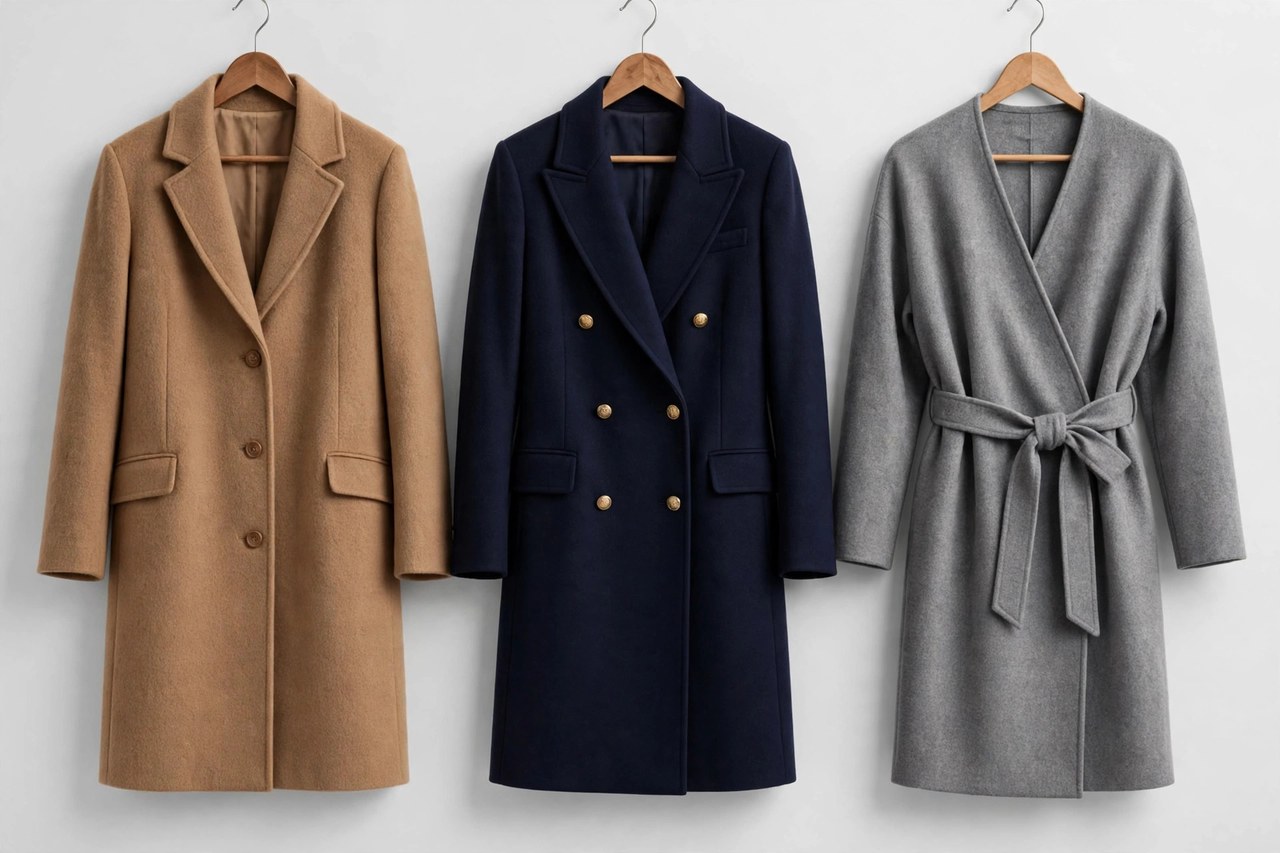
An overcoat is a long coat designed to be worn as the outer garment over the rest of the outfit — traditionally over tailoring, and cut with the extra measure that wearing over a jacket demands. Where the umbrella category of outerwear (see our outerwear guide) covers every coat and jacket, the overcoat is its formal summit: structured shoulders, a tailored body, fine cloth, and lengths from just above the knee to the calf. It is the coat of ceremonies, commutes and first impressions, and it is bought on a decade's horizon, not a season's.
This guide takes the overcoat family apart: the named styles and what distinguishes them beyond their silhouettes, the cloths from workhorse wool to cashmere, the single- versus double-breasted decision, and the fitting rules specific to a garment that must accommodate layers while still reading as tailored.
The Named Styles
The Chesterfield is the archetype: single-breasted, straight-bodied, with a short velvet collar in its most traditional form and a fly front hiding the buttons — the business overcoat of two centuries. The wrap coat closes with a belt and no buttons, its wide lapels and shawl-like front making it the softest of the tailored coats and the easiest over dresses. The double-breasted overcoat (including the military-derived greatcoat cut) crosses the cloth over the chest for extra warmth and ceremony. The duffle coat is the tailored family's rugged member — hood, wooden toggles and loop fastenings, born on naval decks. The pea coat, short and double-breasted, is the overcoat idea at jacket length. And the topcoat is the overcoat's lighter sibling, same tailoring in a midweight cloth for the shoulder seasons.
Silhouette within each style follows fashion's slow swing: straight and column-like, belted and waisted, or cocoon and oversized. The enduring advice is to buy the silhouette in the middle of the swing — a coat cut at the extreme of its decade dates fastest — and to let color do personality's work: camel, navy, charcoal and black are the permanent overcoat colors precisely because they outlast swings, while a red or checked overcoat is the classic second coat.
Cloths: Wool, Blends and Cashmere
Overcoat cloth is heavy by design — typically 400 to 700 grams per metre — and its fiber decides warmth, drape and price. Pure wool, especially in a melton or twill weave, is the standard: wind-resistant by density, warm by crimp, and able to be pressed back to a tailored line for decades. Wool-cashmere blends add surface softness and a luxury hand at a moderate price step; full cashmere is the summit cloth, weightlessly warm and requiring the gentlest wear. Wool-synthetic blends trade some drape and pressability for abrasion resistance and price — acceptable at the hard-wearing end, disappointing at the luxury end.
Read the inside as carefully as the outside. A quality overcoat is fully lined (viscose or cupro linings let it slide over tailoring), canvassed or well-fused through the chest so the lapels roll rather than lie dead, and finished with hand-worked buttonholes and a center back vent or pleat for stride. The warmth rating lives in the cloth weight and the wind seal at the front, neck and cuffs — an overcoat is a mild-to-cold garment by design, and for deep winter its correct partner is layering underneath or the parka family in our outerwear guide.
Fit, Length and Care
Fit an overcoat over a jacket or your heaviest sweater, fastened fully. The shoulder seam belongs at your shoulder's edge (it cannot be altered economically), the chest should close without the buttons pulling when you sit, and the sleeves should reach the base of the thumb over a cuff. Length is proportion: just above the knee flatters most heights and suits dresses and trousers alike; mid-calf is the full traditional statement and warms the legs genuinely; a shorter topcoat length serves drivers and milder climates. Walk, sit and lift a bag in the fitting room — an overcoat is worn in motion through a whole day.
Care rewards the investment. Rest the coat 48 hours between wearings on a broad, shaped hanger; brush it down after wear with a clothes brush (downward strokes, collar first); sponge small marks rather than rushing to the cleaner; and dry clean only once or twice a season, at the end, before breathable-bag storage with cedar against moths. Re-proof nothing, re-line when the lining goes (a good tailor relines an overcoat happily), and replace buttons with the spares sewn inside at purchase. Under this regime the overcoat is the wardrobe's true decade garment, and cost per wear becomes its most persuasive argument.
Related Women's Guides
Photos


More to Explore on Apparel Search
Looking for Women's Clothing Stores?
This guide helps you choose women's overcoats. To browse where to buy, visit our women's clothing store directory, where you can find retailers that carry them.