Women's Cashmere Overcoats Guide
The longest, most formal coat in the wardrobe — a tailored topcoat in cashmere, built for ceremony and serious cold.
Shop Women's Cashmere Overcoats Now
Shop Women's Cashmere Overcoats on Amazon Shop Women's Cashmere Overcoats on eBayThe Amazon and eBay links on this page are affiliate links. If you make a purchase through them, Apparel Search may earn a commission.
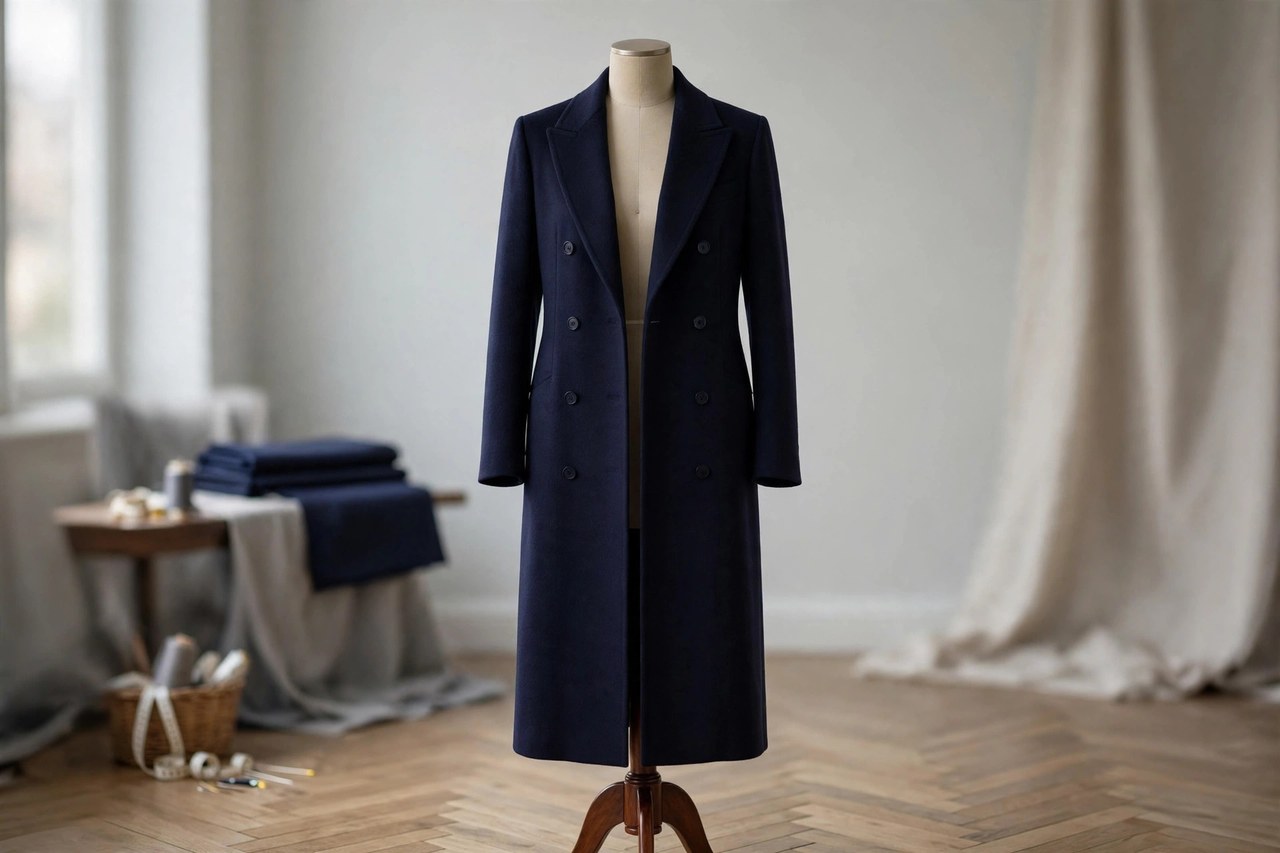
The overcoat is the formal peak of outerwear: a long, tailored topcoat designed to be worn over suits, dresses, and evening clothes, falling at least to the knee and usually well below it. In cashmere, it becomes something close to the perfect winter garment — all the ceremony of a greatcoat with the soft hand and fluid drape that only this fiber provides. Where our coats guide surveys cashmere coats in all their variety, this page is devoted to the overcoat alone: what defines it, how its tailoring details work, which cloths suit it, and how to wear and keep a coat that is expected to serve at weddings, funerals, galas, and the coldest commutes of your life with equal composure. It is a considered purchase, and it deserves a considered guide.
What Makes an Overcoat an Overcoat
Length and intent define the overcoat. It is cut to cover everything beneath it — a suit jacket, a long dress, even a ball gown in a pinch — so its hem typically reaches mid-calf or beyond, and its cut is straight or gently shaped rather than wrapped or belted. Traditionally it is single-breasted with a fly front or exposed buttons, though double-breasted polo-style overcoats carry equal formality. The overcoat differs from its cousins by register: the wrap coat is relaxed, the duffle is sporty, the puffer is technical, and the overcoat is the one that speaks quietly and formally. In a wardrobe, it is the coat of record — the one photographed at life's formal winter moments — which is why classic styling matters more here than anywhere else in outerwear. Trends should pass it by entirely.
Anatomy of a Tailored Topcoat
Read an overcoat from the collar down. The lapel — usually notched, sometimes peaked on double-breasted models — should roll smoothly to the button rather than creasing flat, a sign of proper internal canvas. Many fine overcoats carry a velvet or self-fabric collar option and a half-canvas or full-canvas chest, borrowed from suit tailoring, which lets the front mold to the body over time. Buttons are traditionally horn or horn-look; covered or leather buttons appear on dressier models. A single rear vent allows walking and sitting; the skirt of the coat should hang closed and straight, neither kicking forward nor wrapping the legs. Inside, look for a full lining with an interior pocket, and hand-finishing at the collar and buttonholes on better coats. In cashmere cloth, all of this tailoring sits on a soft foundation, so the best overcoats feel structured in the mirror and forgiving on the body.
Cashmere and Cashmere-Blend Cloths
Pure cashmere overcoating is the summit cloth: dense, warm, and light, with a short, even nap that gives the coat its characteristic soft glow. It is also the most delicate option at edges and friction points, so makers often reserve it for their finest lines and reinforce the design with careful finishing. Cashmere-wool blends are the working aristocracy of overcoats: at 50 percent cashmere and above, the hand feel remains unmistakably luxurious, while the wool contributes abrasion resistance and helps the coat keep its tailored edges through years of use. Some topcoats add a whisper of silk to the cloth for surface richness. Judge cloth in person by three tests: pinch it and watch the crease fall out, check the nap is even in both directions, and confirm the coat's weight feels balanced — substantial through the body, never dragging from the shoulders. A great overcoat distributes its warmth so well you forget you are wearing it.
Wearing the Overcoat: Formal and Modern
The overcoat's home ground is over tailoring and dresses, where its long clean line completes a formal silhouette. Wear it open over a suit for arrival-and-photographs polish, closed against real weather; a cashmere scarf in a contrasting or tonal shade fills the neckline and is practically part of the uniform. For evening, a dark cashmere overcoat over a gown is one of winter dressing's great sights, and the coat's length means the gown's hem travels clean and dry. Modern styling relaxes the register without breaking it: the same overcoat over knit pants and loafers, or even over denim with boots, works because the coat's formality lends intention to everything beneath. What does not work is competition — avoid loud scarves, novelty hats, or anything that argues with the coat's quiet line. The overcoat is the outfit's frame; let it frame.
Storage and Seasonal Care
An overcoat spends half its life in storage, so store it like the heirloom it is. Hang it on a broad, contoured hanger that fills the shoulders, buttoned, in a breathable garment bag with room around it — never crushed in a packed closet, which can break the nap along fold lines. Clean it before summer storage, since moths are drawn to the proteins in soiled fibers, and include cedar blocks or rings in the bag, refreshed yearly. Brush the coat after winter wears to lift road dust from the nap before it settles. During the season, rotate it with another coat when you can; even the finest cloth recovers its surface with rest. Small maintenance pays: re-sew a loose button the week it loosens, and have a tailor press the lapels rather than ironing at home. Treated this way, a cashmere overcoat is routinely a twenty-year garment — the rare purchase that becomes more yours the longer you own it.
Related Women's Guides
Photos

More to Explore on Apparel Search
Looking for Women's Clothing Stores?
This guide helps you choose women's cashmere overcoats for formal winter dressing. To browse where to buy, visit our women's clothing store directory, where you can find retailers that carry them.