Women's Cashmere Coats Guide
The softest way to face winter — wrap coats, reefers and cocoon shapes in cashmere and cashmere-blend cloth.
Shop Women's Cashmere Coats Now
Shop Women's Cashmere Coats on Amazon Shop Women's Cashmere Coats on eBayThe Amazon and eBay links on this page are affiliate links. If you make a purchase through them, Apparel Search may earn a commission.
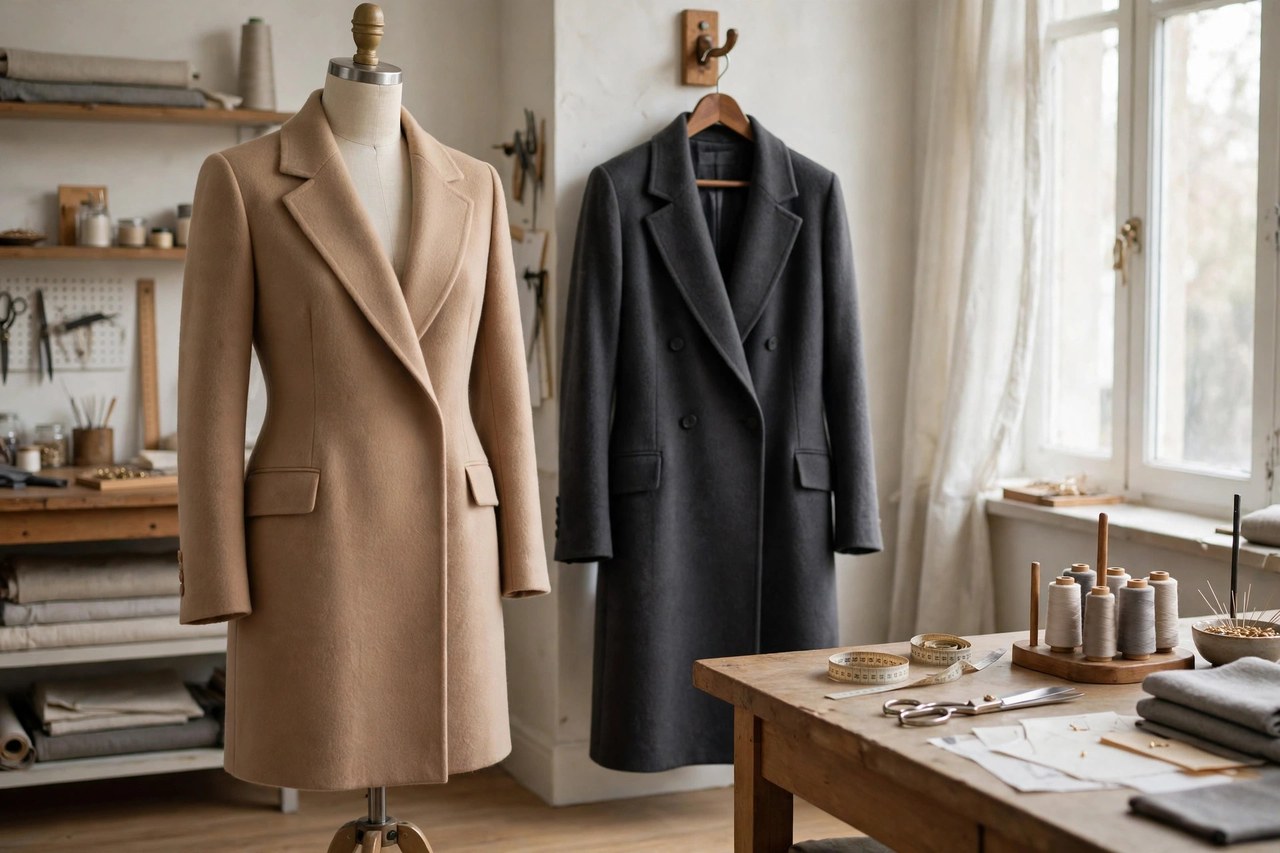
A cashmere coat is the largest single piece of the fiber most women will ever own, and the most transformative: it is the garment strangers see, the one that covers every outfit from December to March. Cashmere coat cloth is woven, not knitted — the yarn is loomed into a dense, smooth fabric with a soft brushed surface, then tailored like fine wool coating. The result drapes with a fluidity wool alone rarely achieves and feels noticeably lighter for its warmth. This guide covers the coat styles cashmere suits best, how the cloth is built (including the honest role of blends), how to fit a coat over winter knitwear, what a fair price looks like, and the care routine that keeps a coat beautiful for a decade. For the most formal member of the family, see also our overcoats guide.
Why Cashmere for a Coat
Three properties make cashmere exceptional coat cloth. Warmth-to-weight leads: a cashmere coat insulates like a much heavier wool coat, which matters on the fortieth consecutive day of wearing it. Second is drape — cashmere cloth falls in soft folds rather than standing stiffly, so wrap styles tie gracefully and long coats move instead of swinging like boards. Third is the surface: a fine, matte, almost suede-like face that reads expensive under any light and takes deep color beautifully. The trade-offs are price and tenderness. Pure cashmere cloth is costly and can wear at friction points faster than hardy melton wool, which is why many fine coats blend cashmere with wool for strength. Chosen well and cared for simply, though, a cashmere coat is a ten-to-fifteen-year garment, and its cost per winter becomes modest arithmetic.
Coat Styles: Wrap, Reefer, Cocoon and More
The wrap coat is cashmere's signature silhouette: soft shoulders, a shawl or notched collar, and a belt that creates the waist, perfectly matched to the cloth's drape. The reefer and pea coat styles bring naval structure in a shorter length, usually double-breasted, and suit women who want tailoring without severity. Cocoon and oversized coats use cashmere's fluidity in volume — dropped shoulders, wide sleeves, a shape that swallows layers beneath. The classic single-breasted straight coat is the most versatile and the easiest to wear across decades of changing fashion. Robe coats, with their patch pockets and tied waists, sit between dressing gown ease and outerwear polish. Whatever the style, check that the design respects the cloth: cashmere coats look best with clean lines and few fussy details, because the fabric itself is the decoration.
Fabric Weight, Blends, and Linings
Coat cloth is described by weight, and cashmere coatings range from light double-faced cloths to heavy winter weights. Double-faced cashmere — two layers woven together and finished by hand — is the connoisseur's version: unlined, soft on both sides, beautifully light, and priced accordingly. More common and more practical are cashmere-wool blends, where 30 to 70 percent cashmere brings the softness and wool brings resilience and value; a well-made blend coat can out-wear a pure cashmere one. Pure cashmere coats exist at the top of the market and are unmatched in hand feel. Linings matter: a full silk or quality viscose lining helps the coat slide over knitwear and protects the cloth from inside friction, while unlined double-faced coats trade that armor for softness. Whichever you choose, stroke the cloth against the nap; quality cashmere coating feels even and dense, never thin or papery at the edges.
Fit and Length: Choosing Your Silhouette
Always try a winter coat over your bulkiest sweater, because that is how it will live. You should be able to raise your arms, drive, and sit without the fronts pulling apart; a coat that only closes over a thin top will spend the winter half-open. Shoulder fit is the non-negotiable — seams should sit at or just past your shoulder bone in tailored styles, since shoulders are the costliest alteration. Length follows lifestyle: knee-length suits drivers and commuters who sit often; mid-calf gives the most warmth and elegance for walkers; full length is dramatic but demands dry pavements. Check the belt height on wrap coats — it should meet your natural waist when tied, not your ribs or hips. And button the coat and walk: good cashmere cloth moves quietly and settles back into line, a small test that reveals both cut and cloth quality.
Price Expectations and Coat Care
Cashmere coats occupy the summit of the section's price range, and the ladder is logical: blend coats from reputable makers form the entry tier, high-cashmere blends and pure cashmere from specialists the middle, and double-faced pure cashmere from luxury houses the top, where prices can reach several thousand. What the money buys is cloth density, hand-finishing, and a lining and button quality that matches the shell. Care keeps the investment sound. Rest the coat on a wide, shaped hanger, brush it down after wear with a clothes brush to lift dust from the nap, and give it a day off between wearings. Clean once a season at most, with a cleaner experienced in cashmere, and store it clean in a breathable bag with cedar against moths. Attend to the friction points — where a bag strap crosses, where seatbelts rub — and a cashmere coat will reward you with a decade of winters that look considerably better than everyone else's.
Storage is where fine coats are quietly lost, usually to moths. Our guide to moth prevention and clothing storage covers cleaning before storage, cedar, sealed containers, and what to do if damage appears.
Related Women's Guides
Photos

More to Explore on Apparel Search
Looking for Women's Clothing Stores?
This guide helps you choose women's cashmere coats by style and cloth. To browse where to buy, visit our women's clothing store directory, where you can find retailers that carry them.