Women's Cashmere Guide
The softest section of the wardrobe, explained — every cashmere piece a woman can wear, and how to judge each one before you buy.
Shop Women's Cashmere Now
Shop Women's Cashmere on Amazon Shop Women's Cashmere on eBayThe Amazon and eBay links on this page are affiliate links. If you make a purchase through them, Apparel Search may earn a commission.
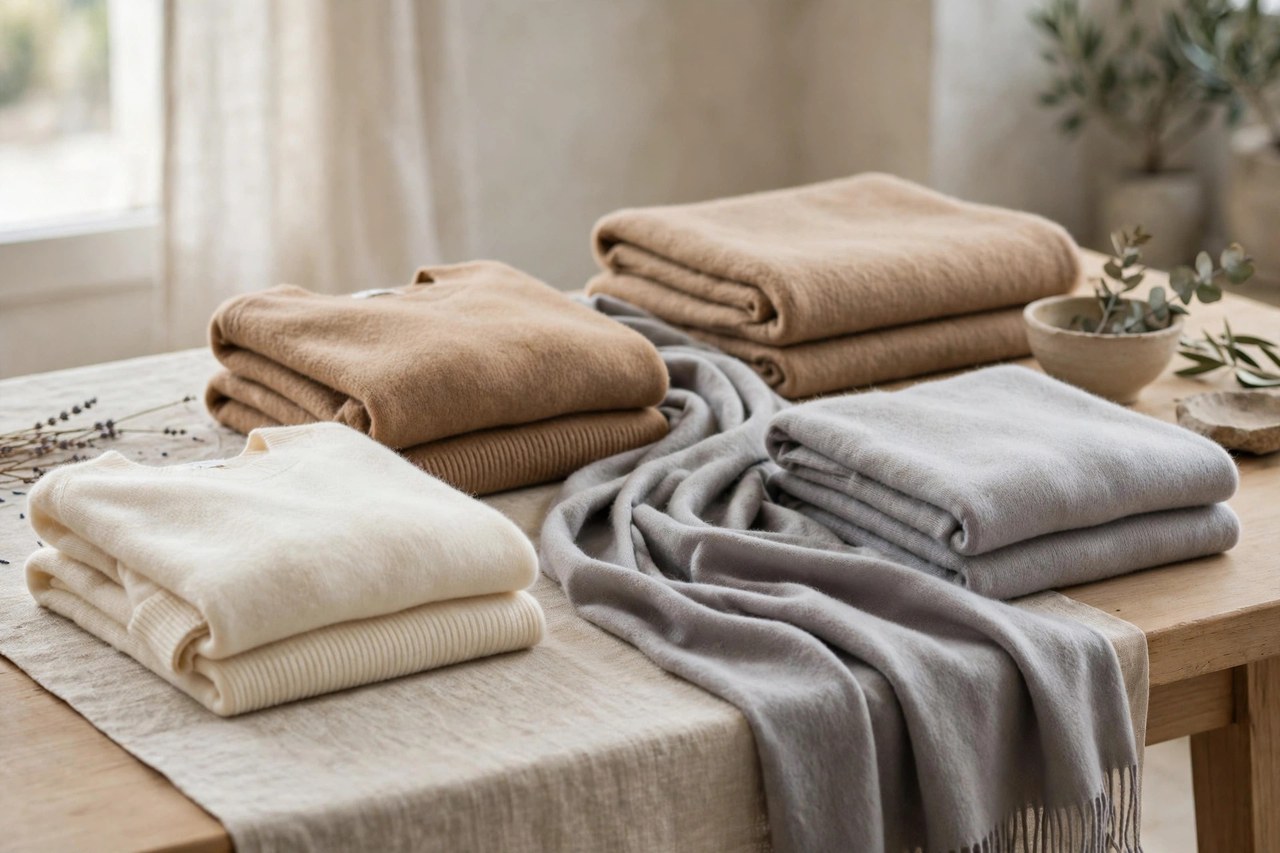
Cashmere is the downy undercoat of the cashmere goat, combed out by hand each spring on the high plateaus of Mongolia, Inner Mongolia, and Kashmir. A single goat yields only about 150 grams of usable down a year — enough for a fraction of one sweater — which is why genuine cashmere has always been a considered purchase rather than an impulse one. This section of our clothes guide is devoted entirely to women's cashmere: twenty-one guides covering every garment the fiber is made into, from the classic crew-neck sweater to coats, scarves, socks, and the turtleneck family. Start here for the fiber basics, then follow the links below to the piece you are shopping for, where each guide covers that garment's styles, quality markers, typical prices, and care in detail.
Why Cashmere Feels Different
Cashmere fibers are extraordinarily fine — around 14 to 19 microns in diameter, roughly a sixth the width of a human hair — and that fineness is the whole story. Fine fibers bend without scratching the skin, which is why cashmere feels soft where lambswool can prickle. The fibers are also hollow and crimped, trapping still air in tiny pockets, so a cashmere knit insulates far beyond its weight: a one-ply cashmere sweater can feel as warm as a wool sweater three times as thick. Finally, cashmere is resilient when it is well made. Quality fibers spring back from folding and resist the surface fuzzing called pilling far better than short-fiber cashmere, so two garments with identical labels can age completely differently. Understanding that difference is the key to buying cashmere well.
The Cashmere Wardrobe, Piece by Piece
The sweater is cashmere's home ground, and our guides cover it from every angle: the classic sweater itself, turtleneck sweaters, the mock turtleneck, and the turtleneck neckline wherever it appears. Around it sits a full wardrobe. Cashmere coats and overcoats use the fiber in heavier, often woven form for a soft, matte luxury no synthetic matches. Scarves and shawls are the traditional entry point — the fiber's original luxury form. Knit pants, skirts, shirts, and tops carry cashmere into outfits far beyond the pullover, while gloves, hats, headwear, and socks finish the picture at the extremities, where warmth-to-weight matters most. The apparel, clothes, and clothing guides in this section step back and compare the whole range, so you can decide which piece deserves your budget first.
Reading Quality: Ply, Gauge, and Fiber Length
Three ideas unlock almost every cashmere buying decision. Ply is the number of yarn strands twisted together: one-ply knits are light and fluid, two-ply adds body and warmth, and four-ply and beyond builds the dense, cushioned knits of serious winter sweaters. Gauge is the number of stitches per inch: fine gauges (14 to 16) produce smooth, dressy knits, while chunkier gauges (5 to 7) make relaxed, textured sweaters. Fiber length is the quiet one: long fibers, 34 millimeters and up, spin into stronger yarn that pills less and lasts longer, while short fibers make the suspiciously cheap cashmere that sheds and thins within a season. Each guide in this section applies these ideas to its garment, because the right ply for a scarf is wrong for a pair of socks.
Caring for Cashmere So It Lasts
Cashmere rewards gentle habits. Rest knitwear at least a day between wearings so the fibers recover their shape. Wash by hand in cool water with a wool wash, or use a trusted dry cleaner, and dry flat on a towel rather than hanging, which stretches wet knits. Pilling is managed, not feared: a cashmere comb or fabric shaver lifts the little bobbles that form where fabric rubs, and good cashmere pills less with every wash as loose short fibers leave. Storage is where cashmere is won or lost. Fold pieces with acid-free tissue, keep them clean before storing since moths target soiled fibers, and use cedar or sealed breathable bags through the summer. Every guide below ends with the care specifics for its garment, from de-pilling gloves to airing an overcoat.
Women's Cashmere Guides
- Cashmere Apparel
- Cashmere Clothes
- Cashmere Clothing
- Cashmere Coats
- Cashmere Fashion
- Cashmere Gloves
- Cashmere Hats
- Cashmere Headwear
- Cashmere Mock Turtlenecks
- Cashmere Overcoats
- Cashmere Pants
- Cashmere Scarves
- Cashmere Shawls
- Cashmere Shirts
- Cashmere Skirts
- Cashmere Socks
- Cashmere Sweaters
- Cashmere Tops
- Cashmere Turtleneck Sweaters
- Cashmere Turtlenecks
Looking for Women's Clothing Stores?
This guide helps you choose women's cashmere by garment and quality. To browse where to buy, visit our women's clothing store directory, where you can find retailers that carry them.